Kenya Reaffirms Commitment to Food Security & Nutrition at Global Summit in Paris
“Kenya’s CS Kagwe outlines bold steps to cut food imports & boost nutrition security at the Paris Summit. Learn how tech, livestock vaccines & school feeding programs are transforming agriculture.”

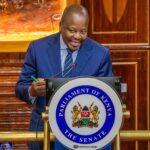
Kenya’s Cabinet Secretary for Agriculture and Livestock Development, Senator Mutahi Kagwe, has pledged the country’s dedication to achieving food and nutrition security through technology-driven and inclusive strategies. Speaking at the Nutrition for Growth Summit in Paris, Kagwe outlined Kenya’s progress in reducing food imports, enhancing agricultural productivity, and improving nutrition programs for vulnerable populations.
Reducing Kenya’s Reliance on Food Imports
Kagwe acknowledged Kenya’s historical dependence on imported staples, with 80-90% of wheat, 80% of rice, and 95% of edible oil sourced externally. However, he reported significant progress in reversing this trend, citing a reduction in the national food deficit—particularly for maize, rice, and sugar—through targeted supply-side interventions.
“These measures have stabilized food prices and improved returns for farmers, marking a turning point in Kenya’s food production trajectory,” Kagwe stated.
Tech-Driven Agricultural Transformation
To boost local production, Kenya has embarked on a mass farmer registration drive, integrating GPS-mapped farm data to refine fertilizer subsidies, soil testing, and extension services. The government has also deployed 20,000 national agripreneurs to support smallholder farmers with modern farming techniques.
Focus on ASAL Regions & Livestock Development
With 88% of Kenya classified as arid or semi-arid (ASAL), Kagwe emphasized the importance of livestock value chains. He highlighted the nationwide livestock vaccination campaign launched in January 2025, aiming to eradicate Foot-and-Mouth Disease (FMD) and Peste des Petits Ruminants (PPR) within three years. This initiative is expected to unlock export opportunities and strengthen the sector.
Additionally, Kagwe announced the upcoming launch of the Kenanie Leather Industrial Park, a key investment expected to enhance value addition and create jobs in the leather industry.
Nutrition Programs: School Meals & Youth Engagement
Kagwe showcased government-led initiatives to combat malnutrition, including:
- The School Meal Program: Linking smallholder farmers to schools, ensuring stable markets while improving child nutrition. The program aims to expand from 1 million to 10 million children by 2030.
- 4K Clubs Initiative: Engaging youth in agriculture through agripreneurship training to foster interest in food production and value addition.
Policy Reforms & Global Partnerships
The CS emphasized ongoing policy reforms to align Kenya’s food and nutrition security strategies with climate change adaptation and global market dynamics. He called for stronger international partnerships and increased investment in Kenya’s agricultural sector to achieve long-term food sovereignty.
“Kenya is committed to sustainable food systems, but we need global collaboration to scale these efforts,” Kagwe concluded.
With these measures, Kenya aims to not only achieve self-sufficiency in food production but also position itself as a leader in climate-smart agriculture and nutrition security in Africa.
https://farmerstrend.co.ke/farming-news/kenya-reaffirms-commitment-to-food-security-nutrition-at-global-summit-in-paris/https://farmerstrend.co.ke/wp-content/uploads/2025/03/1743093268532-845x1024.jpeghttps://farmerstrend.co.ke/wp-content/uploads/2025/03/1743093268532-e1743175015683-150x150.jpegFarming News'Kenya's CS Kagwe outlines bold steps to cut food imports & boost nutrition security at the Paris Summit. Learn how tech, livestock vaccines & school feeding programs are transforming agriculture.'Kenya’s Cabinet Secretary for Agriculture and Livestock Development, Senator Mutahi Kagwe, has pledged the country’s dedication to achieving food and...FarmersTrendjohn doefarmerstrend@gmail.comAdministratorFarmers Trend Ltd.










Leave a Reply