Naivasha Farmers Prove: How Kenyan Farmers Reduced Broiler Antimicrobial Use by 90%
“Discover how Naivasha farmers are raising antibiotic-free broilers profitably using simple biosecurity measures. Learn their 5 proven techniques to reduce antimicrobial use while increasing profits.”

Beyond Vision 2030 Farmer Field School (FFS) group is a composed of members that reside in the outskirts of Naivasha town. Naivasha is a tourist destination, with many hotels hence a high demand for chicken meat. Intensive poultry production is a norm here with haphazard use of antimicrobials and growth promoters to cash in on the ever-high demand for broiler chicken. This is amongst the reasons why this group has been selected to practically show that with simple biosecurity measures; farmers can say bye to costly antimicrobials and welcome high profits.
Beyond Vision 2030 FFS is one of the participating groups under FAO’s Fleming Fund-supported project aimed at tackling antimicrobial resistance (AMR). The group is currently raising its second batch of broilers using enhanced biosecurity practices, with antimicrobials administered only when necessary and under the supervision of a qualified animal health service provider. This shift towards responsible antimicrobial use demonstrates the impact of hands-on learning and behavior change fostered through the FFS approach.
“Like other farmers we had known that it is impossible to rear broilers without using antimicrobials. When they supplied us with the day-old chicks, they gave us a list of antimicrobials to stock, and at the slightest thought of a clinical sign in the broilers we gave the antimicrobials in water.” Says Naomi Gathua the chairperson of the group.
The group consisting mainly of poultry farmers was formed in 2024 with the goal of learning more about poultry farming through peer-to-peer learning. Its 22 members are all full of testimonies on how the skills they have acquired have helped them keep poultry with minimal use of antimicrobials. Having been taught about antimicrobial resistance and its effect on the food chain, the group’s risk perception index on antimicrobial has significantly risen.
“We were the first ones to buy broilers we raised without antimicrobials because we did not report any diseases in the batch. We were sure of the quality of the meat; the remaining birds were also quickly bought as the consumers knew that we had raised them without using any antimicrobials.” Said Fredrick Ndinguri a member of the group.
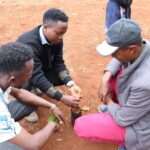
Through the project, this group was given the first batch of 106 chicks. Out of this, only eight died from rodent attacks and not diseases. The group was trained on how simple biosecurity measures can prevent diseases from occurring on a farm. This included biosecurity measures especially the use of footbaths at the entry to the poultry house as well as strict use by stepping into the solution anytime one enters a poultry house. Others included personal cleanliness when handling broilers, proper feeding, and record keeping.
Ruth Omani, the FAO focal point attached to the group lauded the group’s passion for learning and noted that the adoption of the biosecurity measures was the reason the farm did not report any diseases in the broilers.
“The challenge of antimicrobial resistance can be tackled through prudent use of antimicrobials. This group has shown that it is possible to raise broilers with minimal use of antibiotics; against a perception that poultry cannot be kept without use of drugs. The outcome is reduced use or judicious use of our precious antibiotics which makes foods of animal origin safe for the public and fetches more profits for the farmer.” Ruth added.
Tabitha Kimani the regional project manager applauded the group and encouraged them to further disseminate the information on the importance of biosecurity measures in reducing the unnecessary use of antimicrobials on farms. She noted that the agriculture sector is the largest user of antimicrobials in animal and crop production and subsequently the greatest change agent in the prudent use of antimicrobials.
The group noted that while the strict use of Personal Protective Equipment, like gumboots, overalls, and footbaths can reduce the introduction of diseases on poultry farm, their strict application is a major challenge. To overcome this, they suggested the use of posters at the door to serve as a reminder and make it an individual intention to observe the biosecurity measures.
About the project
This ongoing project, funded by the Government of the United Kingdom through the Fleming Fund, aims to combat antimicrobial resistance (AMR) by generating data for action in the food and agriculture sectors across Sub-Saharan Africa and South and South-East Asia. Running from October 2022 to March 2025. The project supports 12 countries—including Kenya—in strengthening AMR surveillance, antimicrobial use (AMU) practices, and governance using a One Health approach. Its core objective is to improve the generation, analysis, and use of AMR-related data to inform decision-making, promote prudent AMU, and build more resilient agrifood systems in the face of AMR threats.
For more information contact
Joseph Othieno
National Communications Specialist
FAO Kenya
Email: joseph.othieno@fao.org










Leave a Reply