Mushroom Farming in Kenya 2026 – The Complete Guide to Growing Button and Oyster for Profit
Table of Contents
ToggleMushroom Farming in Kenya 2026 – The Complete Guide to Growing Mushrooms for Profit
Mushroom farming in Kenya is a good business for people who do not own large pieces of land because you can grow mushrooms in a small room, a garage, or a simple mud house. Many farmers in Kiambu, Meru, and Kisii are making good money from mushroom farming in Kenya, and the demand in Nairobi, Mombasa, and Kisumu keeps growing every year.

Button mushrooms from mushroom farming in Kenya sell for 600 to 1,000 shillings per kilogram in supermarkets, while Oyster mushrooms from mushroom farming in Kenya sell for 400 to 600 shillings per kilogram.
You can start mushroom farming in Kenya with a small investment and see returns within weeks because Oyster mushrooms mature in just 4 weeks.
Button mushrooms from mushroom farming in Kenya take about 8 to 10 weeks from spawning to harvest. If you build a small mushroom house measuring 15 feet by 20 feet for mushroom farming in Kenya, you can get 8 to 10 kilograms of Button mushrooms per square meter, and you can make over 150,000 shillings profit from one growing cycle of mushroom farming in Kenya.
This complete guide to mushroom farming in Kenya will teach you where to get good spawn, how to prepare the substrate, how to build a mushroom house, how to control pests, how to harvest, and how much money you can make from mushroom farming in Kenya. The information comes from successful mushroom farmers and from JKUAT, which is one of the place where mushroom spawn for mushroom farming in Kenya is produced.

Why Mushroom Farming in Kenya Is Growing Fast
Mushroom farming in Kenya does not need a lot of land like maize or potatoes, so people who live in towns or have small pieces of land can do it successfully. You can practice mushroom farming in Kenya in a spare room, a garage, or a small house made of mud and thatch. The mud walls keep the temperature stable for mushroom farming in Kenya, and the thatch roof keeps the sun from heating up the house during the day.
The best places for mushroom farming in Kenya are Kiambu because it is close to the Nairobi market, Meru because wheat straw for substrate is easy to get, and Kisii because the natural humidity is high. Farmers in Machakos and Kisumu have also started mushroom farming in Kenya using new warm-weather Button mushroom strains that can handle higher temperatures.
People in Nairobi and other towns are eating more mushrooms because they know that mushrooms are good for their health, and this has increased the demand for mushroom farming in Kenya. Mushrooms have a lot of protein, few calories, and they have amino acids that the body needs. Supermarkets like Naivas, Carrefour, and Quickmart now stock mushrooms throughout the year, and hotels use them in many dishes, creating a steady market for mushroom farming in Kenya.
| Variety | Substrate | Time to Harvest | Temperature | Price per kg |
|---|---|---|---|---|
| White Button | Composted manure | 8-10 weeks | 16-20°C | 600-1,000 KSh |
| Oyster | Wheat straw | 4 weeks | 20-28°C | 400-600 KSh |
| Shiitake | Hardwood sawdust | 8-12 weeks | 15-25°C | 800-1,200 KSh |
| Warm-weather Button | Composted manure | 8-10 weeks | 20-25°C | 600-1,000 KSh |
Where to Get Mushroom Spawn for Mushroom Farming in Kenya
The spawn is the seed that grows into mushrooms, and you need to get good spawn for successful mushroom farming in Kenya because bad spawn will not grow well or may get contaminated with mold. The best place to get mushroom spawn for mushroom farming in Kenya is JKUAT (Jomo Kenyatta University of Agriculture and Technology), where they sell high-quality spawn for 600 shillings per litre. The spawn produced at JKUAT is used by most commercial mushroom farming in Kenya operations.
The Button mushroom strain that most farmers use for mushroom farming in Kenya is called Agaricus bisporus, and it produces the white mushrooms that you see in supermarkets. These mushrooms need cooler temperatures between 16 and 20 degrees Celsius, so they grow best in highland areas where mushroom farming in Kenya has traditionally been done. In 2026, a new warm-weather Button mushroom strain called Agaricus bitorquis was introduced for mushroom farming in Kenya, and it can grow in temperatures up to 25 degrees Celsius.
The Oyster mushroom strain for mushroom farming in Kenya is called Pleurotus ostreatus, and it is easier to grow than Button mushrooms because it grows faster and tolerates temperature changes better. Oyster mushrooms take only 4 weeks from spawning to harvest, making them a fast option for mushroom farming in Kenya. They can be grown on many different substrates including wheat straw, rice husks, and coffee husks, which makes mushroom farming in Kenya more flexible.
Many mushroom farming in Kenya operations have started using pasteurization instead of sterilization for their substrate because pasteurization is cheaper and it preserves good microbes that help stop contaminants from growing. This change has made mushroom farming in Kenya more affordable for small-scale farmers.
Building a Mushroom House for Mushroom Farming in Kenya
You do not need an expensive stone building for mushroom farming in Kenya because a simple house made of mud walls and grass thatch works very well and costs much less. A 15 foot by 20 foot mushroom house for mushroom farming in Kenya can be built for under 50,000 shillings using local materials, and the mud walls keep the inside temperature stable for mushroom farming in Kenya.

The roof of your mushroom house for mushroom farming should be made of grass thatch or other material that does not let heat pass through easily, and the house should face east to west so that the sun does not shine directly on the walls. The floor of your mushroom farming in Kenya house should be made of compacted earth or concrete, and it should slope a little so that water can drain away when you clean the house. The walls should be painted with white lime so that you can see any mold or contamination easily in your mushroom farming in Kenya operation.
The mushroom house for mushroom farming needs holes for air to come in and out because mushrooms breathe like people and need fresh air to grow properly. The holes should be covered with fine mesh to keep insects out, and they should be placed so that air moves through the house without creating strong drafts that dry out the growing substrate for mushroom.
If you live in a town and do not have space for a mushroom house for mushroom farming, you can grow Oyster mushrooms in a spare room, a garage, or even under your bed using grow bags. This is sometimes called garage farming, and it is a good way to learn mushroom farming in Kenya before you spend money on a dedicated house.
| Cost Item | Quantity | Unit Price | Total |
|---|---|---|---|
| Mushroom spawn from JKUAT | 20 litres | 600 KSh | 12,000 KSh |
| Wheat straw for substrate | 500 kg | 30 KSh/kg | 15,000 KSh |
| Bran and lime for supplements | 50 kg | 50 KSh/kg | 2,500 KSh |
| Drum and firewood for pasteurization | 1 set | 10,000 KSh | 10,000 KSh |
| Building mushroom house (15ft x 20ft) | 300 sq ft | 150 KSh/sq ft | 45,000 KSh |
| Shelves and growing bags | 1 set | 5,000 KSh | 5,000 KSh |
| Workers for substrate and spawning | 10 days | 500 KSh/day | 5,000 KSh |
| Pest control materials | 1 cycle | 2,000 KSh | 2,000 KSh |
| Total for First Cycle of Mushroom Farming in Kenya | 96,500 KSh |
Preparing Substrate for Mushroom Farming in Kenya
The substrate is the material that the mushrooms grow on, and preparing it properly is the most important step in mushroom farming in Kenya because if the substrate is not prepared well, the mushrooms will not grow or they will get contaminated with mold. For Button mushrooms in mushroom farming, the substrate is made from composted horse manure, wheat straw, and other organic materials.
To prepare substrate for mushroom farming in Kenya, you start by mixing 1,000 kilograms of wheat straw with 1,000 kilograms of fresh horse manure. Add 50 kilograms of gypsum and 20 kilograms of urea to help with the composting process for mushroom farming in Kenya. Wet the pile so that it feels like a squeezed sponge, with water dripping out when you squeeze a handful.
You must turn the pile every 3 days for the first 2 weeks of mushroom farming in Kenya. Each time you turn it, check the moisture and add water if it feels dry. The pile will heat up to 60 to 70 degrees Celsius as the microbes break down the material, and this heat is essential for successful mushroom farming in Kenya.
After 2 weeks, the compost for mushroom farming in Kenya should be dark brown and have no strong smell. At this point, you pasteurize it by keeping it at 60 degrees Celsius for 6 to 8 hours. This is the phase 2 pasteurization for mushroom farming in Kenya. After pasteurization, let the compost cool down to 25 degrees Celsius before you add the spawn for mushroom farming in Kenya.
For Oyster mushrooms in mushroom farming in Kenya, the substrate is simpler to prepare. You can use wheat straw, rice husks, coffee husks, or even maize stover. Chop the straw into 2 to 3 centimeter pieces so that it absorbs water well for mushroom farming in Kenya.
Spawning and Incubation in Mushroom Farming in Kenya
Spawning is the process of mixing the mushroom spawn into the prepared substrate for mushroom farming in Kenya. For 100 kilograms of substrate in mushroom farming in Kenya, you will need about 2 to 3 litres of spawn at 600 shillings per litre, costing 1,200 to 1,800 shillings. The spawn should be mixed thoroughly so that it is distributed evenly throughout the substrate for successful mushroom farming in Kenya.
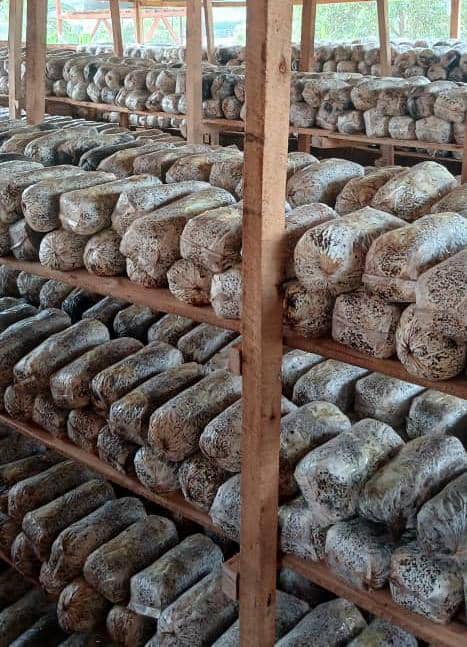
After mixing, put the spawned substrate into growing bags or trays for mushroom farming in Kenya. Polypropylene bags with filter patches are best for mushroom farming in Kenya because they allow air exchange while keeping contaminants out. Each bag should hold 2 to 5 kilograms of substrate for mushroom farming in Kenya.
Incubation in mushroom farming in Kenya takes 2 to 3 weeks for Oyster mushrooms and 3 to 4 weeks for Button mushrooms. During this time in mushroom farming in Kenya, keep the bags in a dark, warm room at 24 to 28 degrees Celsius for Oyster mushrooms or 22 to 25 degrees Celsius for Button mushrooms. The humidity for mushroom farming in Kenya should be around 70 percent.
After about 10 days of mushroom farming in Kenya, you will see white mycelium growing through the substrate. This is the mushroom roots spreading. When the whole bag is white in your mushroom farming in Kenya operation, the substrate is fully colonized and ready for fruiting. For Button mushrooms in mushroom farming in Kenya, you will need to add a casing layer at this point.

Adding the Casing Layer for Button Mushrooms in Kenya
Button mushrooms grown through mushroom farming in Kenya need a casing layer on top of the colonized substrate to trigger fruiting. The casing layer is a mixture of peat moss, lime, and water that is essential for successful mushroom farming in Kenya. It helps hold moisture and provides a place for the mushrooms to form.
To make the casing layer for mushroom farming in Kenya, mix 70 percent peat moss with 30 percent limestone. Add water until the mixture feels like a wet sponge for mushroom farming in Kenya. The pH should be between 7.0 and 7.5 for optimal mushroom farming in Kenya results.
Spread the casing layer about 4 to 5 centimeters thick over the colonized substrate in your mushroom farming in Kenya operation. Then put the trays back in the growing room for mushroom farming in Kenya. The temperature should be lowered to 16 to 18 degrees Celsius for Button mushrooms in mushroom farming in Kenya.
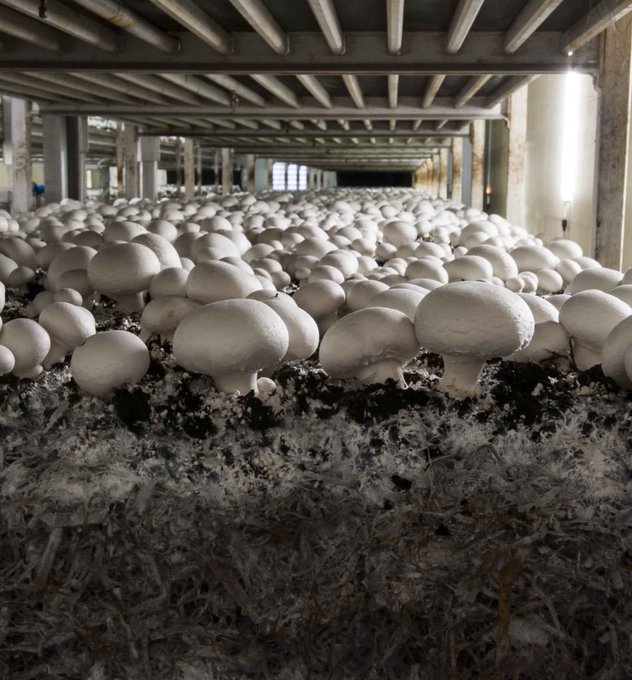
After 10 to 14 days of mushroom farming in Kenya, you will see small white dots forming on the casing layer. These are mushroom pins, and they will grow into full mushrooms in another 7 to 10 days of mushroom farming in Kenya.
Temperature and Humidity for Mushroom Farming in Kenya
Mushrooms need the right temperature and humidity to grow well in mushroom farming in Kenya, and if the conditions are not right, the mushrooms will be small or they will not grow at all. Button mushrooms in mushroom farming in Kenya need cooler temperatures between 16 and 20 degrees Celsius, while Oyster mushrooms in mushroom farming in Kenya need warmer temperatures between 20 and 28 degrees Celsius. The humidity for mushroom farming in Kenya should be kept between 80 and 90 percent so that the substrate does not dry out.
The new warm-weather Button mushroom strain called Agaricus bitorquis has made mushroom farming in Kenya possible in warmer areas because it can grow in temperatures up to 25 degrees Celsius. This means farmers in Machakos and Kisumu can now do mushroom farming in Kenya successfully. The coolest months of June to August are still the best time for traditional Button mushroom farming in Kenya in the highlands.
Mushrooms need fresh air to grow properly in mushroom farming in Kenya because they release carbon dioxide as they grow, and if the carbon dioxide builds up, the mushrooms will grow with long stems and small caps. You should change the air in your mushroom farming in Kenya house 4 to 6 times every hour, and the air coming in should be filtered to keep contaminants out of your mushroom farming in Kenya operation.
To maintain humidity for mushroom farming in Kenya, you can spray water on the walls and floor of the mushroom house. Do not spray water directly on the mushrooms in your mushroom farming in Kenya because wet mushrooms can get diseases. You can also put wet burlap sacks over the shelves or use a humidifier for your mushroom farming in Kenya.
Controlling Pests and Diseases in Mushroom Farming in Kenya
Green mold is the most common problem in mushroom farming in Kenya, and it can destroy your whole crop in just a few days if you do not catch it early. The mold looks like green patches on the surface of the substrate in mushroom farming in Kenya, and it spreads quickly through the growing room. You can control green mold in mushroom farming in Kenya by keeping everything clean, pasteurizing the substrate properly, and removing any bags that have mold on them as soon as you see them.
Fungus gnats are small flies that attack mushroom farming in Kenya, and they lay eggs in the substrate where the larvae eat the mushroom mycelium and the developing mushrooms. You can catch the adult flies in your mushroom farming in Kenya using yellow sticky traps, and you can kill the larvae using a biological control called Bacillus thuringiensis israelensis (Bti). Put one yellow sticky trap for every 10 square meters of growing area in your mushroom farming in Kenya operation.
Mushroom flies are another pest that can infest your mushroom farming in Kenya, and they lay eggs in the substrate where the larvae feed on the mycelium. You can control mushroom flies in mushroom farming in Kenya by keeping the growing room clean, removing old substrate quickly, and putting fine mesh screens over the air vents to keep the flies out of your mushroom farming in Kenya house.
Bacterial blotch causes brown spots on mushroom caps in mushroom farming in Kenya, and it happens when water stays on the caps for too long. To prevent bacterial blotch in mushroom farming in Kenya, do not spray water directly on the mushrooms, and keep the humidity high but not so high that water condenses on the caps. Good air movement also helps keep the caps dry in mushroom farming in Kenya.
Cobweb mold looks like gray cobwebs on the surface of the substrate in mushroom farming in Kenya, and it can cover mushrooms quickly. You can control cobweb mold in mushroom farming in Kenya by spraying the affected area with hydrogen peroxide mixed with water, using 1 part hydrogen peroxide to 10 parts water.
Common Problems and Solutions in Mushroom Farming in Kenya
If your mushrooms have long stems and small caps in mushroom farming in Kenya, the problem is usually too much carbon dioxide and not enough fresh air. Increase the ventilation in your mushroom farming in Kenya house. You should change the air 4 to 6 times every hour for successful mushroom farming in Kenya.
If your mushrooms are cracking in mushroom farming in Kenya, the humidity is too low. Increase the humidity by spraying water on the walls and floor of your mushroom farming in Kenya house, or put wet burlap sacks in the growing room. The humidity for mushroom farming in Kenya should be between 80 and 90 percent.
If your mushrooms are not forming at all in mushroom farming in Kenya, the temperature might be wrong. Check your thermometer for your mushroom farming in Kenya operation. Button mushrooms need 16 to 20 degrees Celsius for mushroom farming in Kenya. Oyster mushrooms need 20 to 28 degrees Celsius for mushroom farming in Kenya.
If you see green patches on your substrate in mushroom farming in Kenya, you have green mold contamination. Remove the affected bags immediately from your mushroom farming in Kenya operation and take them far away from your growing room. Do not open them near healthy bags in your mushroom farming in Kenya. Improve your pasteurization process and make sure your spawn is clean for mushroom farming in Kenya.
If your mushrooms are small and open their caps early in mushroom farming in Kenya, the substrate might be too dry or too old. Check the moisture level of your substrate for mushroom farming in Kenya. It should feel like a squeezed sponge. If it is dry, add water to the next batch of mushroom farming in Kenya.

Harvesting Mushrooms in Mushroom Farming in Kenya
Mushrooms grow in cycles called flushes in mushroom farming in Kenya, and each bag or tray will give you several flushes over about 2 months before the substrate is used up. The first flush in mushroom farming in Kenya comes 2 to 3 weeks after you put the casing layer on for Button mushrooms, or 1 to 2 weeks after spawning for Oyster mushrooms. After that in mushroom farming in Kenya, you get another flush every 7 to 10 days, but each flush gives you smaller mushrooms than the one before.
You should harvest Button mushrooms in mushroom farming in Kenya when the cap is fully open but before the thin skin underneath breaks. You twist the mushroom gently to remove it from the substrate in mushroom farming in Kenya, and then you trim the stem to remove any substrate that is still attached. You should harvest Oyster mushrooms in mushroom farming in Kenya when the caps are fully open but before the edges start to curl up.
After you harvest in mushroom farming in Kenya, you should cool the mushrooms as soon as possible to remove the heat from the growing room, and you should keep them at 2 to 4 degrees Celsius with high humidity. If you store them properly in mushroom farming in Kenya, fresh mushrooms will stay good for 5 to 7 days. The old substrate that is left after harvesting in mushroom farming in Kenya can be used as manure for your vegetable garden or sold to other farmers.
| Cycle | Yield (kg) | Price per kg | Revenue | Profit |
|---|---|---|---|---|
| 1 | 150 | 500 | 75,000 | -21,500 |
| 2 | 240 | 600 | 144,000 | 47,500 |
| 3 | 300 | 700 | 210,000 | 113,500 |
| 4 | 360 | 800 | 288,000 | 191,500 |
Marketing Your Mushrooms from Mushroom Farming in Kenya
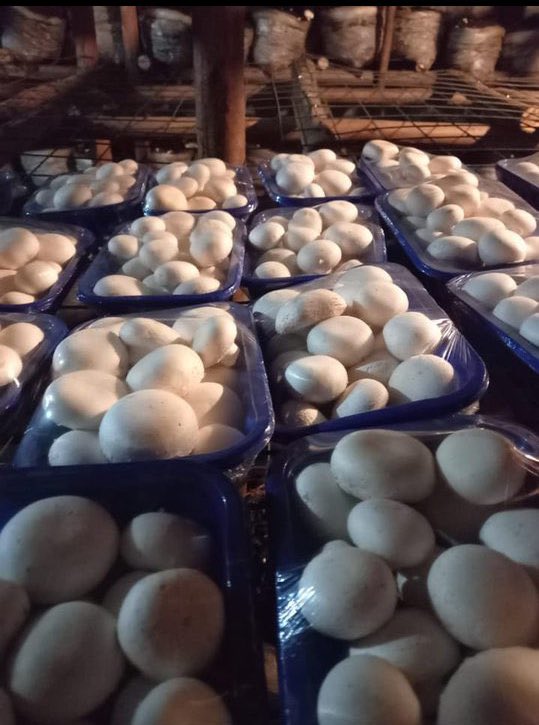
Selling your mushrooms is easier if you have good quality and consistent supply from your mushroom farming in Kenya operation. Supermarkets like Naivas, Carrefour, and Quickmart buy mushrooms from farmers who can supply regularly, and they are always looking for new suppliers of mushroom farming in Kenya produce. You will need to package your mushrooms in clean containers for mushroom farming in Kenya, and they should be weighed and labeled properly.
Hotels and restaurants are also good buyers for mushroom farming in Kenya because they use mushrooms every day. You can approach the kitchen managers of hotels near you and give them samples from your mushroom farming in Kenya operation. If they like your mushrooms, they may agree to buy from you every week, creating a steady income for your mushroom farming in Kenya business.
Local markets like Wakulima Market in Nairobi have mushroom traders who buy in bulk from mushroom farming in Kenya producers. You can take your mushrooms there early in the morning, but the prices may be lower than selling directly to supermarkets for your mushroom farming in Kenya produce.
You can also add value to your mushrooms from mushroom farming in Kenya by drying them. Dried mushrooms last for many months and sell for higher prices than fresh ones from mushroom farming in Kenya. To dry mushrooms from mushroom farming in Kenya, slice them thinly and put them in a food dryer or in the sun on a clean surface. When they are completely dry and brittle, pack them in airtight containers for sale from your mushroom farming in Kenya operation. Dried mushrooms sell for 1,500 to 2,500 shillings per kilogram.
Mushroom powder is another value-added product from mushroom farming in Kenya. Grind dried mushrooms into a fine powder using a grinder for your mushroom farming in Kenya operation. Mushroom powder can be used in soups, sauces, and as a seasoning, and it sells for 2,000 to 3,000 shillings per kilogram, adding more value to your mushroom farming in Kenya business.
Scaling Up Your Mushroom Farming in Kenya
Once you have mastered the basics of mushroom farming in Kenya, you can expand your operation to make more money. Start by building more mushroom houses or converting more rooms in your house for mushroom farming in Kenya. Each 15 foot by 20 foot house for mushroom farming in Kenya can produce 300 to 400 kilograms of mushrooms per cycle.
You can also invest in better equipment for mushroom farming in Kenya. A steam boiler for pasteurization will make your substrate preparation more consistent and faster than using a drum over fire for mushroom farming in Kenya. A humidifier will help you maintain the right humidity for mushroom farming in Kenya without spraying water manually.
Consider specializing in one variety for mushroom farming in Kenya. Some farmers focus only on Button mushrooms because they have the highest price in mushroom farming in Kenya. Others focus on Oyster mushrooms because they grow faster and are easier for mushroom farming in Kenya. Choose the one that works best for your situation.
You can also train other people to grow mushrooms and buy their harvest to resell, expanding your mushroom farming in Kenya business without growing all the mushrooms yourself. This way you become a mushroom aggregator for mushroom farming in Kenya, and you can supply larger volumes to supermarkets and exporters.
How Much Money You Can Make from Mushroom Farming in Kenya
The first time you grow mushrooms in a 300 square foot house for mushroom farming in Kenya will cost you about 96,500 shillings for spawn, substrate, pasteurization equipment, building the house, shelves, and workers. You will get about 150 kilograms of mushrooms in the first cycle of mushroom farming in Kenya, and at 500 shillings per kilogram, you will get 75,000 shillings. You will lose about 21,500 shillings in the first cycle of mushroom farming in Kenya.
After the first cycle of mushroom farming in Kenya, you have already paid for the house and equipment, so your costs are lower. In the second cycle of mushroom farming in Kenya, you will get about 240 kilograms of mushrooms, and at 600 shillings per kilogram, you will get 144,000 shillings, and your profit will be about 47,500 shillings.
In the third cycle of mushroom farming in Kenya, you will get about 300 kilograms of mushrooms, and at 700 shillings per kilogram, you will get 210,000 shillings, and your profit will be about 113,500 shillings.
In the fourth cycle and beyond of mushroom farming in Kenya, you will get about 360 kilograms of mushrooms, and at 800 shillings per kilogram, you will get 288,000 shillings, and your profit will be about 191,500 shillings per cycle. If you do 4 to 6 cycles per year of mushroom farming in Kenya, you can make 600,000 to 1 million shillings per year from a small mushroom house.
Here is a summary table of the costs for one cycle of mushroom farming in Kenya after you have built the house.
| Cost Item | Quantity | Unit Price | Total |
|---|---|---|---|
| Mushroom spawn from JKUAT | 20 litres | 600 KSh | 12,000 KSh |
| Wheat straw for substrate | 500 kg | 30 KSh/kg | 15,000 KSh |
| Bran and lime for supplements | 50 kg | 50 KSh/kg | 2,500 KSh |
| Workers for substrate and spawning | 5 days | 500 KSh/day | 2,500 KSh |
| Pest control materials | 1 cycle | 2,000 KSh | 2,000 KSh |
| Total Cost Per Cycle of Mushroom Farming in Kenya (after house built) | 34,000 KSh |
With a yield of 360 kilograms per cycle of mushroom farming in Kenya at 800 shillings per kilogram, revenue is 288,000 shillings, and profit is 254,000 shillings per cycle after the house is paid for.
Learning Mushroom Farming in Kenya from Experienced Growers
Farmers Trend (0790509684) can help you with advice, site visits, and technical guides for mushroom farming in Kenya. They also organize farm tours where you can go to Limuru Ndeiya and see how commercial mushroom farming in Kenya is done, including how to prepare substrate, how to pasteurize, and how to manage the growing room for mushroom farming in Kenya.
At these farm tours for mushroom farming in Kenya, you will see real mushroom operations and learn from people who have been growing mushrooms for many years. You will get hands-on experience in preparing substrate, adding spawn, and managing the growing environment for mushroom farming in Kenya. The tours are organized regularly, and you can call Farmers Trend to find out when the next one is.
Next Step for Mushroom Farming in Kenya
Mushroom farming in Kenya is a good business for people who do not have a lot of land but want to make money from farming. You need to get good spawn for mushroom farming in Kenya from JKUAT, where it costs 600 shillings per litre. You can build a small mushroom house for mushroom farming in Kenya that is 15 feet by 20 feet for under 50,000 shillings, and you can make over 150,000 shillings profit from one growing cycle of mushroom farming in Kenya.
The best time for Button mushrooms in mushroom farming in Kenya is June to August, but the new warm-weather strains let you grow them all year. Oyster mushrooms are easier to grow and are good for beginners in mushroom farming in Kenya.
For mushroom spawn, site visits, and the 2026 Mushroom farming in Kenya PDF guide, call Farmers Trend Ltd at 0790509684. They also organize farm tours for mushroom training in Limuru Ndeiya where you can learn from experienced growers. The people who started mushroom farming in Kenya a few years ago are now making good money every month. You can do the same. The time to start your mushroom farming in Kenya journey is now.


Leave a Reply