Hibiscus Farming in Kenya: The 2026 Definitive Guide to Earning KSh 650,000 Per Acre with Roselle Exports
Hibiscus Farming in Kenya: The 2026 Blueprint for Roselle Exports and Local Profits
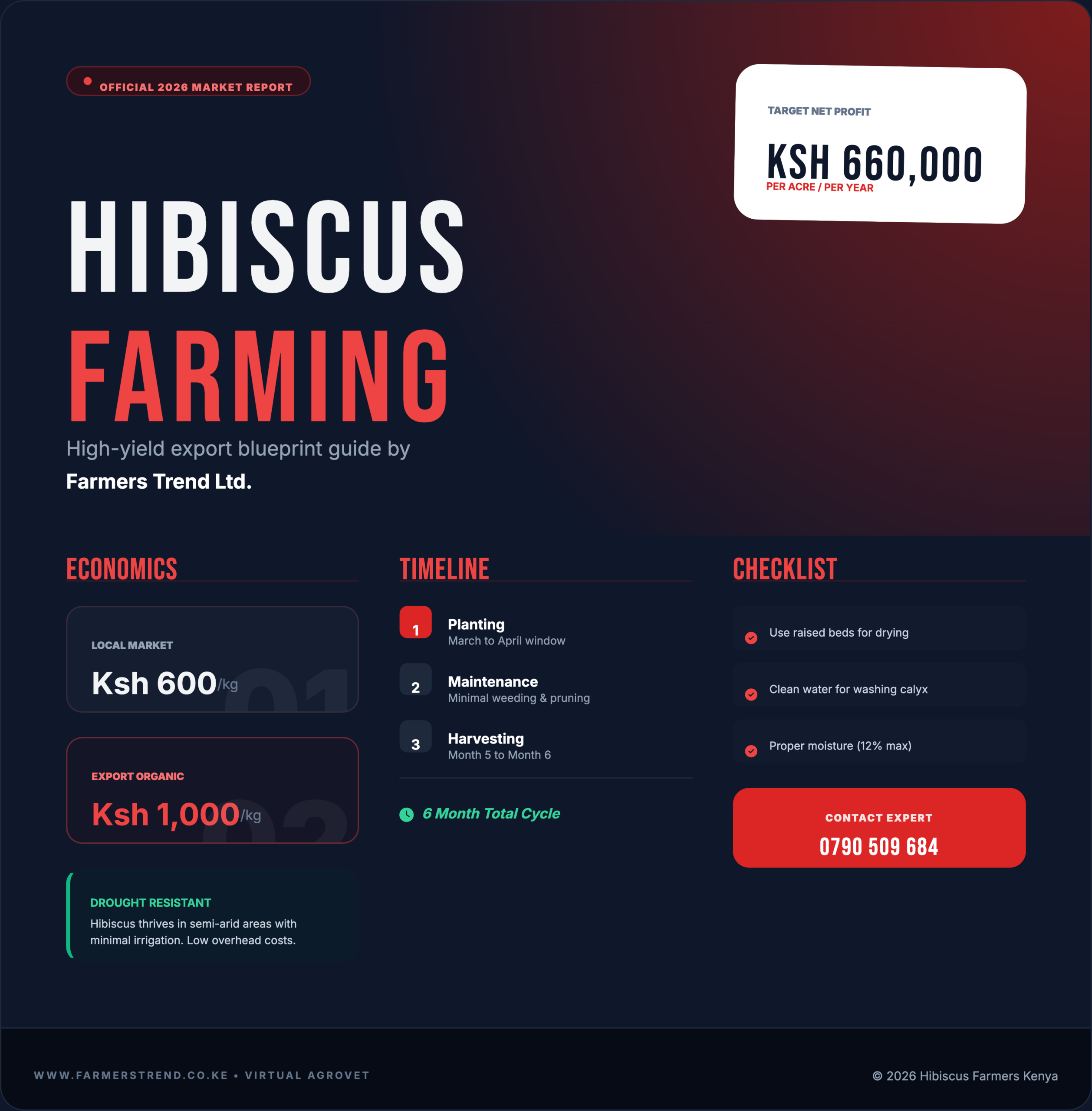
Hibiscus farming in Kenya offers farmers a high-value crop with low production costs and strong market demand. Known scientifically as Hibiscus sabdariffa and commonly called Roselle, this plant produces striking red calyces that are dried and used in teas, juices, jams, herbal remedies, and cosmetics. Countries like Sudan, Nigeria, and Thailand have grown hibiscus as a major export commodity for decades. Kenya, with its tropical climate, fertile soils, and strategic location, has conditions suited for this crop.

The numbers make hibiscus farming in Kenya attractive for both smallholder and commercial farmers. A well-managed acre yields 800 to 1,200 kilograms of dried calyces annually. At local wholesale prices of 300 to 600 shillings per kilogram, gross revenue reaches 240,000 to 720,000 shillings per acre. With production costs of 40,000 to 60,000 shillings per season, net profit ranges from 200,000 to 660,000 shillings annually. Export markets pay higher prices, with organic dried calyces fetching 800 to 1,000 shillings per kilogram.
One advantage of hibiscus farming in Kenya is its low production cost. Unlike vegetables such as tomatoes or onions that require constant spraying, heavy fertilizer application, and expensive irrigation systems, hibiscus is a hardy plant. It grows well in tropical and subtropical climates and tolerates poor soils where other crops often fail. It requires less fertilizer and, once established, performs well with minimal watering. This makes hibiscus ideal for farmers working on marginal land or those wanting to diversify without heavy financial risk.
This guide by Farmers Trend Ltd. provides everything you need to know about commercial hibiscus farming in Kenya. You will learn about botanical requirements, variety selection, cultivation techniques, pest management, harvesting protocols, and financial projections. The information comes from successful growers and agricultural research stations across the country.
Industry Overview and Market Potential for Hibiscus Farming in Kenya
The 2026 status of the herbal tea market shows strong and growing demand for hibiscus products. The Kenyan herbal beverage market continues expanding, driven by global demand for natural health products. Major processors now offer pure hibiscus tea bags, highlighting the commercial potential of locally grown hibiscus.
How profitable is hibiscus farming in Kenya? The demand for dried calyces continues rising. Fresh hibiscus sells for 50 to 80 shillings per kilogram, while dried petals fetch up to 1,250 shillings per kilogram in premium markets. This price difference creates opportunities for farmers who invest in proper drying and processing.
Hibiscus benefits extend beyond direct sales. The plant’s calyces are rich in vitamin C and antioxidants, making them popular in health-conscious markets. Studies indicate that hibiscus tea helps manage blood pressure and cholesterol, adding to its appeal. Local processors seek consistent supply for blending with other herbs. Export markets in Europe, the Middle East, and North America pay premium prices for certified organic product.
The organic farm Kenya movement has gained momentum, with more farmers seeking certification to access premium markets. Hibiscus is well-suited for organic production because it tolerates pest pressure without heavy chemical inputs. Farmers Trend Ltd supports this movement by supplying certified seeds and organic inputs through their Virtual Agrovet platform.
Botanical Profile and Lifecycle for Hibiscus Farming in Kenya
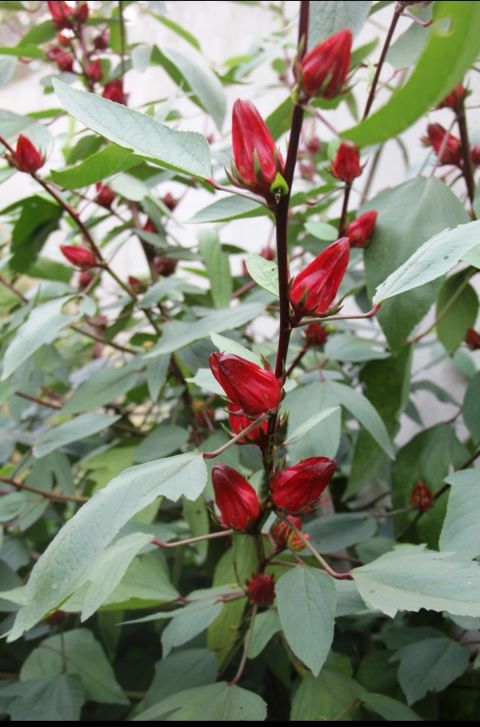
The commercial species for hibiscus farming in Kenya is Hibiscus sabdariffa. This species produces the fleshy red calyces used for tea and food products. Other hibiscus species are grown as ornamentals and do not produce harvestable calyces. Distinguishing between these is essential for commercial success.
How long hibiscus takes to grow depends on variety and growing conditions. From seed to first harvest takes approximately 120 to 180 days. The plant follows a seasonal pattern, with vegetative growth in the first 2 to 3 months, flowering at 3 to 4 months, and calyx development over the following 2 months.
How many days will it take to grow a hibiscus plant from seed to first harvest? Under good conditions with adequate moisture and warmth, farmers harvest at 150 to 180 days. Cooler temperatures or water stress extend this timeline.
The lifespan of a hibiscus plant in commercial production is typically one season. While plants can live longer in perennial settings, commercial growers treat hibiscus as an annual crop. New planting each season ensures uniform harvest and allows variety changes based on market demand.
How many times a year does a hibiscus plant bloom? In tropical conditions, hibiscus flowers over several weeks. The main flowering period lasts 4 to 6 weeks, with calyces maturing progressively. This extended flowering allows multiple harvest passes through the field.

Cultivation Strategy and Timing for Hibiscus Farming in Kenya
Hibiscus farming in Kenya requires understanding the ideal tropical climate conditions. The plant grows best in warm areas with temperatures between 20°C and 35°C. It tolerates higher temperatures with adequate moisture but cannot handle frost.
What month is best to plant hibiscus? The start of the long rains in March to April is ideal. This timing allows plants to establish with natural rainfall before flowering during the drier months. Short rains planting in October also works in areas with reliable moisture.
How to get hibiscus to grow fast starts with proper soil preparation. Hibiscus prefers well-drained loamy soils with pH between 5.5 and 7.0. Deep ploughing to 30 centimeters allows roots to develop fully. Incorporate 10 to 15 tons of manure per acre during land preparation.
Spacing determines plant development and ease of harvest. For commercial hibiscus farming in Kenya, spacing of 1 meter by 1 meter gives 4,000 plants per acre. This spacing allows each plant enough room to branch and produce multiple calyces. Closer spacing of 75 centimeters by 75 centimeters increases plant count but may reduce individual plant yield.
Do hibiscus plants grow quickly under Kenyan conditions? Growth rate depends on temperature, moisture, and soil fertility. During warm, wet months, plants grow rapidly, reaching 1 to 2 meters in height by flowering. Cool or dry conditions slow growth significantly.
Plant seeds directly in the field or transplant from nursery. Direct seeding is simpler but requires more seed and careful weed management. Transplanting gives more uniform stands but requires nursery labor. Plant at 2 to 3 centimeters depth with 2 to 3 seeds per hole, thinning to one strong plant after emergence.

Technical Management and Maintenance for Hibiscus Farming in Kenya
Daily care for hibiscus farming in Kenya focuses on consistent moisture and weed control. The first month after planting is critical for establishment. Keep the field weed-free and maintain adequate soil moisture.
How often should you water hibiscus? During dry periods, water every 3 to 5 days depending on soil type. Sandy soils need more frequent watering than clay soils. Drip irrigation is most efficient, delivering water directly to roots while keeping foliage dry. Consistent moisture during flowering and calyx development improves yield and quality.
What fertilizer is best for hibiscus? Low phosphorus, high potassium formulas promote flowering and calyx production. Apply NPK 10:10:20 or similar at 100 kilograms per acre at planting and again at flowering. Potassium is especially important for calyx development and quality.
Avoid excess nitrogen, which promotes leaf growth at the expense of flowers and calyces. Organic growers can use compost tea and foliar feeds to supplement nutrition. Wood ash provides potassium at low cost.
What not to plant with hibiscus matters for disease management. Avoid planting other malvaceous crops like okra or cotton nearby, as they share pests and diseases. Good companions include legumes that fix nitrogen and provide ground cover.
The plant that gives 12 months of flowers refers to perennial ornamental hibiscus, not commercial Roselle. In tropical conditions with pruning, some hibiscus varieties bloom year-round. For Hibiscus sabdariffa, flowering is seasonal, triggered by day length and rainfall patterns. Commercial production follows one main harvest period.

Challenges, Pests, and Disadvantages in Hibiscus Farming in Kenya
What are the common problems with hibiscus bushes in commercial production? Aphids, mealybugs, and root rot top the list. Regular scouting catches problems early.
Aphids cluster on new growth and leaf undersides. They suck sap and transmit viruses. Heavy infestations stunt plants and reduce yield. Control with neem oil or insecticidal soap. Encourage natural predators like ladybugs.
Mealybugs appear as white cottony masses on stems and leaves. They weaken plants and excrete honeydew that promotes sooty mold. Control with appropriate insecticides or by introducing natural enemies. Prune and destroy heavily infested branches.
Root rot results from waterlogged soils or poor drainage. Affected plants wilt and die. Prevention through proper site selection and raised beds is essential. Avoid overwatering and ensure good drainage.
What are the disadvantages of hibiscus plants in a commercial setting? Harvest labor is the main challenge. Calyces must be picked by hand, and the harvest window lasts several weeks. Labor costs during peak season can reach 30 to 40 percent of total production costs.
Is hibiscus a high maintenance plant? No, compared to vegetables like tomatoes or capsicum, hibiscus requires less input. It tolerates poorer soils and needs fewer sprays. However, harvest labor requirements are significant and must be factored into planning.
Harvesting, Value Addition, and Financials for Hibiscus Farming in Kenya
The harvest process for hibiscus farming in Kenya involves collecting the calyx rather than the petal. After flowers fade, the calyx swells and turns bright red. Harvest when calyces are plump and fully colored but before they become woody.
Harvest by hand, picking individual calyces or cutting entire branches. Remove the green seed capsule from the center of each calyx. This step is essential for quality and must be done promptly after harvest.
Drying transforms fresh calyces into marketable product. Spread calyces in a single layer on clean mats or drying racks. Sun drying takes 4 to 7 days depending on weather. Turn regularly for even drying. Properly dried calyces have 10 to 12 percent moisture content and store for months.
Value addition through cleaning, grading, and packaging increases returns. Remove discolored or damaged calyces. Grade by size and color for premium markets. Package in food-grade bags or containers with proper labeling.
How much is hibiscus per kg in Kenya in 2026? Dried organic calyces wholesale for 400 to 700 shillings per kilogram. Retail prices reach 800 to 1,200 shillings per kilogram in health food stores and supermarkets. Fresh calyces sell for 50 to 80 shillings per kilogram to processors.
Export prices for certified organic hibiscus range from 2.50 to 4.00 US dollars per kilogram FOB Mombasa. European and North American buyers require GlobalGAP or organic certification. Farmers Trend Ltd assists farmers with certification pathways.

Hibiscus Variety Comparison Matrix
| Variety | Type | Calyx Color | Yield per Acre | Best Use | Growth Period |
|---|---|---|---|---|---|
| Hibiscus sabdariffa (Red) | Roselle | Deep red | 800-1,200 kg dried | Tea, juice, export | 150-180 days |
| Hibiscus sabdariffa (White) | Roselle | Pale red | 700-1,000 kg dried | Local markets | 150-180 days |
| Hibiscus rosa-sinensis | Ornamental | Various | None | Landscaping | Perennial |
| Kenaf | Fiber | Green | Fiber only | Cordage, paper | 120-150 days |
2026 Hibiscus Production Cost-Benefit Table
| Cost Item | Amount (KSh) |
|---|---|
| Seeds (2 kg at KSh 2,000 from Farmers Trend Ltd) | 4,000 |
| Land preparation | 8,000 |
| Manure (10 tons) | 15,000 |
| Fertilizers | 10,000 |
| Pest control materials | 5,000 |
| Labor (planting, weeding, harvest) | 60,000 |
| Drying and processing labor | 15,000 |
| Packaging materials | 8,000 |
| Certification (organic/GlobalGAP) | 25,000 |
| Total Costs Per Acre | 150,000 KSh |
| Yield Level | Dried Yield (kg) | Price/kg | Gross Revenue | Net Profit |
|---|---|---|---|---|
| Conservative | 800 | 400 | 320,000 | 170,000 |
| Good Management | 1,000 | 500 | 500,000 | 350,000 |
| Excellent | 1,200 | 600 | 720,000 | 570,000 |
| Export Organic | 1,000 | 800 | 800,000 | 650,000 |
Hibiscus Farming in Kenya for Organic Markets
The organic market for hibiscus continues growing. European buyers seek certified organic product with traceability from farm to consumer. Farmers Trend Ltd supports farmers seeking organic certification through their network of inspectors and advisors.
Organic production requires using certified organic seeds, natural fertilizers, and biological pest control. Farmers Trend Ltd supplies organic-certified hibiscus seeds through their Virtual Agrovet platform. Their seeds are tested for purity and germination rates.
The certification process takes 2 to 3 years for full organic status. During this transition, farmers can sell at conventional prices while building soil health and production systems. Exporters often assist with certification costs in exchange for supply contracts.

The Farmers Trend Ltd Advantage
Farmers Trend Ltd is the premier source for certified hibiscus seedlings and seeds in Kenya. Their seeds are tested for genetic purity and germination rates, ensuring the best start for your hibiscus farming in Kenya operation. The nursery maintains mother blocks of proven varieties to maintain quality.
Contact Farmers Trend Ltd at 0790509684 to place orders or inquire about availability. The Virtual Agrovet platform allows you to order online with delivery arranged to your farm. Browse varieties, check prices, and place orders at any time.
Farmers Trend Ltd provides agronomic advice through their platform. You can ask questions about planting, care, and pest management. Their team of experts responds promptly with practical solutions. This ongoing support increases your chances of success.
For farmers seeking organic certification, Farmers Trend Ltd connects you with inspectors and provides guidance on compliance. Their network of organic buyers helps farmers access premium markets.
Next Step
Hibiscus farming in Kenya offers one of the most accessible opportunities in high-value horticulture. The crop matures in 150 to 180 days. Yields reach 1,200 kilograms of dried calyces per acre with good management. Prices range from 400 to 800 shillings per kilogram depending on market and certification. Net profits exceed 500,000 shillings per acre.
The 2026 planting windows approach. March to April with the long rains and October to November with the short rains offer ideal conditions. Your seeds are waiting at Farmers Trend Ltd nurseries. The Virtual Agrovet platform makes ordering simple.
Start with soil testing to know your pH and nutrient levels. Choose Hibiscus sabdariffa for commercial production. Prepare your land thoroughly with proper drainage. Install irrigation for consistent moisture during dry periods.
Order your certified hibiscus seeds from Farmers Trend Ltd through their Virtual Agrovet platform or call them at 0790509684.
The farmers building profitable enterprises with hibiscus started exactly where you are now. They learned, they planned, and they took action. You can do the same.
Your hibiscus farming in Kenya journey begins today. The market is waiting. The profits are real. The time to act is now.
https://farmerstrend.co.ke/trending/hibiscus-farming-in-kenya-2026-profit-guide/https://farmerstrend.co.ke/wp-content/uploads/2026/03/hibiscus-farms-in-kenya.jpeghttps://farmerstrend.co.ke/wp-content/uploads/2026/03/hibiscus-farms-in-kenya-150x150.jpeg# TrendingHerbs Farming In KenyaHibiscus FarmingDried hibiscus price per kg Kenya 2026,Farmers Trend Ltd hibiscus seeds,Herbal tea farming Kenya,Hibiscus calyx processing Kenya,hibiscus export market kenya,Hibiscus farming profit per acre,Hibiscus harvest season Kenya,Hibiscus production costs Kenya,hibiscus sabdariffa kenya,Hibiscus seeds Kenya price,Hibiscus yield per acre Kenya,How long hibiscus takes to grow,Organic hibiscus farming Kenya,Roselle farming Kenya,Virtual agrovet hibiscusHibiscus Farming in Kenya: The 2026 Blueprint for Roselle Exports and Local Profits Hibiscus farming in Kenya offers farmers a high-value crop with low production costs and strong market demand. Known scientifically as Hibiscus sabdariffa and commonly called Roselle, this plant produces striking red calyces that are dried and used...FarmersTrendjohn doefarmerstrend@gmail.comAdministratorFarmers Trend Ltd.


Quite educative!is there an arrangement for the farmers where after harvest, the produce will only be picked by the buyers from the farm? That the farmer will not be struggling to find the market?