Kenya and Israel Launched a Goat and Sheep Breeding Training Centre in Kiambu to Boost Breeding, Productivity: 7 Best Gains for Your Flock
The goat and sheep breeding training centre in Kiambu launched on Monday, 23 November 2026. Kenya and Israel set up the centre at 27 Farms in Ciada, Kiambu County. You learn how to breed, feed and manage dairy goats and sheep with modern Israeli farming methods, and you stay in Kenya to do so.
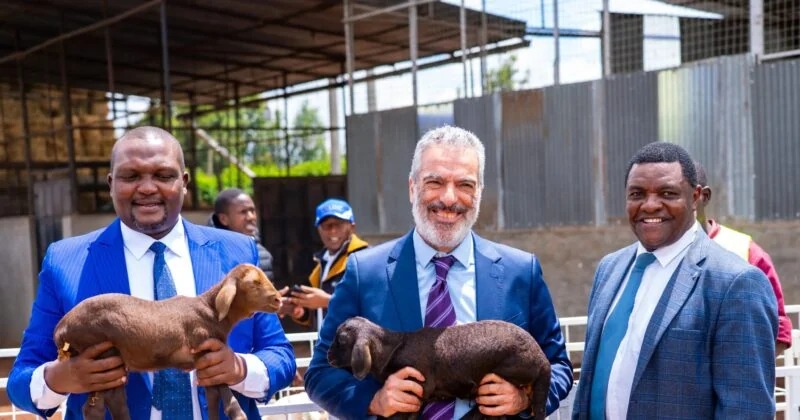
MASHAV, Israel’s Agency for International Development Cooperation, backs the training. Israeli Ambassador Gideon Behar said the centre is the first Israeli-supported training centre in Kenya dedicated to goats and sheep. Training starts in early 2027.
This article gives you the launch facts, the reasons Kenya needs the centre and seven gains you expect. You also get breeding basics for dairy goats and sheep, a worked income example and a plan to prepare before the first session.
What Kenya and Israel Launched at 27 Farms in Ciada
Israel’s embassy in Kenya, working through MASHAV, partnered with 27 Farms to launch the training centre on Monday, 23 November 2026. The farm sits in Ciada, Kiambu County. Capital FM and News9 reported the launch.
Ambassador Gideon Behar officiated. Eytan Hatzor, MASHAV Director and Representative in Kenya, spoke at the launch. Jacqueline Gathura, Managing Director of 27 Farms, also spoke. She leads the farm with her partner Evans.
John Ngigi Kuria, Kiambu County Chief Officer in charge of Livestock, represented Governor Kimani Wamatangi. Peter Njenga represented Jonathan Mueke, Principal Secretary of the State Department for Livestock. County and national government both took part.
What the centre teaches
The centre teaches modern Israeli methods for raising dairy goats and sheep. You learn livestock nutrition, feed production, animal management and sustainable farming. You learn on the farm, with live demonstrations, and you do not travel to Israel.
Government agricultural staff also attend. Extension officers who train farmers in your ward gain the same practical knowledge you gain.
The feed mill and nutrition centre
27 Farms runs a small-scale feed mill and a nutrition centre. With MASHAV support, the farm brought in a high-capacity machine. Officials expect the farm to grow into a regional feed centre.
Hatzor described a total mixed ration. This method combines concentrate and fodder in one feed, so every mouthful carries the same nutrients.
The animals on the farm
27 Farms keeps dairy goats and has worked on improving their genetics. About two years ago, the farm introduced the Red Master, a sheep raised for meat. Officials hope the Red Master becomes a widely established breed in Kenya.
When training starts and what you pay
Gathura said training starts in a few weeks, heading into the new year. Capital FM reports early 2027. The organisers have not published fees or dates. Call 27 Farms or the Embassy of Israel in Kenya before you plan your travel and your budget.
Why Kenya Needs a Goat and Sheep Breeding Training Centre
Goats and sheep carry a large share of Kenya’s livestock. The 2019 census counted 27.7 million goats and 17.1 million sheep, close to 45 million animals, according to the Kenya National Bureau of Statistics. At the launch, Ambassador Behar put the national number of sheep and goats at about 65 million. Pastoralists and smallholders keep most of these animals, and most live in arid and semi-arid lands.
Numbers do not pay your bills. Yield per animal does. A survey published in 2020 reported an average of 1.26 litres of milk per dairy goat per day. The range ran from 0.5 to 3.5 litres. The farms kept 4.5 goats on average. Toggenburg crosses made up 45.9 percent of the goats, Kenyan Alpine crosses 29.5 percent and Saanen crosses 17.4 percent.
A separate survey of 147 households in Homa Bay, Nyeri and Meru counties recorded higher averages for purebred-type herds. The table shows the figures.
| Group | Average milk per goat per day | Where the figure comes from |
|---|---|---|
| Dairy goat keepers, all breeds and crosses | 1.26 litres (range 0.5 to 3.5) | Survey published in 2020 |
| Toggenburg | 1.70 litres | Survey of 147 households |
| Alpine | 1.83 litres | Survey of 147 households |
| Saanen | 2.52 litres | Survey of 147 households |
Breed guides list higher potential. A Nation report quotes three to five litres a day for the Saanen under good management. The gap between 1.26 litres and three litres comes from breeding, feeding and management. The goat and sheep breeding training centre in Kiambu trains you on all three.
The Central region, which includes Kiambu, counted 531,209 goats and 664,237 sheep in the 2019 livestock population table. Each of those animals either pays for its feed or costs you money. Better breeding decides which.
The government already invests in goat genetics. The Kenya Animal Genetic Resources Centre runs the Goat Artificial Insemination Centre at Ndomba in Kirinyaga County. A 2020 report in The Star said the centre would produce 500,000 doses of goat semen a year. Genetics alone do not raise yield. A farmer who buys semen still needs feed, housing, records and health care. The Kiambu centre trains farmers on those parts.
Sheep face a similar gap. More than 60 percent of Kenya’s sheep are native and live under extensive systems, according to a published study. Native sheep survive drought well. They often grow slowly. Better breeding choices close part of the gap without costing you the hardiness.
Seven Ways the Goat and Sheep Breeding Training Centre in Kiambu Helps You
The centre offers seven gains. Each gain links to a practical step you take on your own farm.
1. Better genetics for your does and ewes
Breeding starts with the animals you keep. A weak doe passes weak traits to her kids. The centre teaches you to select does, ewes, bucks and rams by traits you measure. These traits include milk per day, kidding rate, growth to weaning and adult size.
27 Farms has worked on the genetics of its dairy goats, so you see animals chosen with those traits in mind. Israel gives you a reference point too. MASHAV describes an Israeli sector of about 2,400 farms managing around 520,000 sheep and goats, supported by genetic improvement programmes, research and advisory services. The Kiambu centre brings this experience to your breeding plan.
2. Feeding to match your breeding goal
Feed decides how much of your breeding gain shows up in the milk jug. Researchers name feeding as a constraint on goat milk yield in Kenya, because Napier grass and similar fodder supply limited energy and protein.
A trial with lactating Toggenburg goats on a Napier grass diet found 300 grams of concentrate per goat per day gave the highest daily milk yield. You learn how to set a feed plan from numbers like these.
The feed mill at 27 Farms makes the lesson practical. You see a total mixed ration, and you learn to weigh each part. You stop feeding by the handful.
3. Training in Kenya, with no flight to Israel
MASHAV trains Kenyans in Israel. MASHAV ran a 12-day international course on small ruminant farming in 2025. MASHAV also runs an 11-month agricultural internship. MASHAV covers tuition and accommodation, and students pay their own flights. Kenya has sent 210 trainees on the 11-month programme.
Those places are limited and the travel costs money. The centre in Kiambu County brings small ruminant training to a farm you reach by road.
4. Live demonstrations you see and repeat
Reports describe practical, hands-on training with live demonstrations at the farm. Watching a method on a working farm shows you the detail a page of text leaves out.
Ask the organisers which demonstrations run in each session. Write down the steps. Repeat them at home within one week, while you still remember the order.
5. Records to guide every breeding decision
Records turn opinion into evidence. You remember your best doe. You forget the three does who gave half her milk.
Record the birth date, birth weight, number of kids or lambs, weaning weight, mating date and kidding date for every animal. Record milk per day for every doe in milk. Researchers use birth weight, weaning weight and yearling weight to rank lambs. You use the same three weights.
A doe with twins beats a doe with one kid. Your records show you which does deliver twins year after year.
6. Health and biosecurity habits to cut losses
MASHAV’s small ruminant course in Israel lists health and disease management, biosecurity, reproductive technologies and sustainable practices among its topics. Ask 27 Farms which of these topics the Kiambu sessions cover.
You start with three habits now. Quarantine every new animal for three weeks before the animal joins your flock. Give newborn kids and lambs colostrum within hours of birth. Follow a deworming and vaccination programme set by your veterinary officer.
7. More income and better food for your household
Officials told News9 the centre aims to raise farmer income. Women farmers gain knowledge for income, family nutrition and health. The centre also aims to help farmers in arid and semi-arid areas cope with drought, and to show government where the sector has gaps. These aims match Sustainable Development Goal 2, which targets food security.
A doe giving more milk feeds your family first and sells the surplus. A faster-growing ram reaches market weight sooner, so you feed him for fewer months.
Who Gains Most From the Kiambu Training
Dairy goat keepers gain first. If your does average 1.26 litres a day, you have the most room to improve. Better breeding stock, a balanced ration and records lift yield without extra land.
Sheep farmers in drier counties gain next. Red Maasai flocks carry the hardiness you need in drought. The training shows you how to add growth through selection and sire choice, and how to feed lambs for market.
Young farmers gain a skill with a clear market. Kiambu County borders Nairobi, so buyers of milk, breeding stock and lambs sit close to the centre.
Women farmers gain directly. Officials named women farmers as a target group for income, family nutrition and health.
Extension officers gain a place to practise. They return to your ward with methods they have seen on a working farm. Farmer groups gain a shared plan. A group training together picks one buck, one feed formula and one record format.
Dairy Goat Breeding Basics You Apply Now
You do not wait for 2027 to improve your breeding. Start with the basics below. The trainers at the centre refine them for your farm.
Match the breed to your altitude
Kenya’s common dairy goat breeds include the Saanen, Toggenburg, Alpine and Anglo-Nubian. The British Alpine performs best in highland and medium-altitude zones where temperatures stay moderate. Much of Kiambu County sits in this zone. Galla goats, also called Boran or Somali goats, suit hotter and drier areas.
Pick the breed for your altitude, your feed supply and your buyers. Do not pick a breed for the colour of its coat.
Follow a breeding calendar
| Event | Typical timing |
|---|---|
| First mating | About seven months, when the doe has grown well |
| Pregnancy | About five months |
| Peak milk | Four to six weeks after kidding |
| Lactation length | About 284 days with good feeding |
| Dry period | About two months before the next kidding |
Breeding a doe at seven months supports better milk production later, according to a Standard livestock column. Mating a doe before she grows enough costs you growth and milk.
Rotate your bucks
Never mate a buck to his own daughters. Swap bucks with a neighbour every two years, or buy a new buck from a different farm. A farmer group shares the cost of one good buck and changes bucks on a schedule.
Artificial insemination gives you another route to better genetics. President William Ruto commissioned the Goat Artificial Insemination Centre at Ndomba in Kirinyaga County on 2 April 2025. The centre belongs to the Kenya Animal Genetic Resources Centre. Ask your county livestock office how to access semen.
Feed the doe in milk
A doe in milk needs more feed than a dry doe. Napier grass forms the base in many Kenyan zero-grazing units. Kenyan researchers tested Leucaena leaf hay with concentrate on a Napier grass diet, so add a protein source such as Leucaena to your plan. Start with 300 grams of concentrate per goat per day, as the Toggenburg trial found, and adjust with your trainer’s advice.
Give clean water at all times. A goat in milk drinks more than you expect.
Grow three fodder sources
One fodder crop leaves gaps in your feed plan. Grow a grass for bulk, a legume tree or shrub for protein and a hay or silage reserve for the dry months. Napier grass fills the first role. Leucaena and Calliandra fill the second. Cut and dry surplus grass in the wet season so your does eat well in the dry months.
Chop fodder before feeding, so goats waste less. Remove leftovers each day, because stale feed lowers intake.
Care for the doe at kidding
A doe carries her kids for about five months. Dry her off about two months before kidding. Raise her feed in the last six weeks of pregnancy, because the kids grow fastest then.
Clean the kidding pen. Dip each kid’s navel in iodine. Make sure each kid drinks colostrum within the first hours. Weigh each kid at birth and record the weight beside the doe’s number.
Sheep Breeding Basics: Red Maasai, Dorper and Crosses
Sheep farmers in Kenya choose between hardiness and growth. Researchers have studied the choice for years, and their findings help you decide.
The Red Maasai is an indigenous breed known for adapting to arid and semi-arid areas. Farmers prefer the breed for maternal and adaptive traits. The Red Maasai tolerates drought and trypanosomes, and ranks lower than the Dorper for body weight in earlier studies.
Kenya first imported the Dorper from South Africa in 1952 for growth, carcass quality and mothering ability. Many farmers crossed Dorper rams with Red Maasai ewes. Red Maasai sheep are declining among their traditional keepers because of this crossbreeding.
| Sheep type | Main strengths | What to watch | Best use on your farm |
|---|---|---|---|
| Red Maasai | Drought tolerance, trypanosome tolerance, maternal traits | Buyers paid 8 to 13 percent less per kilogramme in one study | Ewe flock in dry or tough areas |
| Dorper | Growth, carcass quality, mothering ability | Needs a steady feed supply to show growth | Terminal sire over Red Maasai ewes |
| Red Master | Raised for meat at 27 Farms | Introduced about two years ago, so ask for performance records | Watch the training sessions before you invest |
A study at the ILRI station in Kapiti Plains ranked crossbred lambs highest for meat production. The authors suggested the Dorper as a terminal sire on Red Maasai ewes. A terminal sire produces lambs you sell, and you do not keep his daughters for breeding.
A 2023 on-station study found Red Maasai lambs grew faster after weaning than Dorper lambs. Both breeds have strengths. Your feed, your buyers and your rainfall decide which one pays on your farm.
Weigh your lambs at birth, at weaning and at nine months. Keep the ewes whose lambs grow fastest and raise twins. Sell the rest.
Care for the ewe at lambing
A ewe carries her lambs for about five months. Feed her well in the last weeks before lambing and keep the pen dry. Check every lamb drinks colostrum, dip the navel and weigh the lamb. Record the ewe’s number, the ram’s number and the number of lambs born.
How Israel and Kenya Built This Partnership
The Kiambu centre grows from a long relationship. Kenyan trainees attended courses in Israel before Kenya’s independence. Israel and Kenya share semi-arid climates, which helped agricultural knowledge move between them. Diplomatic ties resumed in 1988, and Israeli experts began holding on-the-spot courses in Kenya.
Israel set up MASHAV in 1958 to share expertise in agriculture, water, health and education with developing countries. You see its work across Kenya. The Israel-Kenya Don Bosco Agricultural Innovation and Technology Centre launched in Embu County in 2023. An Israeli-backed onion model farm launched at Kinama in September 2025.
MASHAV supports its alumni to apply what they learn. Many graduates go on to establish farms, agribusinesses and training centres across Kenya. The Embassy of Israel in Kenya publishes the history of the partnership on its website.
The Kiambu centre follows the same pattern. Israel supplies method and equipment support. A Kenyan farm hosts the training. County and national government officials take part.
What Better Breeding Adds to Your Income: A Worked Example
Numbers help you decide. The example below uses the survey milk yields from earlier, a 284-day lactation and a farm price of Sh100 a litre. Your price differs, so replace Sh100 with the price you receive.
| Doe yield per day | Milk per lactation (284 days) | Income at Sh100 a litre | Income from 10 does |
|---|---|---|---|
| 1.26 litres (survey average) | 358 litres | Sh35,784 | Sh357,840 |
| 2.52 litres (Saanen survey average) | 716 litres | Sh71,568 | Sh715,680 |
| 3.00 litres (breed guide, good management) | 852 litres | Sh85,200 | Sh852,000 |
Moving a doe from 1.26 litres to 2.52 litres adds Sh35,784 in a lactation. Feed costs rise too. At 300 grams of concentrate a day for 284 days, one doe eats 85.2 kilogrammes. At Sh50 a kilogramme, the concentrate costs Sh4,260.
Charge the full concentrate cost against the extra milk and each doe still adds about Sh31,500. Ten does add about Sh315,000. Your actual gain depends on your feed prices, milk price and doe health.
The same logic applies to sheep. A ewe with twins gives you two lambs to sell. A ram reaching market weight a month sooner saves you a month of feed. Track both in your records.
How to Prepare Before Training Starts in 2027
You have a few weeks and a few months. Use them.
First, call 27 Farms or the Embassy of Israel in Kenya for dates, fees and places. Ask whether you attend alone or with a farmer group. Ask which topics each session covers.
Next, count your animals and record 30 days of baseline numbers. Record milk per doe per day, kidding dates, kid and lamb deaths and feed use. You compare these numbers with your results after training.
Then set one clear goal. Choose milk, meat or both. A goat and sheep breeding training centre in Kiambu teaches many topics, and a clear goal tells you which ones to focus on.
Plan your fodder. List three fodder sources you grow or buy, such as Napier grass, Leucaena and hay. A trainer cannot fix a feed gap if your farm grows no fodder.
Check your housing. A dairy goat house stays dry and free of draughts. Raise the floor, repair leaks and give each animal space.
Finally, bring a neighbour. A farmer group splits travel costs, shares a good buck or ram and checks each other’s records. Groups also ask more questions than one person asks.
Questions to Ask 27 Farms Before You Book
Ask about dates. Ask which weeks cover dairy goats and which cover sheep.
Ask about fees and what they include. Ask whether meals, notes and materials come with the fee.
Ask about group bookings. Ask how many places each group receives.
Ask about breeding stock. Ask whether 27 Farms sells breeding does, bucks, ewes or rams, and whether you receive records for each animal.
Ask about feed. Ask whether 27 Farms sells its total mixed ration or teaches you to mix your own on your farm.
Ask about follow-up. Ask whether trainers visit your farm after the course.
Plan Your Market Before You Breed
Decide who buys your milk, kids and lambs before you expand your flock. Milk buyers want steady supply, so a farmer group delivering together meets demand better than one household. Breeding stock buyers want records, so a buck or ram with a known birth weight and weaning weight sells for more than an animal with no history.
Kiambu County borders Nairobi, which puts you close to large buyers. Visit the buyers, ask what they pay and ask what quality they want. Then breed for those buyers.
Common Breeding Mistakes to Avoid
| Mistake | What goes wrong | Your fix |
|---|---|---|
| Mating does too young | Does stay small and kids stay weak | Wait until about seven months and good body size |
| Using one buck for years | Inbreeding raises weak kids | Swap bucks every two years |
| Feeding fodder only | Milk stays low | Add concentrate, such as 300 grams per goat per day, and water |
| Keeping no records | You keep poor animals | Record weights, milk, matings and kiddings |
| Skipping quarantine | New animals bring disease | Hold new stock apart for three weeks |
| Buying a breed for looks | The animal fails at your altitude | Match breed to altitude, feed and market |
Fix one mistake each month. Small steps add up faster than a big plan you never start.
Frequently Asked Questions
When did Kenya and Israel launch the goat and sheep breeding training centre in Kiambu?
Kenya and Israel launched the centre on Monday, 23 November 2026.
Where is the centre?
The centre sits at 27 Farms in Ciada, Kiambu County.
Who supports the training?
MASHAV, Israel’s Agency for International Development Cooperation, supports the training with the Embassy of Israel in Kenya. 27 Farms hosts the training. The Kiambu County Government and the State Department for Livestock took part in the launch.
When does training start?
Capital FM reports training starts in early 2027. The farm’s managing director said training starts in a few weeks, heading into the new year.
How much does the training cost?
Reports of the launch do not state fees. Ask 27 Farms or the Embassy of Israel in Kenya.
Does the centre teach sheep as well as goats?
Yes. The centre covers dairy goats and sheep, including livestock nutrition and feed production.
Which dairy goat breed gives the most milk in Kenya?
In a survey of 147 households, Saanen goats averaged 2.52 litres per day, ahead of Alpine at 1.83 litres and Toggenburg at 1.70 litres. Breed guides list three to five litres for the Saanen under good management.
Who attends the training?
Farmers attend. Government agricultural staff also attend to gain practical knowledge.
Build Your Flock and Your Orchard Together
The goat and sheep breeding training centre in Kiambu gives you a place to learn breeding, feeding and herd management without leaving Kenya. Your gains come from good animals, balanced feed and clear records. Start your records now, set a goal for milk or meat and call 27 Farms for dates.
Goats and sheep also feed your land. Their manure supplies nutrients to fruit trees. Keep young trees fenced, because goats browse seedlings and bark. Plant the orchard first and let the flock graze only after the trees grow tall and strong.
Farmers Trend Limited sells fruit seedlings. Choose your trees, fence them and plant them before your flock grows.
Call or WhatsApp Farmers Trend Limited on 0724 559 286 or 0790 509 684. Visit www.farmerstrend.co.ke or email info@farmerstrend.co.ke. Browse the fruit seedlings catalogue at https://wa.me/c/254790509684.
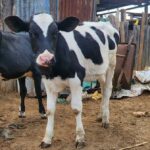
https://farmerstrend.co.ke/trending/goat-and-sheep-breeding-training/https://farmerstrend.co.ke/wp-content/uploads/2026/11/WhatsApp-Image-2026-11-26-at-12.39.32.jpeghttps://farmerstrend.co.ke/wp-content/uploads/2026/11/WhatsApp-Image-2026-11-26-at-12.39.32-150x150.jpeg# TrendingIn LivestockThe goat and sheep breeding training centre in Kiambu launched on Monday, 23 November 2026. Kenya and Israel set up the centre at 27 Farms in Ciada, Kiambu County. You learn how to breed, feed and manage dairy goats and sheep with modern Israeli farming methods, and you stay...FarmersTrendjohn doefarmerstrend@gmail.comAdministratorFarmers Trend Ltd.




Leave a Reply