Avocado Brokers in Kenya: 7 Tricks Used to Cheat Farmers and How to Protect Yourself
Avocado brokers in Kenya buy from a base of smallholders. The Star reports smallholders make up about 85 per cent of all avocado growers in the country. These farmers sell to the buyer who arrives at the gate. Some buyers pay a fair price. Others push you to harvest early, weigh the fruit without you watching, and pay far less than your avocados earn at the packhouse.

In April 2026, Agriculture Principal Secretary Paul Ronoh warned farmers against exploitative middlemen as the new export window opened. According to a Business Daily report, he said some brokers dupe farmers into harvesting early, disappear, and return when quality has dropped to offer rock-bottom prices. He said the government will act against the cartels working in rural areas.
Government action takes time. You protect your income today with four decisions. You decide when to harvest. You decide how to prove maturity. You decide who buys your fruit. You decide what goes on paper. Farmers Trend Limited wrote this article to help you make each decision with facts. You will learn the seven tricks brokers use, the Agriculture and Food Authority (AFA) rules, the prices to expect and the steps to sell with confidence.
What the Agriculture Ministry Warned About Avocado Brokers in Kenya
AFA reopened the 2025/2026 avocado export season on April 2, 2026, after fruit maturity improved in major production zones. Days later, Principal Secretary Ronoh told farmers to shun middlemen who exploit them. He said some brokers use the ignorance and desperation of rural growers to buy perishable fruit cheaply.
His description follows a clear pattern. The broker arrives early in the season with cash and a truck. The broker urges you to harvest now. The fruit leaves your farm below the maturity standard. The packhouse or the airport inspector rejects part of the load. The broker returns with a lower price for the next batch and blames quality.
The rules add pressure. KenTrade data reported by FreshPlaza shows the Horticultural Crops Directorate approved US$38.8 million in avocado exports, 33,205 tons, during the 12 weeks of the 2026 closed season. This volume represents up to one third of Kenya’s annual avocado production. Waithaka Wagura, chief executive of the Avocado Exporters Association of Kenya, confirmed an artificial shortage as the season opened. Brokers use price swings like this one to push you into quick sales.
On October 30, 2026, AFA closed the harvesting season for sea exports. The Authority found harvest volumes too low to support shipments. AFA also suspended harvesting for oil processing, according to FreshPlaza. A buyer who asks for fruit after a closure breaks the rules. Check every AFA notice before you agree to harvest.
The Price Gap Behind Avocado Brokers in Kenya
Kenya exported about 110,000 metric tons of avocados in the 2024-2025 period, valued at over KES 25 billion, according to FreshPlaza. Divide KSh 25 billion by 110 million kilograms. The answer is about KSh 227 per kilogram. Freight, packing, cold storage, inspection and exporter margins take a share of this money. Your farm gate price still sits far below the export value.
The table below shows farm gate prices reported in recent news. Prices change by season, region and grade. Use the figures as a reference when a buyer quotes you.
| Where the fruit goes | Reported price to the farmer | Period |
|---|---|---|
| Grade 1 fruit for export | Up to KSh 130 per kilogram | Second half of 2025 |
| Fruit for oil processing, all other grades | Average KSh 50 per kilogram | Second half of 2025 |
| Sold through exporters | KSh 60 to KSh 80 per kilogram | Early 2026 |
| Sold to processors | KSh 30 to KSh 50 per kilogram | Early 2026 |
| Single fruit sold around Gatundu North | KSh 5 to KSh 10 per fruit | November 2025 |
An exporter quoted by FreshPlaza reported the grade 1 and oil grade prices. Farmbiz Africa reported the processor and exporter ranges. Citizen Digital reported the Gatundu North price.
Run the numbers on 5,000 kilograms of fruit. At KSh 50 per kilogram, you earn KSh 250,000. At KSh 130 per kilogram, you earn KSh 650,000. The difference is KSh 400,000. A broker who downgrades your fruit takes this difference. Now compare the processor and exporter ranges. At KSh 30 against KSh 60 per kilogram, the same 5,000 kilograms lose KSh 150,000.
The 2026 season gives you a stronger position. An exporter quoted by Business Today called the start of the season a seller’s market for growers whose fruit meets the quality standard. Another exporter told FreshPlaza grower prices rose compared with 2025. Know these numbers before any buyer quotes you a price.
7 Tricks Avocado Brokers in Kenya Use to Cheat Farmers
Watch for these seven tricks. Not every broker uses them. A registered agent who weighs fairly, tests maturity and pays on time serves you and the exporter well. Use the tricks below to spot the buyers who do not.
Trick 1: The Early Harvest Push
The broker tells you rain will damage the fruit. The broker says another buyer arrives tomorrow. The broker says prices will fall next week. Each line has one goal. You pick before the fruit reaches maturity.
The cost is high. AFA sets a minimum of 24 per cent dry matter for export avocados. Fruit below this number faces rejection. FreshPlaza reports rejection rates for immature fruit in premium markets reach 30 per cent and cost Kenya more than KES 7.5 billion (US$57 million) a year. When a load fails, the broker lowers your price on the next load.
Stop this trick with a test. Measure dry matter on your own fruit. Pick only after the result shows 24 per cent or higher. Tell the broker the harvest date comes from your test. A serious buyer waits. A buyer who refuses to wait shows you what you need to know.
Trick 2: The Broker Who Disappears and Returns
The Principal Secretary described this trick directly. A broker agrees to collect your fruit on a set day. The truck does not come. You wait. The fruit stays on the tree past the agreed date, or sits in crates after picking. Quality drops. The broker returns and offers a low price because you have no other buyer.
You hold the weak position because you have no confirmed sale. Fix the position before you pick. Do not harvest until the buyer confirms a collection time in writing, by SMS or WhatsApp at minimum. Pick only the quantity the truck will carry on the day. Harvest in the morning. Keep crates in shade. Add a rule to your agreement. If the truck arrives more than four hours late, the price rises by an agreed amount or you sell to another buyer.
Trick 3: Buying the Whole Crop on the Tree
The broker offers a lump sum for every fruit on your trees months before harvest. You receive cash today. The broker picks when the broker chooses, grades as the broker chooses, and keeps every shilling of any price rise. Take an example. You expect 5,000 kilograms. The broker offers KSh 150,000. This equals KSh 30 per kilogram. Grade 1 export fruit reached up to KSh 130 per kilogram in late 2025.
Sell by the kilogram, by grade, after harvest. If you need cash before harvest, ask for a written advance against a price per kilogram. Join a group with access to a buyer who pays on delivery. Refuse any deal where you do not know the final price per kilogram.
Trick 4: Weighing Without Your Control
Some buyers weigh fruit on a scale you cannot read. Others buy by the heap, the sack or the count. Then come deductions for crate weight, moisture and rejects with no proof. Each deduction takes kilograms from your payment.
Control the weighing. Weigh at your farm and stand beside the scale. Use a scale verified by the Weights and Measures department. Weigh the empty crates first and write the weight down. Record gross weight, crate weight and net weight on a slip. Ask the buyer to sign the slip and take a photo of the display. Refuse any deduction without a reason on paper.
Trick 5: Mixing Fruit and Downgrading Grades
FreshPlaza reports brokers often aggregate fruit from smallholders and mix mature and immature batches to meet early demand. Your mature fruit travels with someone else’s immature fruit. The load fails inspection. Exporter margins shrink. FreshPlaza also reports licence revocations for non-compliant exporters rose 40 per cent year on year. The pressure flows back to you through lower prices and fewer buyers.
Downgrading is the second part of this trick. A broker sorts your fruit and moves good avocados to the oil grade. Oil grade averaged KSh 50 per kilogram in late 2025 while grade 1 reached KSh 130. You lose KSh 80 on each kilogram moved.
Sort in front of the buyer. Agree grade standards in writing before sorting starts, including size, skin condition and dry matter. Photograph each crate by grade. Keep a sample of good fruit as evidence. Ask to take rejected fruit home so you sell the fruit to a processor yourself.
Trick 6: Delayed Payment and Small Deposits
The broker loads the truck, pays a small deposit and promises the balance after the exporter pays. Days become weeks. You carry the risk for the whole delay. A broker who delays payment knows you need cash for labour, inputs and school fees. Some farmers accept a price cut to get paid sooner.
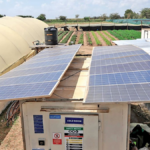
Set payment terms before harvest. Ask for payment on collection by M-Pesa or bank transfer. If the buyer needs time, agree on a date no later than seven days after collection and write the date into the contract. Ask for a deposit of at least half. SokoFresh runs solar-powered cold storage in Gatundu and, according to The Star, farmers who supply the company receive instant payments. Use this standard when you compare buyers.
Trick 7: Unregistered Agents and No Paperwork
AFA authorises only marketing agents with valid registration permits to transact in export avocados, as Kenyans.co.ke reported. In 2026, exporters had to submit lists of their registered Horticultural Produce Marketing Agents or suppliers by March 30 to support traceability. A broker without a permit does not appear on an exporter’s list. You have no one to call when payment fails.
Check the buyer before you load a single crate. Ask to see the permit, the national ID and the name of the exporter the broker supplies. Photograph the permit and the vehicle number plate. Call the exporter to confirm the relationship. Refuse trucks without crates. AFA warned in a March 2026 notice stating exporters or agents found transporting or receiving avocados without crates, or on open pick-up trucks, face revocation of their registration or licence.
Why Early Harvest Costs You More Than Avocado Brokers in Kenya Admit
Dry matter is the solid content of the fruit. The figure rises as the avocado grows, and growers use the figure to judge maturity. In 2022, AFA raised the minimum dry matter for exported avocados to 24 per cent. Before this change, the minimums stood at 20 per cent for Fuerte and 21 per cent for Hass, according to Food Business Middle East and Africa.
| Measure | Figure |
|---|---|
| Current minimum dry matter for export | 24 per cent |
| Earlier minimum for Hass | 21 per cent |
| Earlier minimum for Fuerte | 20 per cent |
| Rejection rate for immature fruit in premium markets | Up to 30 per cent |
| Yearly loss from rejection | Over KES 7.5 billion (US$57 million) |
| Rise in exporter licence revocations | 40 per cent year on year |
Every control point checks maturity. Inspectors from the Horticultural Crops Directorate verify oil content at the Jomo Kenyatta International Airport cargo terminal and reject consignments below the threshold. All fresh export avocados face mandatory packhouse inspection from April 7, 2026, and exporters apply at least three days before shipment.
Kakuzi, a large Kenyan grower, exports at a minimum of 24 per cent dry matter and reaches a maximum maturity of 35 per cent by mid-September, according to a 2023 Capital FM report. Maturity differs by region, so test your own block.
Harvest below 24 per cent and your fruit loses the export price. The fruit goes to oil or to the local market. The broker keeps the margin by blending your fruit into mixed loads. You keep the loss. Waiting for a passing test result protects your price. Picking early costs you up to KSh 80 on every kilogram.
How to Test Avocado Dry Matter on Your Farm
You need a kitchen scale accurate to one gram, a knife, a tray and an oven or microwave. The test takes about an hour. Run the test before every buyer visit.
Collect your sample early in the morning. A New Zealand research sampling protocol advises 21 fruit from at least seven trees spread across the block. Walk the block in a diagonal line so the sample covers different rows. Avoid trees at the edge, near a stream or in a wet spot.
Cut each fruit. Remove the skin and the seed. Slice the flesh thin and mix all slices together. Weigh a portion and write the weight down. Dry the portion in an oven or a microwave until the weight stops falling. Weigh the dried portion. Divide the dried weight by the fresh weight and multiply by 100.
Here is an example from Wikifarmer. A fresh sample weighs 125 grams. After drying, the sample weighs 30 grams. Thirty multiplied by 100 and divided by 125 gives 24 per cent. This fruit meets the Kenyan export minimum.
Write the date, the block, the tree numbers and the result in a notebook. Repeat the test each week as harvest approaches. Show the record to the buyer. Ask your county agriculture office and the exporter you supply about free testing. In 2023, Kakuzi offered free maturity testing to smallholders in its supply network.
How to Check an Avocado Broker Before You Sell
Ask for four items before any deal. The first is the registration permit for a Horticultural Produce Marketing Agent. The second is the national ID. The third is the name and contact of the exporter or packhouse the broker supplies. The fourth is the vehicle number plate.
Call the exporter. Ask whether the broker is on the 2026 agent list. Ask which price the exporter pays for grade 1 fruit. Ask when payment reaches the broker. A broker who objects to your call gives you your answer.
Ask other farmers. Visit the next farm on your road. Ask what the broker paid, how long payment took and whether the weights matched. Write down the answers. A broker with a clean record agrees to your checks without delay.
Look at the truck. AFA requires crates for avocado transport. A buyer who arrives with sacks or an open pick-up breaks the rule and signals poor handling. Fruit packed in sacks bruises. Bruised fruit gets downgraded, and you take the loss.
Write a Contract Before Avocado Brokers in Kenya Touch Your Fruit
A written agreement protects you in every dispute. Keep the agreement to one page. Sign two copies and keep one. The table lists the clauses to include.
| Clause | What to write |
|---|---|
| Parties | Your name and ID, the buyer’s name, ID, permit number and exporter |
| Variety and quantity | Hass or Fuerte, expected kilograms, harvest dates |
| Maturity | Minimum dry matter of 24 per cent, with your test result attached |
| Price | Price per kilogram for each grade, fixed before harvest |
| Grading | Size, skin and weight limits for each grade, sorting done in your presence |
| Weighing | Verified scale, weights recorded on a signed slip, crate weight stated |
| Collection | Date, time, crates supplied by the buyer, penalty for lateness |
| Payment | Deposit amount, balance date, method, interest on late payment |
| Rejected fruit | Evidence needed, who pays, return of rejects to you |
| Disputes | Named witness, county agriculture office as first point of contact |
Ask a witness to sign. A group official, a village elder or a neighbouring farmer works well. Send a photo of the signed page to the buyer by WhatsApp. The message creates a second record.
Refuse to sign any paper you do not understand. Ask the buyer to explain each clause in plain words. A buyer who rushes you is hiding something. A buyer who respects your fruit gives you time.
Sell Together: How Farmer Groups Beat Avocado Brokers in Kenya
One farmer with 200 kilograms has no bargaining power. Twenty farmers with 5,000 kilograms each hold 100,000 kilograms. Exporters, processors and cold storage companies listen to this volume.
Farmers in Gatundu North chose this route. FreshPlaza reported growers under the Ashindi Kiambu Community Association plan to form a corporate society to pool avocado sales, reduce intermediaries and support steadier prices. They run a seedling-planting campaign and plan to process oil, cosmetics and food items. Farmer David Ngugi said a collective marketing structure reduces losses and stabilises income.
SokoFresh shows another model. According to The Star, the company has supported smallholder avocado farmers since 2019 through solar-powered cold storage and direct market linkages. Its senior export operator, Ejidio Mburu, said scouting, onboarding farmers and grading produce are the critical steps. Farmers in the programme reach premium export markets, receive instant payments and cut post-harvest losses.
Start a group in six steps. Gather 10 to 20 farmers within one area. Register the group with your county office. Elect a chairperson, a treasurer and a record keeper. Agree on one dry matter test method. Agree on harvest days. Invite two or three registered exporters to bid for your pooled fruit and compare their offers in writing.
Work out the gain. Suppose 20 farmers sell 100,000 kilograms together and win KSh 10 more per kilogram. The group earns KSh 1,000,000 extra. Each farmer receives KSh 50,000. This figure is an example. Your own gain depends on grade, season and buyer.
Use the National Horticulture Traceability System and Keep Records
In June 2026, AFA launched the National Horticulture Traceability System. According to The Star, the platform tracks fresh produce from individual farms through the supply chain to export markets. Regulators will trace produce back to specific farms and production blocks. The system also targets produce from unregistered farms and informal markets.
Before this system, one non-compliant batch hurt entire groups of farmers because regulators had no way to find the source. Traceability changes this. Compliant farmers prove their fruit is clean. Non-compliant sources face exposure.
Prepare your farm. Ask your county agriculture office how to register your farm and your blocks. Keep a harvest book. Record the date, block, tree numbers, dry matter result, kilograms, buyer name, permit number and price. When an exporter rejects fruit, your record shows which batch failed and which batch passed. A broker cannot blame your block without proof.
Follow the AFA Calendar for Avocado Harvest in Kenya
AFA announces harvest openings and closures each season after field surveys. A buyer who asks for fruit outside the open window puts you at risk. Check the notice before you agree to any harvest date. The 2026 calendar looked like this.
| Date | Event |
|---|---|
| March 1 to 6, 2026 | AFA field survey of maturity in major production zones |
| March 30, 2026 | Exporters submit lists of registered agents and suppliers |
| April 2, 2026 | Export harvesting opens |
| April 7, 2026 | Mandatory packhouse inspection starts |
| April 30, 2026 | Harvesting for oil processing opens |
| October 30, 2026 | Harvesting for sea exports closes |
Plan your sales around the calendar. Test dry matter four weeks before the expected opening. Line up two registered buyers before the opening date. Agree on prices before the first truck arrives. Avoid selling fruit after a closure, because the exporter faces penalties and passes the risk to you.
Compare Your Selling Options Before You Accept a Broker’s Offer
Do not sell to the first broker. Compare channels using the same fruit and the same date. The table shows the main options and what to check in each.
| Channel | Price signal | What to check |
|---|---|---|
| Registered agent supplying an exporter | KSh 60 to KSh 80 per kilogram in early 2026 | Permit, weighing, grading, payment date |
| Group selling direct to an exporter or packhouse | Up to KSh 130 per kilogram for grade 1 | Volume, contract, dry matter records |
| Oil processor | KSh 30 to KSh 50 per kilogram | Use for lower grades, confirm payment terms |
| Cold storage partner such as SokoFresh | Instant payment reported by The Star | Membership terms, grading rules, market link |
| Local market | KSh 5 to KSh 10 per fruit around Gatundu North | Low value, use for rejects |
Send the same message to each buyer. State the variety, the expected kilograms, the dry matter result and the harvest window. Ask for a written price per kilogram by grade. Compare the replies. A broker who knows you compare offers quotes honestly.
Plant Trees Buyers Want: Grafted Hass Avocado Seedlings and Fuerte
Better trees give you better bargaining power. Kenya’s avocado harvest reached a record 694,000 tons in 2025 and is projected at 727,000 tons in 2026, according to AFA figures reported by Food Business Middle East and Africa. More fruit means buyers choose. Fruit passing the maturity test and grading well earns the price.
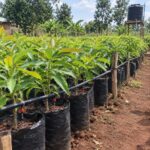
Farmers Trend Limited sells grafted Hass avocado seedlings to farmers across Kenya. Farmers Trend Limited recommends grafted seedlings from a nursery with a clear source and records you check. Plant in blocks of equal age so fruit matures together and your test results apply to the whole block.
Consider Fuerte as a second variety. An exporter told FreshPlaza farm gate prices for green-skin avocados approached, and in some cases matched, Hass prices for export-grade fruit. A second variety spreads your harvest and gives you a second sale window. You hold more than one product when a buyer pressures you.
Farmers Trend Limited also lists other fruit seedlings in its catalogue. Browse the catalogue on WhatsApp at wa.me/c/254790509684 and ask about avocado varieties for your altitude.
Mistakes Farmers Make With Avocado Brokers in Kenya
Selling before testing is the first mistake. You hand the broker control of the harvest date. Test first and name the date yourself.
Accepting a verbal price is the second. A spoken price changes on the day of collection. Write the price on paper and take a photo of the signed page.
Trusting a weight you did not see is the third. Weigh at your farm. Stand beside the scale. Sign only a slip matching your own record.
Selling the whole crop to one buyer is the fourth. One buyer controls your price and your payment date. Split your fruit between two registered buyers each season.
Skipping the permit check is the fifth. An unregistered broker leaves you without recourse. Ask for the permit, photograph the permit and call the exporter.
Ignoring AFA notices is the sixth. Rules on openings, closures and inspections change by season. Read each notice and ask your county office when a broker quotes a rule you do not know.
Working alone is the seventh. A single farmer has little bargaining power. Join a group or start one in your village this season.
Questions Farmers Ask About Avocado Brokers in Kenya
What is the minimum dry matter for avocado export in Kenya?
AFA sets the minimum at 24 per cent dry matter for export avocados. The rule came in 2022 and replaced the earlier minimums of 20 per cent for Fuerte and 21 per cent for Hass.
How much should a broker pay per kilogram of avocados?
Reported prices range from KSh 30 to KSh 50 per kilogram from processors, KSh 60 to KSh 80 from exporters, and up to KSh 130 for grade 1 export fruit. Prices change each week. Call two exporters and your county agriculture office before you accept an offer.
Are all avocado brokers dishonest?
No. A registered agent who tests maturity, weighs openly and pays on time supports farmers and exporters. The tricks in this article describe behaviour to refuse, not a whole group of people. Judge each buyer by permit, paperwork and payment record.
Should I sell avocados on the tree?
Selling on the tree hands the buyer control of the harvest date and the grade. Avoid this sale unless the contract fixes a price per kilogram for each grade and you hold a dry matter result.
Where do I report a broker who cheats me?
Report to your county agriculture office and to the AFA Horticultural Crops Directorate. Carry your contract, weight slips, photos and messages. Report non-payment or fraud to the police with the same evidence.
When does the avocado export season open?
AFA decides after a field survey of fruit maturity. In 2026, export harvesting opened on April 2 and sea export harvesting closed on October 30. Watch AFA notices each year and ask your exporter for dates.
Which should I plant, Hass or Fuerte?
Hass remains the main export variety. Fuerte gives you a second variety, and green-skin prices have approached Hass prices for export-grade fruit. Planting both spreads your harvest.
Your Plan for the Next Avocado Harvest
Avocado brokers in Kenya earn from gaps in your information. Close each gap. Learn the price. Learn the 24 per cent dry matter rule. Test your own fruit. Check the permit. Weigh at your farm. Sort in front of the buyer. Sign a contract. Collect payment on the day of collection or within seven days.
Build your position over the year. Join or start a farmer group. Register your farm for traceability. Keep a harvest book. Line up two registered buyers before AFA opens the season. Plant grafted Hass avocado seedlings and a block of Fuerte to give yourself quality and choice.
Farmers Trend Limited supports avocado growers with grafted seedlings and farm information. Call or WhatsApp Farmers Trend Limited on 0724 559 286 or 0790 509 684. Visit www.farmerstrend.co.ke or email info@farmerstrend.co.ke. Browse the fruit seedlings catalogue at wa.me/c/254790509684.
https://farmerstrend.co.ke/trending/avocado-brokers-in-kenya/https://farmerstrend.co.ke/wp-content/uploads/2026/11/790425782_950731058070904_3380603987929899227_n-768x1024.jpghttps://farmerstrend.co.ke/wp-content/uploads/2026/11/790425782_950731058070904_3380603987929899227_n-150x150.jpg# TrendingAvocado FarmingFruitsIn FruitsAFA avocado rules,avocado brokers in Kenya,avocado dry matter,avocado export season,avocado farmer groups,avocado prices Kenya,grafted hass avocado seedlings,hass avocado farming,how brokers cheat avocado farmersAvocado brokers in Kenya buy from a base of smallholders. The Star reports smallholders make up about 85 per cent of all avocado growers in the country. These farmers sell to the buyer who arrives at the gate. Some buyers pay a fair price. Others push you to harvest...FarmersTrendjohn doefarmerstrend@gmail.comAdministratorFarmers Trend Ltd.



Leave a Reply