Tissue Culture Cooking Banana in Kenya: 5 Best Varieties Worth Planting for Matoke
Tissue culture cooking banana seedlings give you clean, uniform plants and an early matoke harvest. Farmers Trend Limited sells quality tissue culture cooking banana seedlings at KSh 250 each. Ready to establish a cooking banana plantation this rainy season? Start with the right variety.
Kenya has more than 400,000 smallholder banana farmers. Bananas cover 1.7 percent of the country’s arable land. Most farmers grow dessert varieties, which leaves a gap in cooking banana and plantain supply, according to the Kenya News Agency. KALRO reports rising demand for cooking banana and plantain in urban areas. You fill the gap when you plant the right variety on your land.
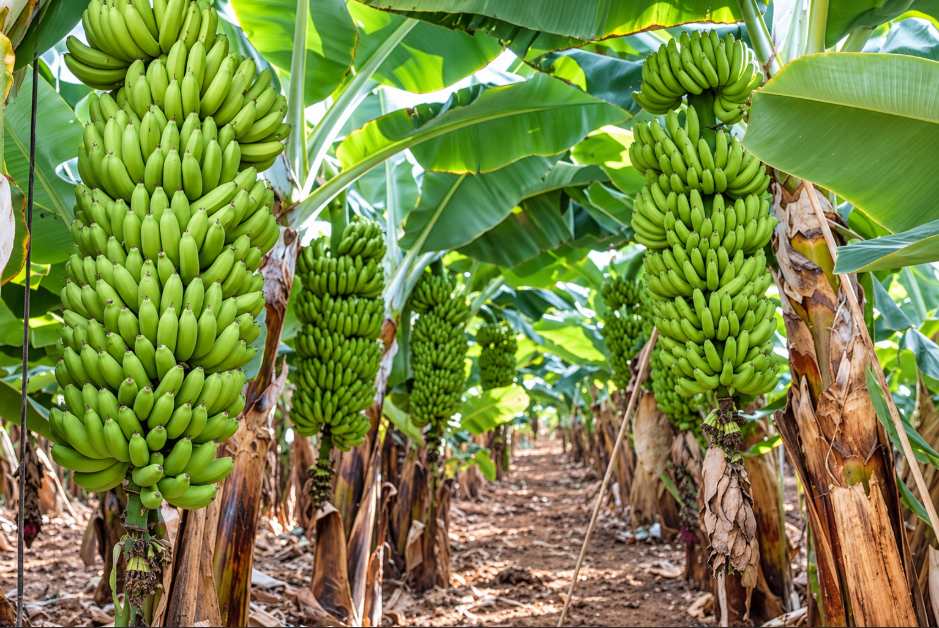
This article names five varieties worth your land: Uganda Green, Ng’ombe, FHIA 17, Giant Cavendish and plantain. You will learn how each variety performs, how to choose between them, how to plant, feed and protect your crop, and what an acre earns. Pick the variety which fits your altitude, your rainfall and your market.
What Is Tissue Culture Cooking Banana?
Tissue culture cooking banana is a cooking banana plant grown from a small piece of shoot tissue in a sterile laboratory. Technicians multiply the tissue into many identical plantlets. Each plantlet carries the traits of the parent plant. Nurseries then harden the plantlets in a greenhouse for about six weeks before farmers plant them, according to The Standard.
Suckers work differently. A sucker grows beside an old plant and carries every pest and disease living in the mother plant. Farmers swap suckers between farms and spread weevils, nematodes and wilt along the way. The Monitor in Uganda reports yield losses of up to 90 percent when farmers reuse infected suckers across farms. Clean tissue culture seedlings remove this risk at planting.
Tissue culture plants also fruit earlier. The Standard reports fruiting in 340 days, against 420 days for ordinary bananas. The same report puts the average yield of tissue culture bananas at 30 to 40 tonnes a hectare, twice the yield of traditional bananas. The Monitor reports a rise in African banana productivity from 20 to 45 tonnes a hectare with tissue culture technology.
Farmers Trend Limited sells tissue culture banana seedlings propagated in a laboratory in Kenya. Farmers Trend Limited states the seedlings deliver superior quality, disease resistance and high yield. Your harvest starts 8 to 12 months after planting, depending on variety and growing conditions.
Tissue Culture Seedlings Versus Suckers
Compare the two planting materials on five points before you buy.
Health: A tissue culture seedling starts free of pests and diseases. A sucker carries whatever lives on the mother plant. You pay for the sucker with lower yields when the mother plant carries weevils or wilt.
Uniformity: Laboratory plantlets are identical copies of one parent. Suckers differ in size and vigour. Your suckers flower on different dates and your harvest spreads over many weeks. Uniform tissue culture plants mature together, so you fill buyer orders on schedule.
Speed: Tissue culture plants fruit 80 days earlier, going by The Standard figures of 340 days against 420 days. Eighty days is almost three months of extra selling in your first cycle.
Supply: One shoot gives about 2,000 plantlets, according to the Monitor. Laboratories supply large orders on short notice. You find suckers only where a neighbour has a healthy stand.
Cost: Suckers cost less or nothing. Weigh this saving against yield losses of up to 90 percent from infected suckers. A tissue culture cooking banana seedling at KSh 250 protects an investment of land, labour and fertiliser worth many times more.
Why Matoke Farming Is Growing in Kenya
Kisii County leads national banana production. The county grows bananas on slightly more than 6,350 hectares and averages about 56 tonnes a hectare each year, according to the Nation. Banana is the main food crop in Kisii.
Other regions are catching up. Farmers in Murang’a and Meru now grow plantain. KALRO tests cooking banana and plantain varieties at demonstration sites in Nyeri and Kilifi. KALRO wants more variety in cooking banana and plantain across regions, so farmers meet consumer demand and earn more.
Central and Eastern Kenya still grow mostly dessert bananas. A survey in six districts of Murang’a, Kirinyaga, Meru and Embu found dessert varieties make up more than 80 percent of plantings. Cooking banana growers face less competition in these counties.
Buyers use matoke in many ways. K24 reports Kenyans now boil, fry, roast and mash cooking banana, slice green fruit into crisps, and cook matoke in coconut milk. Each use creates a buyer for your tissue culture cooking banana crop.
5 Tissue Culture Cooking Banana Varieties Worth Planting for Matoke
KALRO names Uganda Green, Ng’ombe and FHIA 17 as important cooking banana cultivars in Kenya. Farmers Trend Limited sells tissue culture banana seedlings in Uganda Green, Ng’ombe, FHIA-17 and Giant Cavendish. The Farmers Trend Limited seedling selector also lists plantain. Read each profile and match the tissue culture cooking banana variety to your farm.
1. Uganda Green (Ndizi Kisukari): The Matoke Standard
Farmers Trend Limited describes Uganda Green as a large cooking banana and a household staple. KALRO lists the variety as early maturing with a yield of 18 tonnes an acre. The variety tolerates Panama disease and cigar end rot. KALRO recommends Uganda Green for the highlands and notes the variety responds well to irrigation.
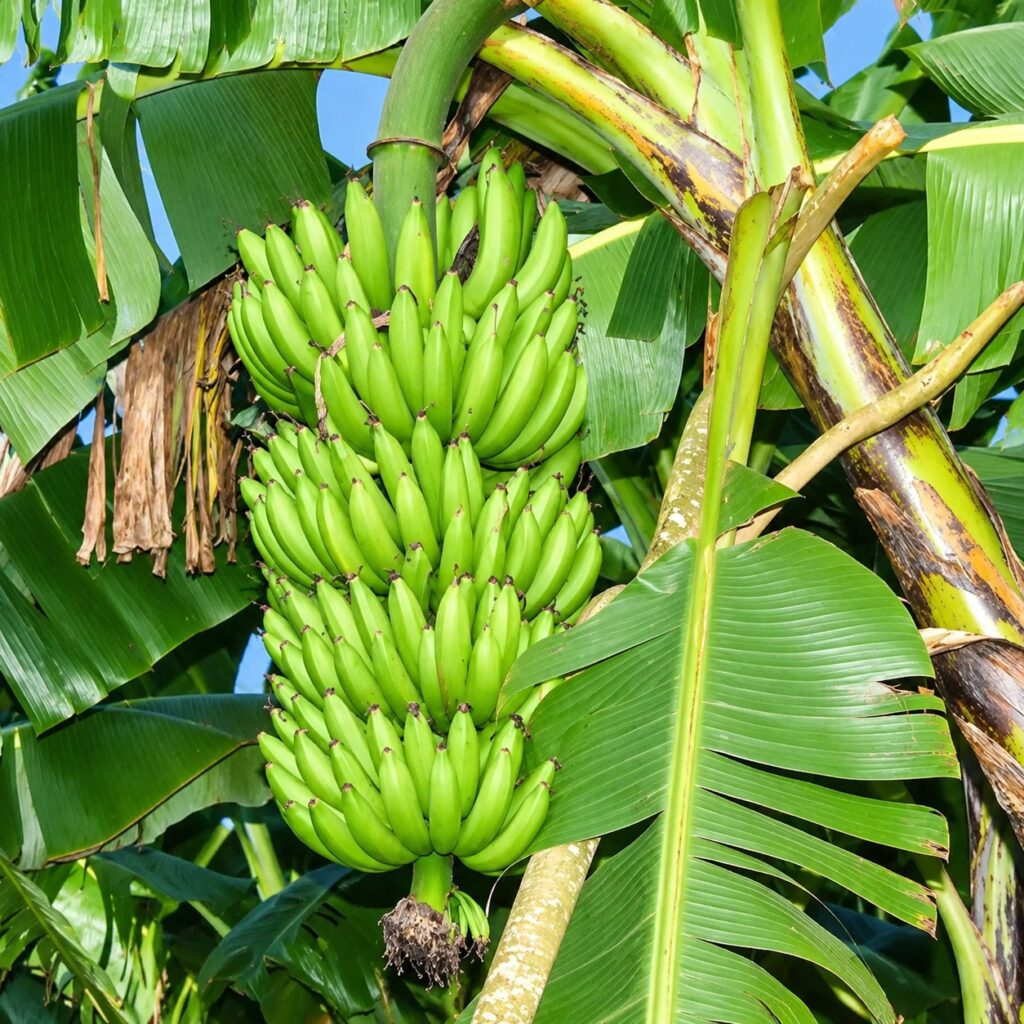
You harvest Uganda Green green. You peel the fruit with care, cook the fingers and mash or pound them into a meal. KALRO calls the variety a strong candidate and a low-maintenance choice.
Plant Uganda Green if you farm in the highlands and sell matoke to town buyers. Make this your first tissue culture cooking banana variety if you have never grown cooking banana.
2. Ng’ombe: Starchy Fingers for Matoke, Flour and Chips
Farmers Trend Limited describes Ng’ombe as firm in texture with a rich flavour. KALRO lists Ng’ombe as early maturing with uniform growth and long fingers. The skin stays partly green and turns yellow as the fruit ripens. The texture is starchy, which suits matoke.
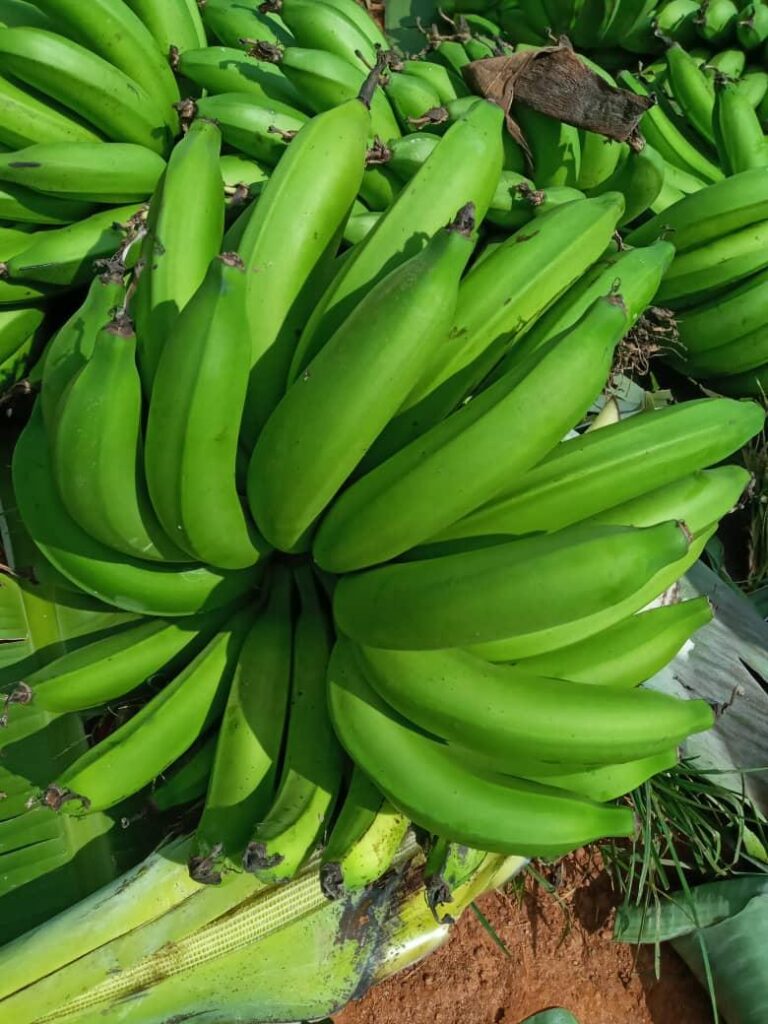
Ng’ombe serves two markets. KALRO classes the variety as dual purpose. You sell green fingers for matoke, or you process the fruit into flour, chips and crisps. Chips turn a golden yellow when you deep fry them.
Plant Ng’ombe if you plan value addition. Uniform fingers make grading easy and give your processor a steady product.
3. FHIA 17: High Yield and Strong Disease Tolerance
FHIA 17 carries the highest yield in the KALRO brochure. KALRO reports bunch weights of about 60 kg and yields of 18 to 24 tonnes an acre. The variety tolerates black sigatoka, Fusarium wilt and nematodes. These three problems cause heavy losses on many Kenyan farms.
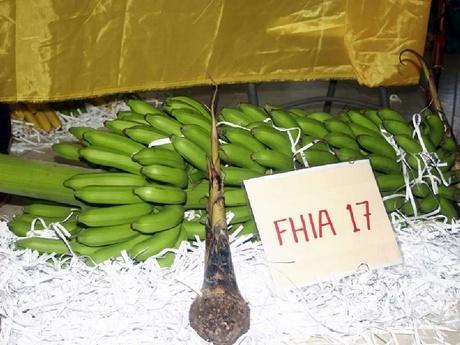
FHIA 17 grows from sea level up to 1,800 metres, in areas with 1,000 to 2,000 mm of annual rain. KALRO notes a long shelf life and quick returns on investment. The variety suits small farms.
Farmers Trend Limited sells FHIA-17 as a sweet banana for fresh eating when fully ripe. You get two options from one plantation. Harvest green for matoke or let the bunch ripen for the dessert market. Choose FHIA 17 for a lowland or mid-altitude farm with less rain.
4. Giant Cavendish: Heavy Bunches and Wilt Resistance
Farmers Trend Limited lists Giant Cavendish among its cooking bananas. Farmers Trend Limited describes the variety as versatile in cooking, robust and flavourful. The Ministry of Agriculture SHEP PLUS training material describes Giant Cavendish as a tall variety, resistant to Fusarium wilt, with heavy bunches averaging 50 kg.
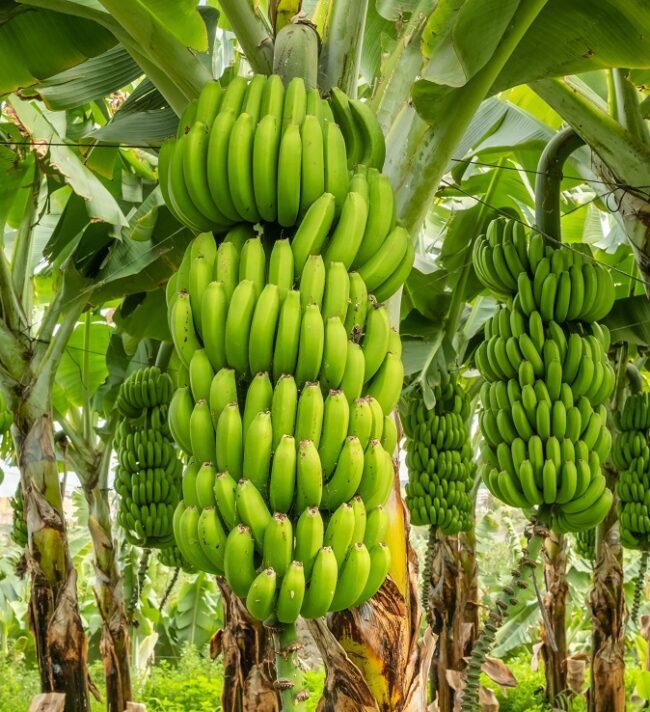
Tall plants fall in wind. The training material states the plants need support to prevent lodging. Prop each plant when the bunch forms. Plant a windbreak on open ground.
Choose Giant Cavendish if Panama disease hit older varieties on your farm. Expect heavy bunches and plan your props before the bunches arrive.
5. Plantain: Boko Boko and Mkono wa Tembo for Frying and Roasting
KALRO set up demonstration sites in Nyeri and Kilifi to test cooking banana and plantain varieties. Boko Boko and Mkono wa Tembo came out as selections. KALRO also points to roasting as a use most Kenyans do not know.
|
|
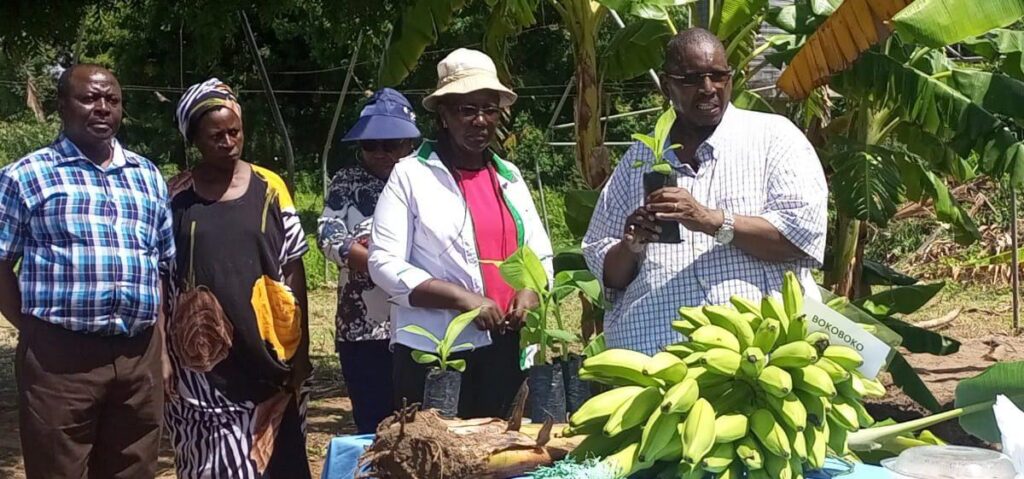
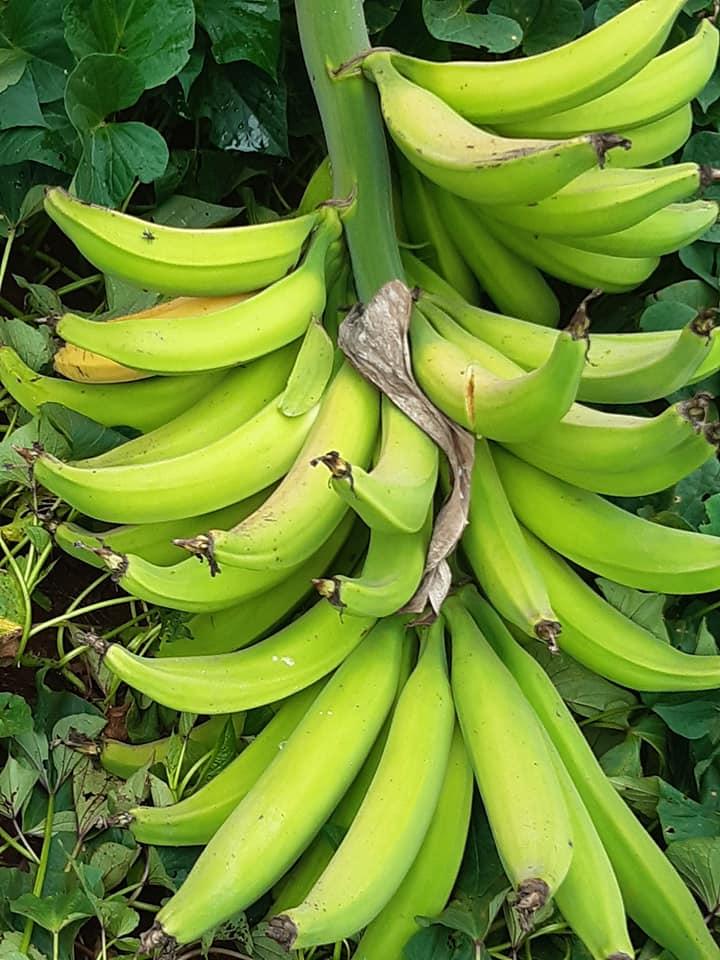
Plantain sells at a higher price per kilo than ordinary cooking banana. One Murang’a farmer told Farmbiz Africa he sells plantain in Murang’a and Nairobi at about KSh 150 a kilo. The same report warns of gluts, bulk buyers who hold down prices and rising labour costs. Line up your buyers before you plant.
Farmers Trend Limited lists plantain banana in its seedling selector. Call before you order and confirm the plantain type in stock.
Tissue Culture Cooking Banana Varieties Compared
| Variety | Main use | Key facts |
|---|---|---|
| Uganda Green | Matoke and mashed meals | Early maturing, 18 tonnes an acre, tolerates Panama disease |
| Ng’ombe | Matoke, flour, chips, crisps | Early maturing, starchy, long uniform fingers |
| FHIA 17 | Matoke and dessert | About 60 kg bunch, 18 to 24 tonnes an acre, 0 to 1,800 m |
| Giant Cavendish | Cooking | Tall, 50 kg average bunch, resists Fusarium wilt, needs props |
| Plantain | Frying, roasting, boiling | KALRO trials in Nyeri and Kilifi, higher price per kilo |
How to Choose the Right Tissue Culture Cooking Banana Variety
Start with your altitude. Uganda Green suits the highlands. FHIA 17 grows from sea level to 1,800 metres. Check your elevation on a phone map before you order.
Check your rainfall next. Farmers Trend Limited lists an ideal annual rainfall of 1,500 to 2,500 mm and recommends irrigation in drier areas. FHIA 17 handles 1,000 to 2,000 mm. If your farm gets less rain, pick FHIA 17 and install drip irrigation.
Name your buyer before you pick a variety. A Kisii or Nairobi matoke trader wants Uganda Green or Ng’ombe fingers. A processor wants Ng’ombe for crisps and flour. A restaurant wants plantain. A market with both cooking and dessert buyers suits FHIA 17.
Split your acre between two varieties. Plant the main variety on most of the land and the second on the rest. Two varieties give you two harvest dates and lower your risk when one variety meets a disease or a price drop.
Site and Climate Needs for Tissue Culture Cooking Banana
Farmers Trend Limited lists the growing conditions below for its tissue culture cooking banana seedlings and other tissue culture banana seedlings.
Temperature: Day temperatures of 26 to 30 degrees Celsius and night temperatures of 20 to 25 degrees suit banana. Growth slows below 14 degrees. Frost kills plants. Farmers above 1,800 metres should check the cold risk before planting.
Rain and humidity: Annual rainfall of 1,500 to 2,500 mm suits the crop, with irrigation in drier areas. Humidity of 60 to 90 percent supports growth.
Soil: Well-drained loam works best. Sandy loam and clay loam work if drainage is good. Soil pH of 5.5 to 7.5 and high organic matter suit banana. Bananas feed heavily on potassium and nitrogen.
Sun and wind: Banana needs 6 to 8 hours of full sun each day. Large leaves and shallow roots suffer in wind. Plant in a sheltered spot or build a windbreak.
How to Plant Tissue Culture Cooking Banana Seedlings
Prepare the Land
Choose a sunny, airy site free of waterlogging. Clear vegetation and debris. Test your soil. Plough to a depth of 30 to 40 cm, then harrow. Start land preparation before the rains so you plant as soon as the soil is wet.
Dig Holes and Add Manure
Dig holes 60 cm wide, 60 cm long and 60 cm deep. Mix compost or well-decomposed manure into the topsoil. Add 200 g of DAP or a balanced NPK fertiliser to each hole, as Farmers Trend Limited recommends. Fill the hole with the mixture and leave space for the seedling.
Plant and Mulch
Water the tissue culture cooking banana seedlings before transplanting. Set the corm slightly below the soil surface with the roots spread out. Backfill and press the soil gently to remove air pockets. Avoid planting too deep. Apply a thick layer of mulch around each plant.
Water right after planting. Keep the soil moist. Farmers Trend Limited recommends drip irrigation for tissue culture banana plantations.
Spacing and Seedlings Needed Per Acre
Farmers Trend Limited recommends a spacing of 2.5 m by 2.5 m for high density planting and adjusts the figure for variety and soil fertility. Tall varieties such as Giant Cavendish need more room. Fertile soil supports closer spacing. Use the table below to plan your tissue culture cooking banana order.
| Spacing | Plants per acre | Seedling cost at KSh 250 each |
|---|---|---|
| 2.5 m by 2.5 m | 648 | KSh 162,000 |
| 3 m by 3 m | 450 | KSh 112,500 |
| 3.5 m by 3.5 m | 330 | KSh 82,500 |
An acre holds 4,047 square metres. Order 5 percent extra seedlings for gap filling. At 2.5 m by 2.5 m, this means about 680 seedlings. You buy seedlings once. Suckers from your own plants replace each mother plant after fruiting.
Budget Your Inputs for One Acre
Tissue culture cooking banana seedlings are your first cost. At 2.5 m by 2.5 m you buy about 680 seedlings with gap filling, which costs KSh 170,000. At 3 m by 3 m you buy about 473 seedlings, which costs KSh 118,250.
Fertiliser at planting is your second cost. Farmers Trend Limited recommends 200 g of DAP or a balanced NPK for each hole. At 648 holes, you need about 130 kg, or three 50 kg bags. Ask your agrovet for the current price and add the figure to your budget.
Top dressing follows. Farmers Trend Limited recommends NPK every 2 to 3 months. Over 12 months, this means four to six rounds. Compost or manure, mulch material, labour for digging 648 holes and irrigation pipes complete the list.
Write down every cost in a notebook. Compare your costs with the income table below. Your records show you which inputs pay and which inputs waste money.
Feeding, Weeding and Watering Your Plantation
Keep your tissue culture cooking banana plantation weed-free. Weeds compete with young banana plants for water and nutrients. Mulch suppresses weeds and holds moisture around the roots.
Apply a balanced NPK fertiliser every 2 to 3 months, as Farmers Trend Limited recommends. Adjust the rate to your soil test and the growth stage. Add manure each season. Banana needs potassium for bunch filling and nitrogen for leaf growth.
Water consistently. Banana leaves lose water fast in sun and wind. Dry soil slows growth and shrinks bunches. Waterlogged soil rots roots. Drip lines deliver water to the root zone and cut waste.
Desucker, Desbud and Prop
Remove unwanted suckers. Keep 2 to 3 healthy suckers to replace the mother plant after fruiting. A Murang’a farmer told Farmbiz Africa spacing, desuckering and desbudding give bunches and fingers more nutrients and make them healthier.
Cut off the male bud after the last hand opens. This sends energy to the fingers. Prop plants with poles or ropes, especially during fruiting. Giant Cavendish needs props on every plant.
Pests and Diseases in a Cooking Banana Plantation
Clean tissue culture cooking banana seedlings start free of pests and diseases. Your management keeps them clean. Scout your plantation every week. Look at leaves, stems and the base of each plant.
Panama disease, also called Fusarium wilt, turns leaves yellow and kills plants. Black sigatoka forms dark streaks on leaves and cuts yield. Nematodes damage roots. Weevils bore into the corm. KALRO lists FHIA 17 as tolerant of black sigatoka, Fusarium wilt and nematodes. KALRO lists Uganda Green as tolerant of Panama disease.
Follow integrated pest management, as Farmers Trend Limited recommends. Combine biological controls with safe chemicals when needed. Remove and bury diseased plants. Disinfect your knife between plants. Do not bring suckers from other farms onto your land.
Your First 12 Months With Tissue Culture Cooking Banana
Month 0: Plant your tissue culture cooking banana seedlings at the start of the rains. Water each seedling at planting, set the corm slightly below the surface and apply mulch. Mark every plant row with a stake so you track gaps.
Months 1 to 3: Weed every two weeks and keep the soil moist. Replace dead seedlings in the first weeks so the plantation grows evenly. Apply NPK at the first 2 to 3 month interval.
Months 3 to 6: Remove extra suckers and keep 2 to 3 healthy ones. Apply NPK again. Scout every week for leaf spots, yellow leaves and weevil damage. Top up mulch before the dry spell.
Months 6 to 9: Flowers and young bunches appear on early varieties such as Uganda Green and Ng’ombe. Prop every plant, remove the male bud and keep the soil moist. Fix your buyers and your delivery dates.
Months 8 to 12: Harvest begins, depending on variety and conditions. Cut at the green stage, move bunches to shade and sell fast. Keep 2 to 3 suckers on each stool so the next cycle starts without new seedlings.
Harvesting Your Matoke at the Right Stage
Farmers Trend Limited states tissue culture banana seedlings reach harvest 8 to 12 months after planting, depending on variety and conditions. Watch the fingers. Harvest when the fingers look plump with rounded angles and the colour shifts from dark green to lighter green or yellow. For matoke, cut the bunch at the green stage, before yellow shows.
Cut the bunch with a sharp knife and leave part of the stalk attached. Handle the fruit with care. Line crates or sacks with banana leaves. Never drag bunches on the ground.
Handling decides your income. The Nation reports 32 to 40 percent of fresh banana from Kisii goes to waste because of poor handling from the farm to the market. Move bunches to shade within the hour. Sell within two days.
What an Acre of Cooking Banana Earns
Yield of tissue culture cooking banana depends on variety, soil, water and management. KALRO reports 18 tonnes an acre for Uganda Green and 18 to 24 tonnes an acre for FHIA 17. The table below shows income at three farm gate prices.
| Farm gate price per kg | Income at 18 tonnes an acre | Income at 24 tonnes an acre |
|---|---|---|
| KSh 5 | KSh 90,000 | KSh 120,000 |
| KSh 10 | KSh 180,000 | KSh 240,000 |
| KSh 15 | KSh 270,000 | KSh 360,000 |
Farm gate prices swing. A vendor at Daraja Mbili market in Kisii reported bunch prices falling from KSh 100 to KSh 70 in September 2026. A Murang’a report quotes KSh 200 for an ordinary 60 kg bunch at the farm gate and up to KSh 800 outside the county. Direct sales to town buyers close the gap.
Your seedling cost sits between KSh 82,500 and KSh 162,000 an acre, depending on spacing. You pay once. A good first harvest covers the seedling bill, and later harvests add income.
How to Sell Your Matoke for Better Prices
Sell as a group. Ten farmers with ten bunches each fill a lorry. A lorry gets a better price than a single bunch on a bicycle. Banana markets and collection centres exist in Kisii County. NARIGP, backed by the World Bank, set out to build a KSh 117 million banana market in Kisii.
Skip the middleman when you grow enough volume. Contact matoke traders in Nairobi, restaurants and hotels. Offer a weekly supply and a fixed grade. Buyers pay more for steady quality.
Add value to the fingers you cannot sell fresh. Avigwili Banana Processors in Vihiga County started adding value to tissue culture bananas in 2023 and uses a solar drier. In Nyamira, a bunch of banana peel fibres earns KSh 3,000 to KSh 4,000, against less than KSh 1,000 for the raw fruit, The Star reports. Ng’ombe fingers also make flour, chips and crisps.
7 Planting Mistakes to Avoid on Your Cooking Banana Farm
Do not plant too deep. Deep planting slows growth. Set the corm slightly below the soil surface.
Do not plant in waterlogged ground. Banana roots rot in standing water. Pick a well-drained site and dig drainage channels on flat land.
Do not skip mulch. Bare soil loses water and grows weeds. Apply a thick mulch layer at planting and top up each season.
Do not leave tall plants without props. Wind and heavy bunches bring plants down. Prop every plant when the bunch forms.
Do not mix in suckers from unknown farms. One infected sucker brings disease into a clean plantation. Replace gaps with tissue culture cooking banana seedlings or suckers from your own healthy plants.
Do not plant one variety on every plant. A single disease or price drop hits your whole acre. Plant two varieties.
Do not plant before you find a buyer. Call traders, processors and restaurants in the first month after planting. You have 8 to 12 months to build your market.
Where to Buy Tissue Culture Cooking Banana Seedlings in Kenya
Farmers Trend Limited sells tissue culture banana seedlings at KSh 250 each. The seedlings come from a tissue culture laboratory in Kenya. Cooking varieties include Uganda Green (Ndizi Kisukari), Ng’ombe and Giant Cavendish. Ripening varieties include Williams Hybrid, Grand Nain, Dwarf Cavendish, FHIA-17 and FHIA-18.
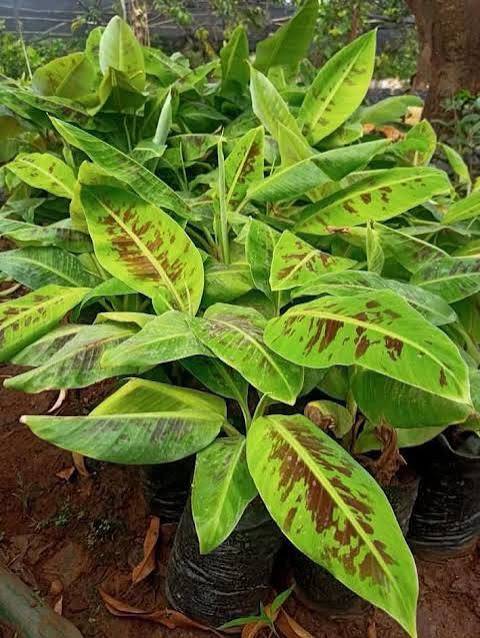
Order early. Rains are here, and planting time is short. Call or WhatsApp Farmers Trend Limited on 0724 559 286 or 0790 509 684. Browse the fruit seedlings catalogue on WhatsApp. Visit www.farmerstrend.co.ke or write to info@farmerstrend.co.ke.
Tell the team your county, your altitude and your acreage. Ask for the variety which fits your site and the number of seedlings you need, including 5 percent extra for gap filling.
Tissue Culture Cooking Banana FAQs
How long do tissue culture cooking bananas take to fruit?
Farmers Trend Limited states tissue culture banana seedlings reach harvest 8 to 12 months after planting. The time depends on variety, soil, water and management.
How many seedlings do I need for one acre?
You need about 648 seedlings at 2.5 m by 2.5 m, 450 seedlings at 3 m by 3 m, and 330 seedlings at 3.5 m by 3.5 m. Add 5 percent for gap filling.
Which cooking banana variety is best for matoke?
KALRO names Uganda Green and Ng’ombe among the important cooking banana cultivars in Kenya. Both mature early. Uganda Green yields 18 tonnes an acre. FHIA 17 yields 18 to 24 tonnes an acre and tolerates black sigatoka, Fusarium wilt and nematodes.
How much does a banana seedling cost?
Farmers Trend Limited sells tissue culture banana seedlings at KSh 250 each.
Does cooking banana need irrigation?
Banana needs steady moisture. Farmers Trend Limited lists an ideal annual rainfall of 1,500 to 2,500 mm and recommends irrigation in drier areas. Drip irrigation delivers water to the roots and saves labour.
Which soil suits cooking banana?
Well-drained loam with a pH of 5.5 to 7.5 and high organic matter suits banana. Sandy loam and clay loam work with good drainage.
Start Your Tissue Culture Cooking Banana Plantation This Season
Tissue culture cooking banana gives you clean plants, even growth and a harvest in 8 to 12 months. Five varieties fit different farms. Uganda Green suits the highlands and plain matoke. Ng’ombe suits matoke, flour and crisps. FHIA 17 gives the highest yield and the strongest disease tolerance. Giant Cavendish gives heavy bunches if you prop each plant. Plantain gives a higher price per kilo if you line up buyers first.
Match your variety to your altitude, rainfall and market. Prepare the land now. Dig 60 cm holes, add compost and 200 g of DAP, and plant at 2.5 m by 2.5 m or wider. Mulch, water, desucker and prop. Harvest at the green stage and move bunches to shade the same day.
Farmers Trend Limited sells tissue culture cooking banana seedlings at KSh 250 each. Call or WhatsApp 0724 559 286 or 0790 509 684, visit www.farmerstrend.co.ke or email info@farmerstrend.co.ke. Order your seedlings this week and plant while the rains last.
https://farmerstrend.co.ke/trending/tissue-culture-cooking-banana-in-kenya/https://farmerstrend.co.ke/wp-content/uploads/2026/11/WhatsApp-Image-2026-11-24-at-13.38.25-1024x576.jpeghttps://farmerstrend.co.ke/wp-content/uploads/2026/11/WhatsApp-Image-2026-11-24-at-13.38.25-150x150.jpeg# TrendingBanana FarmingFruitsIn Fruitscooking banana farming in Kenya,cooking banana seedlings,cooking banana varieties Kenya,matoke farming Kenya,matoke seedlings,matoke varieties,tissue culture banana Kenya,tissue culture banana seedlings,tissue culture cooking banana,tissue culture cooking banana Kenya,tissue culture cooking banana seedlingsTissue culture cooking banana seedlings give you clean, uniform plants and an early matoke harvest. Farmers Trend Limited sells quality tissue culture cooking banana seedlings at KSh 250 each. Ready to establish a cooking banana plantation this rainy season? Start with the right variety.Kenya has more than 400,000 smallholder...FarmersTrendjohn doefarmerstrend@gmail.comAdministratorFarmers Trend Ltd.


Leave a Reply