KALRO Improved Cowpea Technologies Expand in Turkana to Boost Climate-Smart Farming in Kenya’s ASALs
KALRO Improved Cowpea Technologies are expanding across Turkana through on-farm demonstrations and farmer training to boost climate-smart farming, improve productivity, and strengthen food security in Kenya’s ASALs.

TURKANA, Kenya – The Kenya Agricultural and Livestock Research Organization (KALRO) has intensified the rollout of improved cowpea technologies in Turkana County as part of efforts to increase crop productivity, strengthen climate resilience and improve food security in Kenya’s arid and semi-arid lands (ASALs).
The initiative, implemented under the Food Systems Resilience Project (FSRP), is promoting climate-smart farming practices through on-farm demonstrations, farmer training and continuous technical support aimed at accelerating the adoption of improved cowpea production technologies.
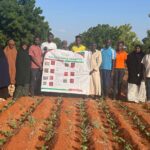
Researchers from KALRO’s Arid and Rangelands Research Institute (AMRI) Katumani recently conducted a field mission in Turkwel Ward, Loima Sub-County, where they monitored the performance of demonstration plots and engaged farmer groups on improved agronomic practices designed to increase yields under harsh climatic conditions.
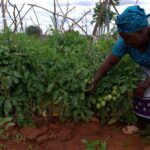
The team evaluated crop establishment and farmer adoption of recommended technologies at the Nanye Irrigation Scheme, where demonstration plots have been established to showcase improved cowpea production systems. Researchers reported strong crop establishment, indicating that the technologies are performing well under local conditions.
As interest in climate-smart agriculture continues to grow, KALRO also identified a site at the Napool Irrigation Scheme for the establishment of a fourth demonstration plot following increased demand from farmers seeking to adopt the cowpea-sorghum intercropping system.
According to the researchers, integrating cowpeas with sorghum helps farmers maximize land productivity while improving soil fertility, reducing production risks and enhancing resilience against climate variability.
Beyond field demonstrations, farmers received practical training on Good Agronomic Practices (GAPs) covering timely thinning of sorghum to achieve the recommended plant population, integrated pest and disease management, field sanitation, early pest scouting and appropriate crop protection measures.
Researchers also trained farmers on the use of locally available organic pest control solutions alongside recommended chemical pesticides to manage crop pests effectively while minimizing yield losses.
During field inspections, stem borers were identified as the major pest affecting sorghum production. Farmers were advised to intensify early monitoring and implement timely control measures to prevent infestations from reducing yields.
KALRO says regular field demonstrations and continuous technical backstopping remain central to increasing farmer confidence and accelerating the adoption of improved crop technologies across Kenya’s drylands.
The Food Systems Resilience Project is supporting the dissemination of resilient agricultural technologies that enable farmers to adapt to climate change while improving productivity and household incomes.
The organization noted that strengthening farmer knowledge through practical demonstrations and extension support is critical to increasing the adoption of improved crop varieties capable of performing under increasingly erratic weather conditions.
As climate change continues to threaten agricultural production across Kenya’s ASAL counties, KALRO believes expanding access to improved cowpea technologies will play an important role in strengthening food security, improving soil health and building resilient farming systems for thousands of smallholder farmers.
https://farmerstrend.co.ke/trending/kalro-improved-cowpea-technologies/https://farmerstrend.co.ke/wp-content/uploads/2026/08/KALRO-Improved-Cowpea-Technologies-Expand-in-Turkana-to-Boost-Climate-Smart-Farming-in-Kenyas-ASALs-1024x768.jpeghttps://farmerstrend.co.ke/wp-content/uploads/2026/08/KALRO-Improved-Cowpea-Technologies-Expand-in-Turkana-to-Boost-Climate-Smart-Farming-in-Kenyas-ASALs-150x150.jpeg# TrendingCowpeas (KUNDE) Farmingagricultural research Kenya,ASAL farming Kenya,climate-smart agriculture Kenya,cowpea farming Kenya,cowpea-sorghum intercropping,dryland farming Kenya,food security Kenya,Food Systems Resilience Project,Good Agronomic Practices,KALRO AMRI Katumani,KALRO Improved Cowpea Technologies,KALRO Kenya,KALRO Turkana,resilient agriculture Kenya,Turkana farmersKALRO Improved Cowpea Technologies are expanding across Turkana through on-farm demonstrations and farmer training to boost climate-smart farming, improve productivity, and strengthen food security in Kenya's ASALs. TURKANA, Kenya – The Kenya Agricultural and Livestock Research Organization (KALRO) has intensified the rollout of improved cowpea technologies in Turkana County as...FarmersTrendjohn doefarmerstrend@gmail.comAdministratorFarmers Trend Ltd.








Leave a Reply