Understanding Tomato Splitting: Causes and Types
Tomato splitting, or cracking, is a physiological disorder that affects tomato fruits, reducing their marketability and leading to significant losses for farmers. The condition occurs due to rapid fruit development coupled with wide fluctuations in water availability. According to Farmers Trend, a leading agricultural resource platform, tomatoes that have reached their ripening stage during dry spells are particularly vulnerable to cracking when the dry period is followed by heavy rains or high temperatures.
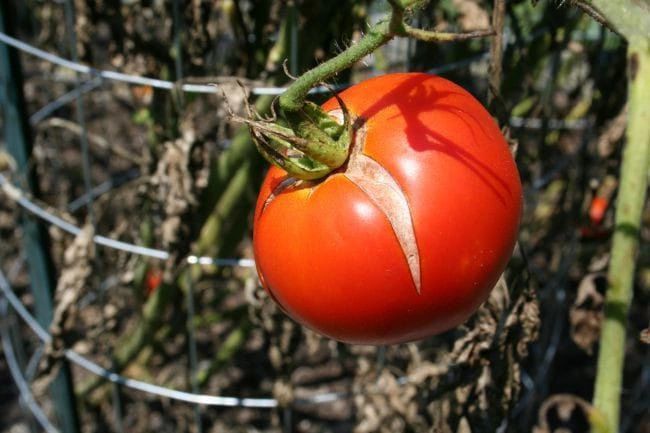
There are two primary types of growth cracks:
- Concentric Cracking
This involves the splitting of the tomato’s epidermis in circular patterns around the stem scar. Concentric cracks are often superficial but can worsen under severe conditions. - Radial Cracking
Radial cracks radiate outward from the stem scar toward the blossom end of the fruit. These cracks are usually deeper and more severe, making the fruit more susceptible to secondary infections and reducing its shelf life.
Why Tomatoes Split or Crack
The primary cause of tomato splitting is rapid changes in soil moisture levels, which lead to the fruit expanding faster than its skin can grow. This imbalance in growth results in the skin breaking, causing cracks. Tomatoes grown in dry conditions are particularly prone to cracking when a sudden influx of water, either from heavy rains or over-irrigation, occurs. High temperatures further exacerbate the issue by accelerating the fruit’s growth, creating additional strain on the skin.
Symptoms and Effects of Tomato Splitting
Tomato splitting is visually evident and can be identified by:
- Circular splits around the stem scar (concentric cracking).
- Longitudinal splits radiating toward the blossom end from the stem scar (radial cracking).
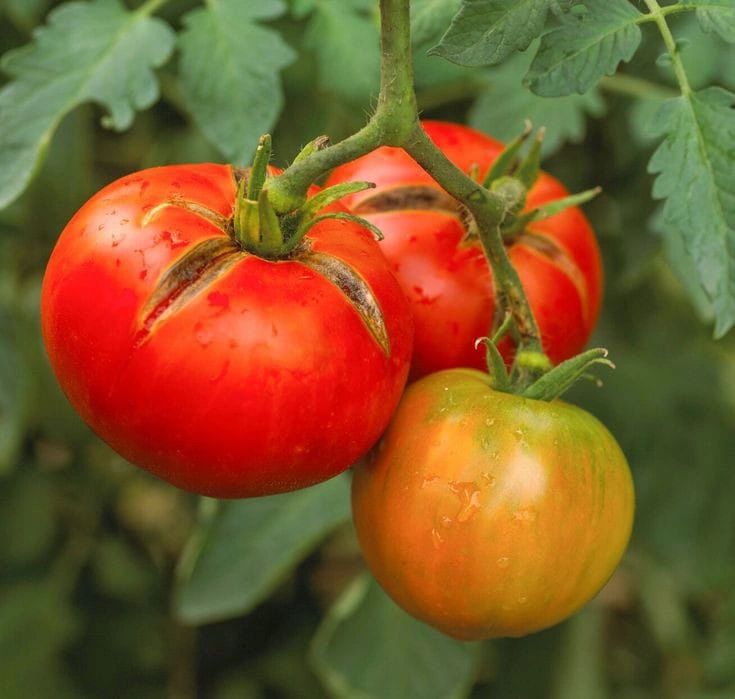 While splitting might seem like a superficial issue, its effects are far-reaching:
- Reduced Market Value: Cracked tomatoes are less appealing to buyers and are often discarded, leading to financial losses for farmers.
- Increased Susceptibility to Pests and Diseases: The cracks expose the fruit to pathogens and pests, further degrading its quality.
- Shortened Shelf Life: Cracked fruits spoil faster, limiting their usability and market potential.
Effective Management of Tomato Splitting
Managing tomato splitting requires an integrated approach that combines good agricultural practices with proper water and nutrient management. Below are some effective strategies:
1. Choose Crack-Resistant Varieties
Planting tomato varieties that are less prone to cracking is the first step toward prevention. Varieties such as Syngenta Staffie F1, Bonarda F1, Newton F1, and Storm F1 are known for their good tolerance to cracking and are highly recommended for Kenyan farmers.
2. Maintain Consistent Watering Practices
Avoid wide fluctuations in water supply. Overwatering, especially during the ripening stage, should be avoided. Drip irrigation systems are ideal as they provide consistent moisture levels and minimize the risk of splitting.
3. Implement a Balanced Nutritional Program
A good nutritional program prevents plants from becoming overly succulent, which can predispose fruits to cracking. Providing balanced amounts of calcium, potassium, and magnesium strengthens the fruit skin, reducing the likelihood of splitting.
4. Protect Against Leaf Defoliation
Leaf defoliation caused by foliar diseases such as late blight or powdery mildew can expose fruits to excessive sunlight, which may accelerate their growth and contribute to cracking. Employ integrated pest management (IPM) practices and use disease-resistant varieties to maintain healthy foliage.
5. Improve Drainage and Mulching
Ensure proper soil drainage to prevent waterlogging during rainy seasons. Mulching helps retain soil moisture during dry spells, reducing fluctuations and providing a stable growing environment for tomatoes.
 Long-Term Solutions for Tomato Farming in Kenya
To address tomato splitting and other physiological challenges, farmers must invest in sustainable agricultural practices. The government and agricultural organizations should play a pivotal role by:
- Providing Training and Extension Services: Educating farmers on proper irrigation techniques, pest management, and nutrient application.
- Subsidizing Crack-Resistant Seeds: Making high-quality seeds like Syngenta Staffie F1 and Bonarda F1 affordable and accessible.
- Supporting Research and Development: Encouraging research into local tomato varieties that are more resilient to Kenya’s climatic conditions.
Conclusion
Tomato farming in Kenya offers immense potential for income generation and food security. However, challenges like tomato splitting threaten farmers’ productivity and profitability. By understanding the causes and implementing effective management strategies, farmers can minimize losses and enhance the quality of their produce.
With proper support from stakeholders, including government agencies and private sector players, tomato farmers can overcome these challenges and contribute to Kenya’s agricultural growth. As Farmers Trend aptly notes, “Empowering farmers with knowledge and resources is the key to unlocking Kenya’s agricultural potential.” With consistent effort, tomato farming can continue to thrive as a cornerstone of Kenya’s economy.
https://farmerstrend.co.ke/trending/understanding-tomato-splitting-causes-and-types/https://farmerstrend.co.ke/wp-content/uploads/2024/12/1733058580984.jpghttps://farmerstrend.co.ke/wp-content/uploads/2024/12/1733058580984-150x150.jpg# TrendingTomato FarmingTomato SplittingTomato splitting, or cracking, is a physiological disorder that affects tomato fruits, reducing their marketability and leading to significant losses for farmers. The condition occurs due to rapid fruit development coupled with wide fluctuations in water availability. According to Farmers Trend, a leading agricultural resource platform, tomatoes that have...FarmersTrendjohn doefarmerstrend@gmail.comAdministratorFarmers Trend Ltd.

Leave a Reply