Strawberry Farming in Kenya 2026 – The Complete Guide to Growing Berries for Profit
Strawberry Farming in Kenya 2026 – The Complete Guide to Growing Berries for Profit
Strawberries are one of the most profitable fruits you can grow in Kenya because they produce fruit quickly and the demand is always high in Nairobi and other towns. In Nairobi supermarkets, premium strawberries sell for 200 to 300 shillings per 250 gram punnet, which works out to 800 to 1,200 shillings per kilogram. Hotels and restaurants use strawberries for desserts, smoothies, and breakfast buffets, and they need consistent supply throughout the year.
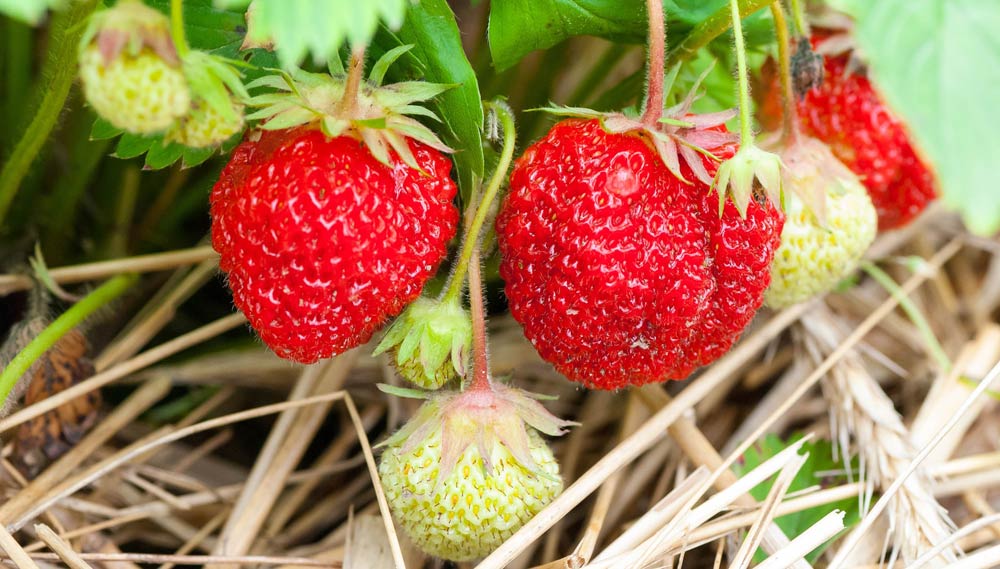
Strawberry farming in Kenya has grown from small backyard plots to commercial ventures that use drip irrigation, plastic mulch, and high-density planting to maximize yields. A well-managed acre can produce 10 to 15 tons of fruit annually under intensive management and drip fertigation. With 25,000 to 30,000 plants per acre at a spacing of 30 centimeters by 30 centimeters, each plant produces 300 to 500 grams of fruit per year. At farm gate prices of 400 to 600 shillings per kilogram, the revenue from one acre can reach 4 to 9 million shillings.
This guide by Farmers Trend Ltd outlines what you need to know about growing strawberries for money in Kenya. You will learn which varieties to plant, how to prepare your land, how to space the plants, how to feed them, how to control pests, how to harvest, and how much money you can make. The information comes from farmers who are already growing strawberries successfully and from agricultural research organizations in Kenya.

The 2026 Industrialization of the Kenyan Berry
Strawberry farming in Kenya has become more organized in recent years, with investors putting money into large-scale production hubs in Kiambu, Nakuru, Eldoret, and Meru. These areas have the cool temperatures that strawberries need to grow well, and they are close to the Nairobi market where most of the fruit is sold. Farmers in hotter zones like Machakos have shifted toward greenhouse production to manage the high temperatures that can reduce fruit quality.
The day-neutral varieties that most commercial farmers plant today begin flowering within 60 to 75 days after transplanting, and they reach peak commercial harvesting by the fourth month. Unlike older varieties that only produced fruit during certain seasons, day-neutral varieties are not sensitive to day length and can produce fruit year-round in the Kenyan tropics. This means that strawberry farming in Kenya can now provide a steady income throughout the year rather than just during one or two seasons.

The market for strawberries has grown as more Kenyans have learned to use them in their cooking and baking. Supermarkets like Naivas, Carrefour, and Quickmart stock strawberries year-round, and the demand is highest during the dry months when other fruits are less available. The export market to Europe and the Middle East is also developing, with buyers looking for high-quality fruit that meets international standards.
| Variety | Fruiting Type | Fruit Size | Sugar Content (Brix) | Market Suitability |
|---|---|---|---|---|
| Chandler | Short-day | Large | 8-10 | Fresh local |
| Fern | Day-neutral | Medium | 9-11 | Fresh and processing |
| Monterey | Day-neutral | Large | 10-12 | Fresh export |
| San Andreas | Day-neutral | Medium | 10-12 | Fresh local |
| Albion | Day-neutral | Large | 11-13 | Fresh export |
Genetics and Material Selection: The 50 KSh Seedling and the Chandler vs Fern Advantage
The choice of planting material is the most critical decision in commercial strawberry farming in Kenya because the variety determines the fruit size, flavor, yield potential, and disease resistance. Farmers Trend Ltd sells certified strawberry seedlings for 50 shillings each, and these plants are grown from runners taken from disease-free mother plants. The seedlings are checked by KEPHIS to make sure they are healthy and true to type, and they are ready for transplanting after 8 to 10 weeks in the nursery.
The Chandler variety is a short-day variety that produces large, sweet berries that are popular in local markets. This variety was the standard for many years, but it only produces fruit during the cooler months when the days are shorter. Chandler is still a good choice for farmers who want to focus production during the peak season.
The Fern variety is a day-neutral variety that produces fruit year-round regardless of the day length, and this has made it the preferred choice for commercial strawberry farming in Kenya. Fern produces medium-sized berries with good flavor, and the plants are vigorous and productive. The fruit is slightly firmer than Chandler, which makes it better for transport to distant markets.
The Monterey and San Andreas varieties are newer day-neutral varieties that produce very large berries with high sugar content. These varieties are preferred by export markets because the fruit looks attractive and has good shelf life. Monterey is more productive than San Andreas in warmer conditions, while San Andreas performs better in cooler areas.
The reason you should buy certified seedlings rather than using runners from your own plants is that strawberry plants accumulate viruses over time, and after 2 to 3 years, the yield and fruit size decline significantly. This is called virus-run-down, and it is the main reason why commercial strawberry farming in Kenya requires new certified seedlings every 2 to 3 years. The 50 shillings per seedling cost is worth it because you get clean, vigorous plants that produce high yields.
| Cost Item | Quantity | Unit Price | Total |
|---|---|---|---|
| Strawberry seedlings (Fern variety) | 25,000 | 50 KSh | 1,250,000 KSh |
| Land preparation | 1 acre | 15,000 KSh | 15,000 KSh |
| Raised bed formation | 1 acre | 10,000 KSh | 10,000 KSh |
| Plastic mulch (black, 1.5m wide) | 1 roll | 25,000 KSh | 25,000 KSh |
| Drip irrigation system | 1 acre | 60,000 KSh | 60,000 KSh |
| DAP fertilizer | 50 kg | 130 KSh/kg | 6,500 KSh |
| CAN fertilizer | 100 kg | 90 KSh/kg | 9,000 KSh |
| Potassium fertilizer | 50 kg | 100 KSh/kg | 5,000 KSh |
| Manure (10 tons) | 10,000 kg | 3,000 KSh/ton | 30,000 KSh |
| Labor (planting, mulching) | 40 days | 500 KSh/day | 20,000 KSh |
| Pest control materials | 1 acre | 20,000 KSh | 20,000 KSh |
| Harvest containers (punnets) | 10,000 | 10 KSh | 100,000 KSh |
| Total First-Year Investment | 1,550,500 KSh |

Orchard Engineering: Raised Beds, Plastic Mulching, and Drip Fertigation
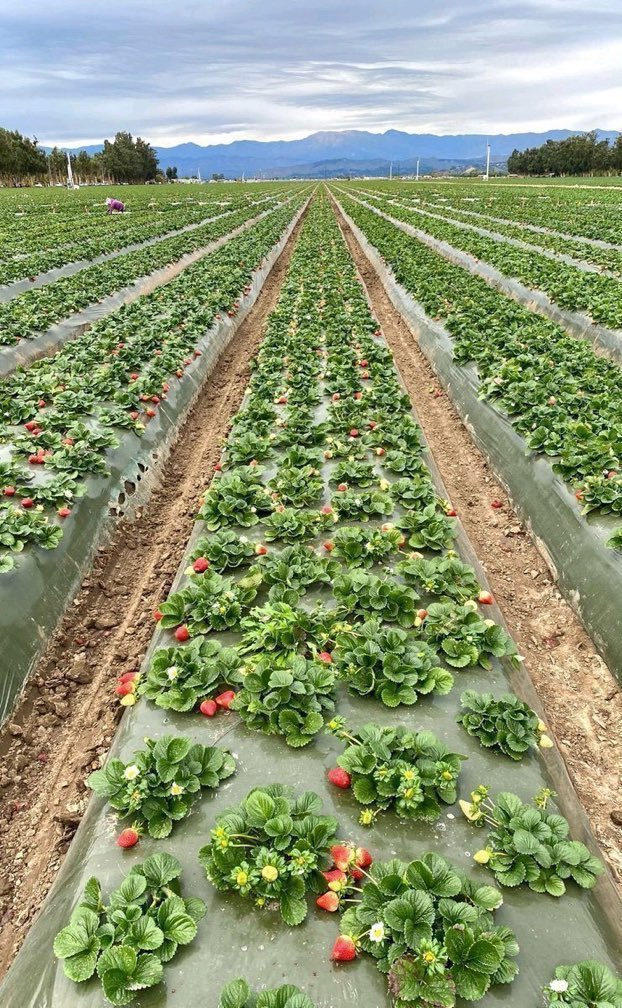
The engineering of a commercial strawberry farm starts with the formation of raised beds because strawberries are very sensitive to waterlogged soil. The beds should be 20 to 30 centimeters high and 1 meter wide, with 50 centimeter pathways between beds. The raised beds allow excess water to drain away from the roots, which prevents crown rot and other fungal diseases that can kill the plants.
Plastic mulch is essential for strawberry farming in Kenya because it suppresses weeds, conserves soil moisture, and keeps the fruit off the ground where it could rot. Black plastic mulch is the most common choice because it absorbs heat and warms the soil, which encourages faster growth. The plastic should be laid tightly over the raised beds and secured at the edges with soil.
The recommended spacing for commercial strawberry farming in Kenya is 30 centimeters between rows and 30 centimeters between plants, which gives approximately 25,000 to 30,000 plants per acre. This spacing allows each plant to get enough sunlight and air, and it also leaves room for workers to walk between the rows during harvest.
Drip irrigation is the best method for strawberries because it delivers water directly to the root zone and keeps the leaves and fruit dry. Dry leaves and fruit are less susceptible to fungal diseases, which is especially important in humid areas. The drip lines should be placed along the rows of plants, with emitters spaced at 30 centimeters. Each plant should have one emitter.
Fertigation is the practice of applying fertilizer through the drip irrigation system, and it is very efficient for strawberry farming in Kenya because it delivers nutrients directly to the roots when the plants need them. You can apply water-soluble fertilizers through the drip system every 7 to 14 days during the growing season.
Nutritional Management: Managing Soil pH and the Potassium-Calcium Balance
The soil requirements for strawberry farming in Kenya are specific, and the crop thrives in well-drained sandy loam soils with a pH between 5.5 and 6.5. Soils that are too acidic or too alkaline can cause nutrient deficiencies that reduce yields and fruit quality. You should test your soil before planting, and the results will guide the application of lime to raise the pH or sulfur to lower the pH.
Phosphorus is important for root development, and you should apply DAP fertilizer at 50 kilograms per acre before planting. The phosphorus should be mixed into the soil because it does not move easily through the soil profile. Nitrogen is important for leaf growth, and you should apply CAN fertilizer at 50 kilograms per acre 4 weeks after planting, and again at 8 weeks after planting.
Potassium is the most important nutrient for fruit quality in strawberry farming in Kenya because it drives sugar accumulation, improves fruit color, and enhances the firmness of the fruit for transport. Apply potassium sulphate at 50 kilograms per acre when the flowers appear, and again when the fruit starts to develop. A deficiency of potassium results in small, pale fruits with low sugar content that do not meet market standards.
Calcium is also very important for strawberries because it prevents tip burn, which is a disorder where the tips of the leaves turn brown and die. Tip burn is caused by a lack of calcium in the growing points of the plant, and it can be prevented by applying calcium nitrate through the drip irrigation system. Apply calcium nitrate at 10 kilograms per acre every 2 weeks during the growing season.
Magnesium is another essential nutrient for strawberries, and a deficiency of magnesium causes the leaves to turn yellow between the veins. Apply magnesium sulphate (Epsom salts) at 10 kilograms per acre if you see these symptoms.
Irrigation and Fertigation Scheduling
Strawberries need consistent moisture throughout the growing season because the roots are shallow and cannot access water from deep in the soil. During dry periods, you should irrigate every 1 to 2 days, applying 20 to 25 millimeters of water per week. Drip irrigation is the most efficient method because it delivers water directly to the root zone with minimal evaporation loss.
The frequency and duration of irrigation should be adjusted based on the weather and the stage of growth. During hot, dry weather, you may need to irrigate daily. During cool, cloudy weather, you can reduce the frequency. During fruit development, consistent moisture is especially important because water stress can cause the fruit to be small and misshapen.
Fertigation should be done every 7 to 14 days using a water-soluble fertilizer with a ratio of 10-10-10 or 20-20-20. You should also add calcium nitrate to the fertigation mix every 2 weeks to prevent tip burn. The total amount of fertilizer applied through fertigation should be 100 to 150 kilograms per acre per year.
Integrated Pest and Disease Management
Spider mites are the most common pest in strawberry farming in Kenya, and they are too small to see easily with the naked eye. The mites suck the sap from the leaves, causing them to turn yellow and dry up, and heavy infestations can reduce yields significantly. Control spider mites with miticides, and rotate between different miticides to prevent resistance. You can also introduce predatory mites that eat spider mites as a biological control.
Aphids are another pest that attacks strawberries, and they cluster on the undersides of young leaves and growing tips, sucking plant sap and causing the leaves to curl. Control aphids with neem oil or insecticidal soap, and encourage natural predators like ladybugs and lacewings.
Botrytis (gray mold) is the most serious disease in strawberry farming in Kenya, and it affects the fruit, especially during wet weather. The fungus causes the fruit to turn brown and become covered with gray fuzzy growth. Control botrytis by keeping the fruit off the ground using plastic mulch, improving air circulation around the plants, and applying fungicides when the weather is wet. Remove any infected fruit from the field immediately.
Powdery mildew appears as white powder on the leaves and can reduce plant vigor and yield. Control powdery mildew with sulfur-based fungicides applied at the first sign of infection. Good air circulation from proper spacing also helps prevent powdery mildew.
Harvesting and Post-Harvest Handling
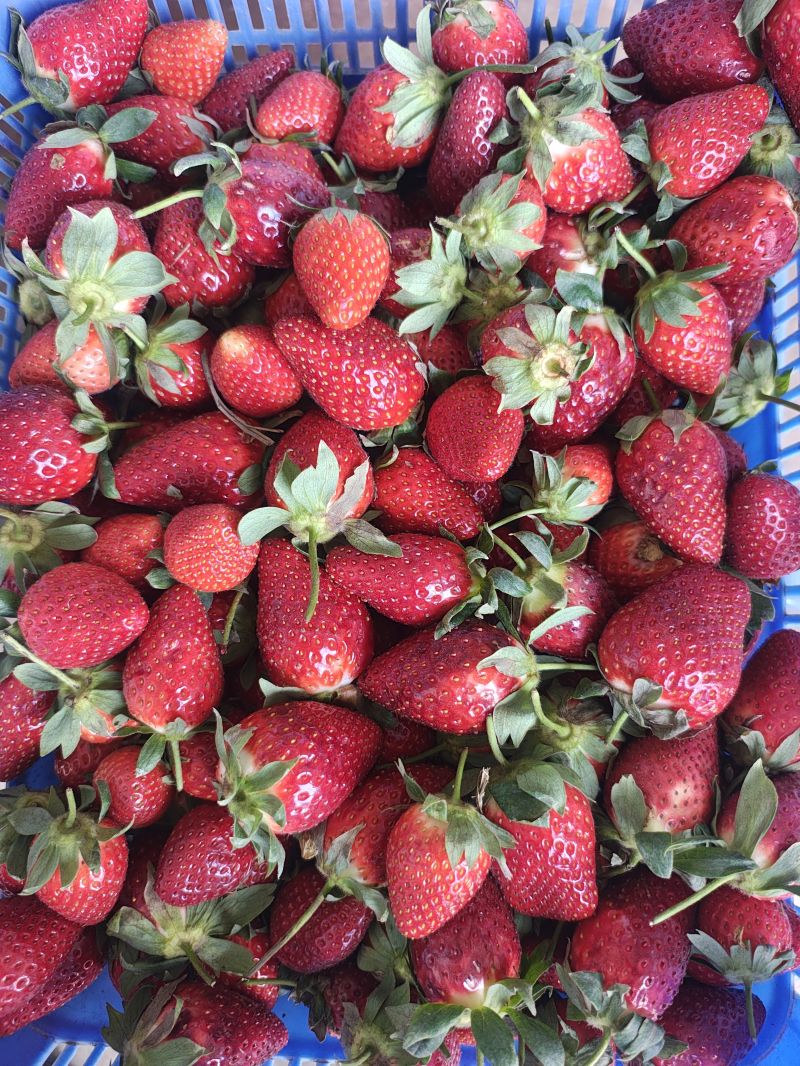
Strawberries do not ripen after they are picked, so you must wait until the fruit is fully mature before you harvest. The fruit is ready to harvest when it has turned 75 to 100 percent red, depending on the variety. The fruit should come off the plant easily when you pull it gently, without tearing the flesh.
Harvest in the morning when the berries are cool, and handle them gently because strawberries are very delicate and bruise easily. Place the berries in shallow punnets or trays, no more than 3 layers deep, to prevent the ones at the bottom from getting crushed. Do not wash the berries before packing because moisture will cause them to rot faster.
Sort the berries by size, color, and quality, and remove any that are damaged, diseased, or overripe. For supermarket sales, pack the berries in 250 gram or 500 gram punnets with clear lids so customers can see the fruit. For processing, you can pack the berries in larger containers or freeze them immediately after harvest.
Strawberries do not store well at room temperature, so you need to cool them as soon as possible after picking. Store the berries at 0 to 2 degrees Celsius with high humidity, and under these conditions, they can be stored for 3 to 5 days. For longer storage, you can freeze the berries, which will keep for 6 to 12 months.
Strawberry Yield Per Acre and Financial Forecasting
| Year | Yield (kg) | Price/kg | Gross Revenue | Net Profit |
|---|---|---|---|---|
| 1 | 8,000 | 400 | 3,200,000 | 1,649,500 |
| 2 | 10,000 | 500 | 5,000,000 | 3,449,500 |
| 3 | 12,000 | 600 | 7,200,000 | 5,649,500 |
- The first year of strawberry farming on one acre costs about 1,550,500 shillings for seedlings, land preparation, raised beds, plastic mulch, drip irrigation, fertilizer, manure, labor, pest control, and harvest containers. You will get about 8,000 kilograms of fruit in the first year, and at 400 shillings per kilogram, you will get 3,200,000 shillings. Your profit will be about 1,649,500 shillings in the first year.
- In the second year, your costs are lower because you have already paid for the mulch, irrigation system, and harvest containers. You will get about 10,000 kilograms of fruit, and at 500 shillings per kilogram, you will get 5,000,000 shillings. Your profit will be about 3,449,500 shillings.
- In the third year, you will get about 12,000 kilograms of fruit, and at 600 shillings per kilogram, you will get 7,200,000 shillings. Your profit will be about 5,649,500 shillings.
- After the third year, the plants will start to decline due to virus accumulation, and you should replace them with new certified seedlings. This 3-year rotation is standard practice in commercial strawberry farming in Kenya.
Next Step for Strawberry Farming in Kenya
Strawberry farming in Kenya is a profitable venture for farmers who have access to water and are willing to invest in quality inputs. Certified seedlings from Farmers Trend cost 50 shillings each, and a well-managed acre with 25,000 plants yields 10 to 15 tons of fruit annually. The farm gate price ranges from 400 to 600 shillings per kilogram, and by year 3, you can earn over 5.6 million shillings per acre.
The best time to plant is March to April for open-field production, but with greenhouses you can plant at any time of year. The day-neutral varieties like Fern, Monterey, and San Andreas produce fruit year-round, which gives you a steady income throughout the year.
For certified strawberry seedlings at 50 shillings, site checks, and the 2026 Strawberry farming in Kenya PDF guide, contact Farmers Trend Ltd at 0790509684. The farmers who started strawberry farming a few years ago are now earning millions every year, and their plants produce fruit every week. You can do the same. The time to start is now.
https://farmerstrend.co.ke/fruits/strawberry-farming/strawberry-farming-in-kenya-2026-guide/https://farmerstrend.co.ke/wp-content/uploads/2026/04/Strawberry-Farming-in-kenya.jpghttps://farmerstrend.co.ke/wp-content/uploads/2026/04/Strawberry-Farming-in-kenya-150x150.jpgStrawberry farming# TrendingBest strawberry varieties in Kenya,Cost of strawberry farming per acre,Drip fertigation strawberries,Farmers Trend strawberry seedlings,Fern strawberry variety,Monterey strawberry variety,Plastic mulch for strawberries,San Andreas strawberry variety,Spider mite control strawberries,Strawberry farming in Kenya PDF,Strawberry market price per kg Nairobi,Strawberry seedlings price in Kenya 2026,Strawberry spacing 30cm x 30cm,Strawberry yield per acreStrawberry Farming in Kenya 2026 - The Complete Guide to Growing Berries for Profit Strawberries are one of the most profitable fruits you can grow in Kenya because they produce fruit quickly and the demand is always high in Nairobi and other towns. In Nairobi supermarkets, premium strawberries sell for...FarmersTrendjohn doefarmerstrend@gmail.comAdministratorFarmers Trend Ltd.

Leave a Reply