Sheep Farming in Kenya 2026 – A Complete Guide to Zero Grazing Dorper Sheep Production
Sheep Farming in Kenya: The 2026 Commercial Guide to Intensive Mutton Production
Sheep farming in Kenya has become a serious business opportunity for farmers who want to move away from traditional cattle rearing. More people in Nairobi, Mombasa, and Kisumu are eating mutton and lamb these days, and hotels and restaurants have added more mutton dishes to their menus. Butchers across the country report that mutton sells faster than beef, which tells you that demand is growing while supply remains limited.

The money works out well for farmers who do things right. A ewe can produce lambs every 8 months under good management, and a farmer can sell a fattened lamb when it is 6 to 9 months old. The initial money you need to start sheep farming is lower than what you would need for cattle, and you do not need as much land either. The profit you can make from each acre is often higher than what you would get from cattle.
This guide by Farmers Trend Limited covers everything you need to know about running a successful sheep farming operation in Kenya. You will learn which breeds work best, how to build proper housing, what to feed your sheep, how to keep them healthy, how to manage breeding, and how much money you can expect to make. The information comes from farmers who have built profitable sheep businesses and from livestock research stations around the country.

Why Farmers Are Choosing Sheep Over Cattle
The beef market has become unpredictable in the last few years. Cattle prices go up and down with no clear pattern, and raising a cow to slaughter weight takes 24 to 36 months before you see any money. A farmer who puts money into sheep starts seeing returns much faster because a lamb reaches slaughter weight in 6 to 9 months.
Land is another factor pushing farmers toward sheep. A commercial sheep flock needs much less land than a cattle herd of similar value. The feed conversion efficiency of sheep is also better, meaning they turn the feed you give them into meat more effectively than cattle do.
A farmer with 50 ewes can expect 75 to 100 lambs every year. Each lamb sold at 6 months brings 8,000 to 12,000 shillings, so the total revenue from lamb sales alone reaches 600,000 to 1.2 million shillings. Add to that the money from selling old ewes and rams that are no longer productive, and the profit margin ends up between 40 and 60 percent after you subtract your costs.
The export market for Kenyan mutton is also growing, especially in Middle Eastern countries that import large amounts of sheep meat. Kenya has trade agreements that give farmers access to these markets, and farmers who produce quality sheep meat can get premium prices.
Choosing the Right Breed for Your Sheep Farming in Kenya
The Dorper breed is the best choice for farmers who want to produce mutton commercially. This breed came from South Africa and has adapted well to Kenyan conditions over the years. Dorper sheep have white bodies with black heads, and they produce high quality meat that does not have too much fat. The breed grows fast, with lambs reaching 35 to 45 kilograms at 6 to 9 months old.
KALRO has developed what they call Smart sheep rearing technology, which combines good genetics with intensive management practices. Farmers who use this system have reduced lamb deaths from 30 percent down to under 10 percent. The system also increases the number of twin births and shortens the time it takes to get lambs ready for market. Farmers using the KALRO system report 40 percent higher profits compared to traditional methods.
A breeding ram from KALRO certified stock costs between 15,000 and 30,000 shillings, while a quality ewe costs between 10,000 and 20,000 shillings. Pedigree stock with official certification costs more, but the better genetics make the higher price worth it because you get faster growth and more lambs per ewe.
The Red Maasai breed is another option for farmers who are in drier areas where water is scarce. This breed handles drought well and can survive on poor grazing land where other sheep would struggle. The meat quality is good, but the growth rate is slower than Dorpers. Red Maasai works well for farmers who cannot provide intensive feeding.
| Breed | Months to Maturity | Twin Birth Rate | Weight at 9 Months | Disease Resistance |
|---|---|---|---|---|
| Dorper | 6-9 | 150-170% | 40-50 kg | Moderate |
| Red Maasai | 10-12 | 100-120% | 30-35 kg | High |
| KALRO Smart | 5-7 | 170-190% | 45-55 kg | Moderate |
Housing on Sheep Farming in Kenya
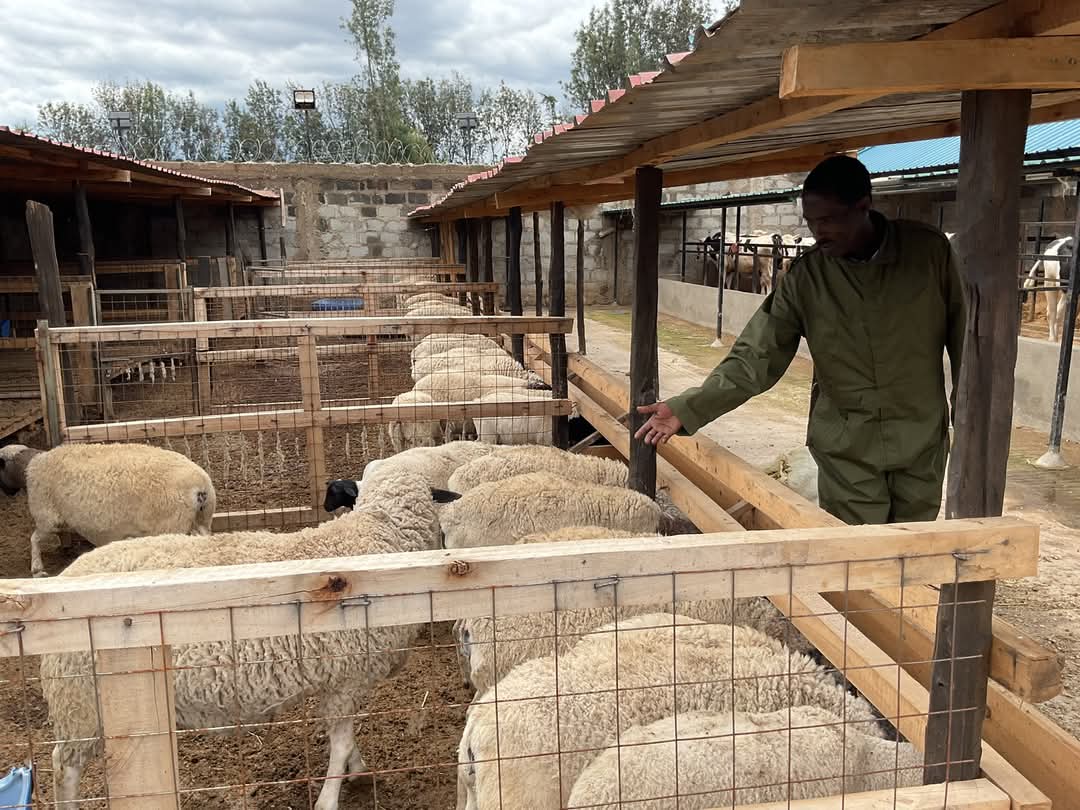
Sheep need a good place to sleep at night, and in intensive sheep farming, that means raised pens. The pens have slatted floors that let waste fall through to the ground below, so the sleeping area stays dry and clean. This simple design reduces foot rot and respiratory disease significantly.
A zero grazing unit for 50 sheep needs a pen that measures 10 meters by 15 meters. You should divide this space into sections for feeding, resting, and lambing. The resting area needs slatted wooden or wire mesh floors, while the feeding area should have troughs running along one wall.
The roof should be made of iron sheets, but you need to leave space for air to move through. The walls should be open on two sides to let fresh air circulate. The floor should slope slightly toward a drainage channel so liquid waste flows away. You can also set up a urine collection system to capture liquid waste and use it as fertilizer on your crops.
Water troughs should be automatic nipple drinkers or shallow pans that are easy to clean. Feed troughs should be 50 centimeters high and 30 centimeters wide, and you should provide 40 centimeters of trough space for each sheep.
How Much Land You Need for Sheep Farming in Kenya?
The amount of land you need for 100 sheep depends entirely on the system you choose to use. If you go with pure zero grazing, you can keep 100 sheep on less than 1 acre because the sheep never go outside and all their feed comes to them. This system needs more labor but takes up very little land.
If you choose semi-intensive grazing, where the sheep go out to graze during the day and come back to the pen at night, you will need 7 to 10 acres for 100 sheep. This system reduces your feed costs because the sheep get some of their food from grazing, but it requires more land than zero grazing.
For extensive grazing where the sheep stay in the field day and night, you will need 15 to 25 acres for 100 sheep. This system has the lowest labor requirements but needs the most land. It also comes with higher risk from predators and slower growth rates because the sheep are not getting concentrated feed.
Starting Your Dorper Sheep Farm
When you start a Dorper sheep farm, the first thing you need to do is find quality breeding stock from KALRO certified breeders. The price you pay for KALRO certified stock is higher than what you would pay for uncertified animals, but the genetics have been proven to perform well. A good ram determines the quality of your entire flock, so do not try to save money by buying a cheap ram.
Build your housing before you bring any sheep onto your farm. The pen needs slatted floors, good ventilation, and secure fencing to keep predators out. Install your feeders and waterers before the sheep arrive. Stock up on feed, mineral supplements, and basic medications so you have everything ready when you need it.
Start with 10 to 20 ewes and 1 ram so you can learn the management system without taking too much risk. Take time to understand the feeding requirements and master the breeding cycle. Once you feel confident, you can expand your flock gradually.
A ewe carries her lambs for 5 months before giving birth. Under good management, a ewe can produce 3 lambs in 2 years, and some farmers achieve 5 lambs in 3 years. The key factors are good nutrition and proper timing of breeding.
Some people ask whether sheep menstruate every 17 days. The answer is that sheep do not menstruate like humans do. Instead, the ewe has an estrous cycle that lasts 17 days. During this cycle, she is ready to mate with the ram for only 24 to 48 hours. If she does not get pregnant during that time, she will come back into heat again after 17 days.
Feeding Your Sheep for Fast Growth
Feed costs are the biggest expense in sheep farming, accounting for 60 to 70 percent of all your production costs. If you can reduce your feed costs while keeping growth rates high, you will see a big difference in your profits.
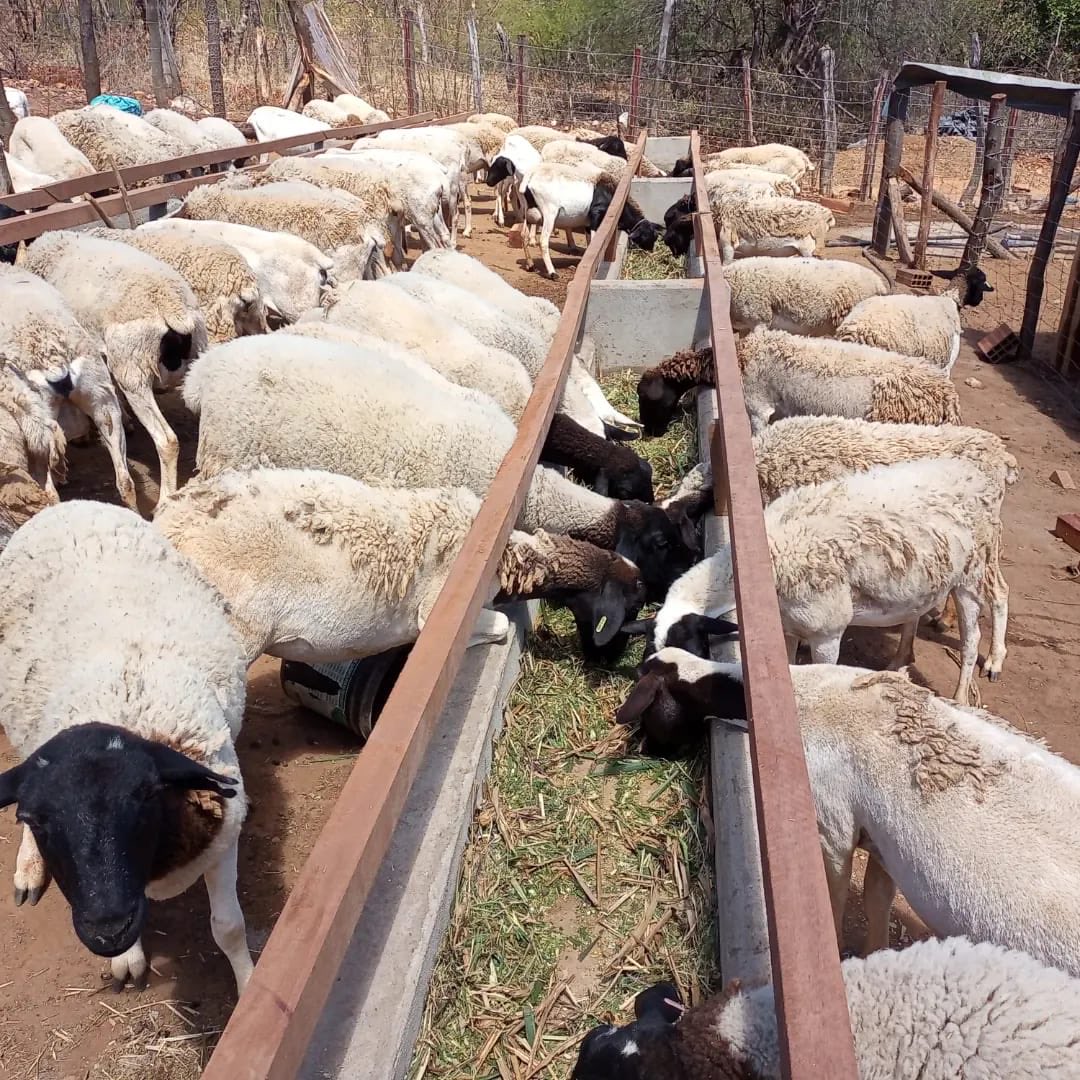
Lucerne is the best feed you can give your sheep because it contains 15 to 20 percent protein and is very digestible. Sheep that eat lucerne grow faster and produce better quality meat. The challenge is that lucerne needs good soil and regular irrigation, which not every farmer has.
Boma Rhodes grass is a good alternative that is easier to grow, though it has lower protein content at 8 to 10 percent. You can mix Boma Rhodes with legumes like desmodium or lucerne to boost the protein content of the feed.
Concentrates are necessary for finishing lambs to market weight. A good finishing ration should contain 14 to 16 percent protein. Common ingredients include maize germ, sunflower cake, and wheat bran. You can buy commercial sheep pellets, but they cost more than mixing your own.
From the time a lamb is weaned until it goes to slaughter, it will eat 200 to 300 kilograms of feed. The feed cost for each lamb comes to 2,500 to 4,000 shillings, while the selling price is 8,000 to 12,000 shillings. The margin is healthy for farmers who manage their feed efficiently.
Keeping Your Sheep Healthy
Internal parasites are the biggest problem you will face when raising sheep. Because sheep graze close to the ground, they pick up worm larvae from contaminated pasture. You need to deworm your sheep regularly and rotate the dewormers you use to prevent the worms from developing resistance.
Foot rot is another common problem that causes lameness and weight loss. Prevention is better than cure here. Keep your pens dry, trim hooves regularly, and remove any sheep that show signs of lameness so the problem does not spread.
Peste des Petits Ruminants (PPR) is a viral disease that kills up to 80 percent of infected sheep. There is no treatment for PPR, so vaccination is your only protection. You need to vaccinate all your sheep every year, and the vaccine costs 50 to 100 shillings per dose.
Managing the breeding cycle requires careful attention. A ewe comes into heat every 17 days, and the heat lasts 24 to 48 hours. You need to introduce the ram during this window to get the ewe pregnant. Keep good records of breeding dates so you can calculate expected lambing dates accurately.
When lambing time approaches, you need to prepare properly. Provide a clean, dry pen for the ewe to give birth. Have iodine ready to treat the lamb’s navel. Keep towels handy for drying off newborn lambs. Watch ewes closely as their due date gets close so you can help if problems arise.
Sheep vs Goats Which One Pays Better
Comparing sheep and goats for profitability depends on your market and where your farm is located. Sheep convert feed to meat more efficiently than goats, meaning they gain weight faster. The mutton market is also larger and more stable than the goat meat market.
Goats have lower feed costs because they are browsers that eat leaves, shrubs, and weeds that sheep cannot digest. Goat meat has a niche market with premium prices during festive seasons like Christmas and Easter.
For intensive systems where land is limited, sheep have an advantage because they adapt better to zero grazing. Sheep also have higher rates of twin births and produce more meat per acre than goats. For farmers with limited land, sheep are usually the better choice.

What Can Go Wrong with Sheep Farming
Internal parasites are the biggest disadvantage of raising sheep. You cannot avoid them, and you must stay on top of deworming or your flock will suffer. The other major disadvantage is the high initial cost of quality breeding stock. A good ram can cost 30,000 shillings or more, and you need to buy several ewes to start a viable flock.
Sheep are also more susceptible to foot problems than goats, especially if their pens get wet and muddy. Keeping pens dry and clean takes labor and attention. Some farmers find that the labor requirements of intensive sheep farming are higher than they expected.
What It Costs and What You Will Earn
Here is a 2026 budget for a zero grazing unit with 20 ewes and 1 ram.
| Cost Item | Quantity | Unit Price | Total |
|---|---|---|---|
| Dorper ewes | 20 | 15,000 KSh | 300,000 KSh |
| Dorper ram | 1 | 20,000 KSh | 20,000 KSh |
| Housing construction | 50 sqm | 5,000 KSh | 250,000 KSh |
| Feeders and waterers | 1 set | 20,000 KSh | 20,000 KSh |
| Feed for 6 months | 3,000 kg | 15 KSh/kg | 45,000 KSh |
| Hay for 6 months | 2,000 kg | 10 KSh/kg | 20,000 KSh |
| Veterinary and medicine | 1 year | 15,000 KSh | 15,000 KSh |
| Labor | 12 months | 10,000 KSh | 120,000 KSh |
| Total First-Year Investment | 790,000 KSh |
Here is what you can expect to earn from your flock.
| Revenue Stream | Year 1 | Year 2 | Year 3 and Beyond |
|---|---|---|---|
| Lamb sales (20 lambs at 10,000 KSh) | 200,000 | 400,000 | 600,000 |
| Cull ewe sales (5 ewes at 12,000 KSh) | 60,000 | 60,000 | 60,000 |
| Manure sales | 20,000 | 30,000 | 40,000 |
| Total Revenue | 280,000 | 490,000 | 700,000 |
You will break even in year three. From year four onward, your annual profit will exceed 400,000 shillings from this small flock.
Next Step
Sheep farming in Kenya gives you solid returns if you use intensive systems and good management practices. Dorper sheep reach slaughter weight in 6 to 9 months, and a flock of 20 ewes can generate 600,000 to 1.2 million shillings in lamb sales every year. The KALRO Smart rearing technology helps reduce lamb deaths and increase the number of twin births.
Start by buying quality breeding stock from certified breeders. Build raised pens with slatted floors to keep your sheep dry and healthy. Feed a balanced ration of lucerne or Boma Rhodes grass along with concentrates. Deworm your sheep regularly and vaccinate them against PPR. Keep breeding records so you can track the 17 day estrous cycle and plan your lambing schedule.
For professional help with sheep house construction and to find pedigree Dorper sheep, contact Farmers Trend Ltd at 0790509684. Virtual Agrovet supplies mineral licks, dewormers, and vaccines for your flock. Ask for the 2026 Sheep farming in Kenya PDF business blueprint that has detailed financial projections.
Farmers who are making good money from sheep started exactly where you are now. They learned what to do, made a plan, and did the work. You can do the same thing.
Your sheep farming in Kenya journey starts today. The mutton market needs more supply, the money is there to be made, and now is the time to start.
https://farmerstrend.co.ke/trending/sheep-farming-in-kenya-2026-guide/https://farmerstrend.co.ke/wp-content/uploads/2026/04/FrwSQYGXgAAu62y-1024x1024.jpeghttps://farmerstrend.co.ke/wp-content/uploads/2026/04/FrwSQYGXgAAu62y-150x150.jpeg# TrendingSheep farmingSheep Farming in Kenya: The 2026 Commercial Guide to Intensive Mutton Production Sheep farming in Kenya has become a serious business opportunity for farmers who want to move away from traditional cattle rearing. More people in Nairobi, Mombasa, and Kisumu are eating mutton and lamb these days, and hotels and...FarmersTrendjohn doefarmerstrend@gmail.comAdministratorFarmers Trend Ltd.








Leave a Reply