Stakeholders Call for Seaweed to Be Officially Recognized as a Cash Crop in Kenya
Kenyan stakeholders are urging the government to officially recognise seaweed as a cash crop to unlock its full potential, boost coastal livelihoods, and attract investment in the blue economy.
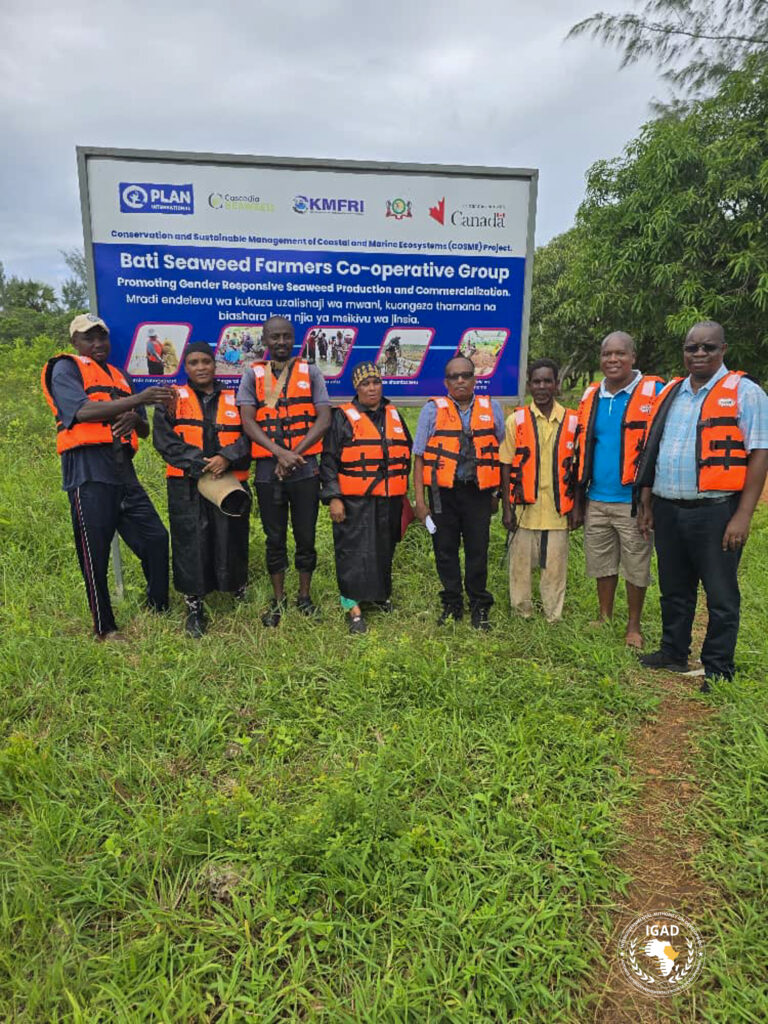
A section of stakeholders is calling on the national government to formally recognise seaweed as a cash crop and unlock its full economic potential for coastal communities.
According to Alfred Rono, the Seaweed Project Coordinator at Plan International, the marine plant is currently categorised and treated like fish, despite being fundamentally different in its nature and production.
Rono said reclassifying seaweed as a cash crop would allow farmers and coastal entrepreneurs to benefit from the same level of policy support and investment as traditional crops like coffee, tea, and sugarcane.
“Seaweed is not a fish; it is a marine plant that has the potential to transform lives, especially along the Coast. But because it’s not officially recognised as a crop, farmers miss out on the desired support mechanisms and market infrastructure,” he said.
He urged the government to review existing agricultural policies and include seaweed among the list of scheduled cash crops.
The move, Rono said, would open up doors to structured markets, access to loans, insurance, and even extension services for seaweed farmers, who currently operate informally and with minimal support.
He argued that seaweed farming, already practised in parts of the coastal counties like Kwale, has shown promise as a source of income, particularly for women and youth.

Value addition
“Other foreign countries have built billion-dollar industries around seaweed. Kenya has similar potential, but we must treat seaweed farming with the seriousness it deserves,” he said.
He said the government must develop and implement the right policies and establish supporting infrastructure to enable both farmers and investors to fully tap into the numerous opportunities surrounding seaweed farming.
At the moment, local farmers face significant challenges in accessing markets due to limited support and a lack of structured systems.
These market challenges have hindered the growth of the sector despite its high potential.
Rono further emphasised the need for the government to create a conducive environment that would attract companies to invest in seaweed production, processing, and distribution.
Strengthening value addition and the supply chain would ensure that seaweed products fetch better prices locally and internationally, ultimately improving the livelihoods of coastal communities.
Kenya Marine and Fisheries Research Institute (KMFRI), Mariculture Assistant Director Dr Antony Nzioka, echoed the call for seaweed to be recognised as a cash crop, saying the institution is keen on supporting the initiative through research and policy recommendations.
“As a research institution, we are also looking forward to formally proposing seaweed to be recognised as a cash crop because of its many benefits not just for the economy, but also for the environment,” he said.
Nzioka said that with climate change threatening traditional forms of agriculture, seaweed presents an eco-friendly and sustainable alternative.
He said the crop requires no fresh water or fertiliser and is easy to grow, making it ideal for communities in the coastal regions.
Declaring seaweed a cash crop would not only boost livelihoods but also contribute to national food security and economic diversification.
Nzioka noted that despite the immense potential of seaweed farming, Kenya has barely scratched the surface. He said Kenya’s coastline has the right conditions and willing communities, but lacks a coordinated framework to grow the sector.
Economic viability
According to Nzioka, research shows that seaweed can also be cultivated in well-structured ponds, provided the conditions mimic the ocean’s climate and salinity levels.
Nzioka said KMFRI actively supports efforts to expand seaweed farming and promote investment in the sector, with the goal of enhancing value addition and improving the livelihoods of coastal communities.
According to the specialist, seaweed falls under the category of a marine plant and should be given the respect and attention it deserves in efforts to grow the blue economy sector.
Nzioka further said that with proper investment in research, breeding and post-harvest technology, seaweed could become a major export product.
KMFRI officer in charge of the seaweed project, Nora Magangi, said seaweed farming holds great potential for women’s empowerment, noting that a significant percentage of seaweed farmers are coastal women.
She explained that recent trials have demonstrated the economic viability of the crop, with many women already using seaweed farming to transform their lives and support their families.
Read original post here
https://farmerstrend.co.ke/trending/stakeholders-call-for-seaweed-to-be-officially-recognized-as-a-cash-crop-in-kenya/https://farmerstrend.co.ke/wp-content/uploads/2025/06/GsnPAWpXAAAphzQ-1024x768.jpeghttps://farmerstrend.co.ke/wp-content/uploads/2025/06/GsnPAWpXAAAphzQ-150x150.jpeg# Trendingblue economy Kenya,coastal agriculture Kenya,KMFRI seaweed research,marine farming Kenya,Plan International seaweed project,seaweed as a cash crop,seaweed economic potential,seaweed export Kenya,seaweed farming in Kenya,seaweed for women empowerment,seaweed market Kenya,seaweed policy support,seaweed value addition,sustainable farming Kenya.Kenyan stakeholders are urging the government to officially recognise seaweed as a cash crop to unlock its full potential, boost coastal livelihoods, and attract investment in the blue economy.A section of stakeholders is calling on the national government to formally recognise seaweed as a cash crop and unlock its...FarmersTrendjohn doefarmerstrend@gmail.comAdministratorFarmers Trend Ltd.







Leave a Reply