Pineapple Farming in Kenya 2026 – The Complete Profitable Commercial Guide to MD2 and Smooth Cayenne Production
The Pineapple Prospectus: Strategic Scaling for Kenya’s 2026 Fresh and Processed Export Markets
The pineapple sector in Kenya is experiencing a structural transformation, driven by rising domestic consumption that reached 284,000 metric tons in 2025 and growing demand from regional export markets. Farmers in Central Kenya, the Coastal belt, and parts of Western Kenya are shifting from traditional subsistence cultivation to commercial production models that prioritize high-yielding hybrid varieties and precision agronomy. The fruit, once considered a low-value crop relegated to smallholder plots, has become a strategic asset for agribusiness investors seeking to capitalize on the expanding fresh fruit and processed juice markets.

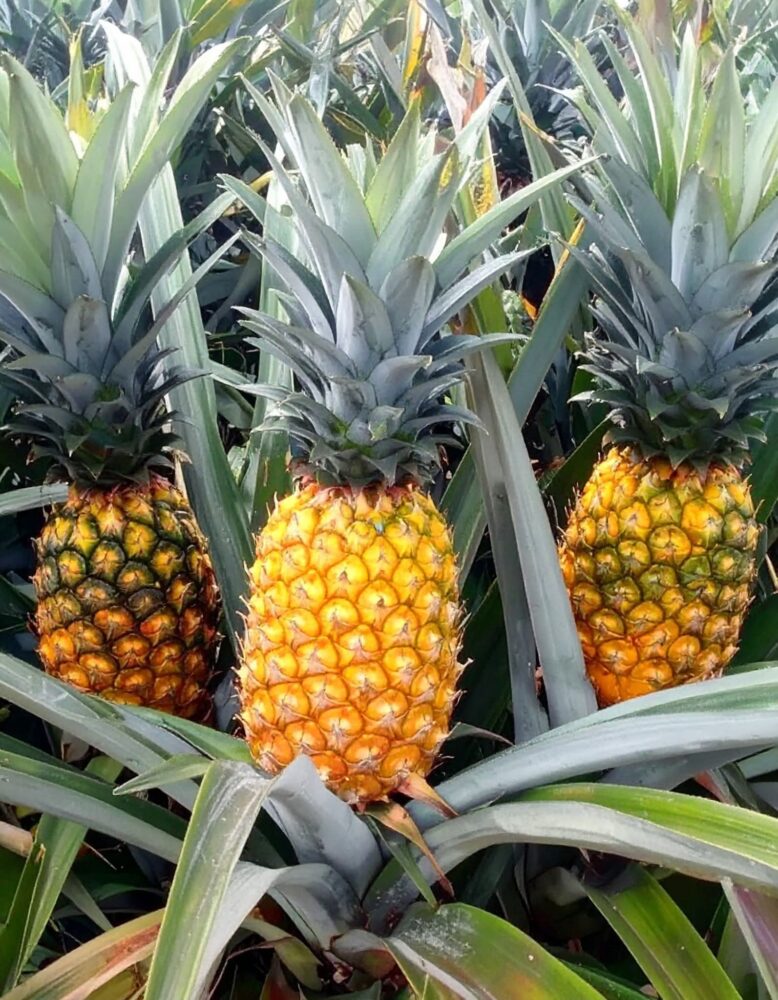
Pineapple farming in Kenya has matured into a technical enterprise that requires careful planning, significant upfront investment, and disciplined management. A farmer who plants certified Smooth Cayenne or MD2 suckers today will wait 14 to 18 months for the first harvest, but each plant produces exactly one pineapple per cycle, and a well-managed acre with 25,000 plants yields 25,000 fruits annually. With retail prices ranging from 70 to 100 shillings per kilogram in urban centers like Nairobi and Mombasa, the gross revenue potential for a commercial grower reaches 800,000 to 1.2 million shillings per acre per cycle.
This informative feature by Farmers Trend Limited examines the technical and economic realities of commercial pineapple farming in Kenya, focusing specifically on variety selection, orchard engineering, nutritional management, harvest logistics, and financial projections. The information comes from successful growers, export processors and horticultural research stations.

The 2026 Industrial Shift in Kenyan Pineapple Value Chains
Pineapple farming in Kenya has historically been dominated by smallholder farmers growing the Smooth Cayenne variety for processing at Del Monte and other juice manufacturers, but the market dynamics have shifted significantly in recent years. The closure of Del Monte’s Thika operations in 2017 forced thousands of farmers to seek alternative buyers, and this disruption catalyzed a diversification of both varieties and market channels. Today, farmers have access to the MD2 hybrid, which is preferred by fresh export markets for its high sugar content, golden color, and extended shelf life.
The domestic consumption of pineapple has grown steadily as urban populations in Nairobi, Mombasa, Kisumu, and Nakuru have expanded, and the fruit is now a staple in household fruit baskets, hotel breakfast buffets, and street food vendor stalls. Processors like Kenya Nut, Evergreen Agro, and Freshco Juices buy large volumes of fruit for juice blending, dried slices, and canned products. The export market to the United Kingdom and European Union also remains active, with Kenyan pineapples competing alongside produce from Uganda, Ghana, and South Africa.
The primary growing zones for pineapple farming in Kenya include the high-potential areas of Central Kenya, specifically Thika, Kiambu, Murang’a, and parts of Kirinyaga, where the volcanic soils and reliable rainfall support vigorous growth. The Coastal belt, including Malindi, Kilifi, and Kwale, also produces significant volumes, though the hotter conditions require more intensive irrigation management. Western Kenya, particularly Homabay and parts of Migori, has emerged as a new production zone, with farmers taking advantage of the region’s warm temperatures and adequate rainfall.
| Variety | Maturation Time | Sugar Content (Brix) | Yield per Acre | Primary Market |
|---|---|---|---|---|
| Smooth Cayenne | 16-18 months | 12-14 | 25,000 fruits | Processing, juice |
| MD2 | 14-16 months | 14-16 | 25,000 fruits | Fresh export, premium local |
| Queen | 18-20 months | 16-18 | 20,000 fruits | Niche fresh market |

Genetics and Material Selection: Analyzing the 30 KSh Sucker Investment Strategy
The choice of planting material is the single most important decision in commercial pineapple farming in Kenya because the variety determines the maturation timeline, the sugar content, the market suitability, and ultimately the profitability of the enterprise. Farmers Trend Ltd offers certified Smooth Cayenne and MD2 pineapple suckers at 30 shillings per sucker, and these plants are produced under strict KEPHIS supervision to ensure varietal purity and disease-free status.
The Smooth Cayenne variety has been the workhorse of the Kenyan pineapple industry for decades, and it remains the preferred choice for juice processors because of its high acidity and consistent juice yield. The fruit is medium to large, with a pale yellow flesh and a fibrous core, and it matures in 16 to 18 months under good management. Smooth Cayenne is more tolerant of marginal conditions than MD2, making it a safer choice for farmers in areas with less reliable rainfall or irrigation.
The MD2 variety, by contrast, has become the standard for fresh export markets because of its deep golden color, high sugar content of 14 to 16 degrees Brix, and extended shelf life of 14 to 21 days under proper cold chain conditions. The fruit is smaller and more uniform than Smooth Cayenne, weighing 1.5 to 2 kilograms, and it matures faster at 14 to 16 months. MD2 requires more precise management of nutrition and irrigation, but the premium prices paid by exporters justify the additional investment.
The cost of suckers is a significant component of the establishment budget, and a farmer planting 25,000 suckers per acre will spend 750,000 shillings on planting material alone. This upfront investment is substantial, but the suckers produce fruit for 4 to 5 years through the plant crop and one or two ratoon cycles, so the annualized cost drops to 150,000 to 187,000 shillings per year. Farmers who attempt to use cheap, uncertified suckers risk introducing diseases like mealybug wilt or planting low-yielding varieties that never achieve commercial viability.
| Cost Item | Quantity | Unit Price | Total |
|---|---|---|---|
| Certified MD2 or Smooth Cayenne suckers | 25,000 | 30 KSh | 750,000 KSh |
| Land preparation | 1 acre | 15,000 KSh | 15,000 KSh |
| Raised bed formation | 1 acre | 10,000 KSh | 10,000 KSh |
| Manure (5 tons) | 5,000 kg | 3,000 KSh/ton | 15,000 KSh |
| DAP fertilizer | 100 kg | 130 KSh/kg | 13,000 KSh |
| Drip irrigation system | 1 acre | 60,000 KSh | 60,000 KSh |
| Mulch materials | 1 acre | 15,000 KSh | 15,000 KSh |
| Labor (planting, weeding) | 30 days | 500 KSh/day | 15,000 KSh |
| Pest control materials | 1 acre | 10,000 KSh | 10,000 KSh |
| Total First-Year Investment | 903,000 KSh |
Orchard Engineering: Double-Row Bed Systems and High-Density Population
The engineering of a commercial pineapple plantation requires careful attention to drainage, plant spacing, and soil preparation because the pineapple plant is highly sensitive to waterlogging and root diseases. The standard configuration for high-density planting is the double-row bed system, where two rows of plants are placed on a raised bed measuring 1 meter wide, with a 60 centimeter pathway between beds. This arrangement allows for 25,000 plants per acre, which is the optimal population for commercial production.
The raised beds should be 20 to 30 centimeters high to ensure adequate drainage during heavy rainfall, and the beds should be oriented north-south to maximize sunlight exposure across the planting area. The double-row configuration places the plants at 30 centimeters within the row and 50 centimeters between rows, and this spacing gives each plant enough room to develop its full rosette without competing with neighbors.
The planting holes should be 15 centimeters deep, and the suckers should be placed with the base firmly in contact with the soil while the growing point remains above ground. Planting too deep causes the sucker to rot, and planting too shallow allows the plant to topple over as it grows. After planting, the soil should be firmed around the base of each sucker to eliminate air pockets.
Mulching is an essential practice in pineapple farming in Kenya because it conserves soil moisture, suppresses weed growth, and moderates soil temperature. The recommended mulch material is dry grass, rice hulls, or coffee husks, applied at a depth of 10 to 15 centimeters around each plant. Mulch also adds organic matter to the soil as it decomposes, improving soil structure over time.

Nutritional Management: Managing Soil Acidity and the Potassium-Brix Relationship
The soil requirements for pineapple farming in Kenya are specific, and the crop thrives in well-drained sandy loam soils with a pH range of 4.5 to 6.5, which is more acidic than many other tropical fruits. Soils with a pH above 6.5 can cause micronutrient deficiencies, particularly iron and zinc, which manifest as yellowing of the leaves and reduced fruit size. Farmers should conduct a soil test before planting, and the results will guide the application of sulfur or other acidifying agents if the pH is too high.
Phosphorus is the most critical nutrient during the establishment phase because it supports root development and early plant vigor. Apply DAP fertilizer at 100 kilograms per acre at planting, placing the fertilizer in a band 10 centimeters away from the sucker to prevent root burn. Nitrogen is important for vegetative growth, and CAN should be applied at 50 kilograms per acre at 3 months and 6 months after planting.
Potassium is the key driver of fruit quality in pineapple farming in Kenya because it directly influences the sugar content, measured as degrees Brix. Exporters require MD2 fruits to have a Brix reading of 14 or higher, and this level of sweetness can only be achieved with adequate potassium nutrition. Apply potassium sulphate at 100 kilograms per acre during the fruit development stage, which occurs 4 to 5 months before harvest.
The application of flower induction agents is a critical management practice in commercial pineapple farming because it synchronizes flowering and ensures that the fruit matures uniformly across the field. The standard protocol uses calcium carbide or ethephon, applied when the plants are 9 to 12 months old, and the treatment should be done in the evening when temperatures are cool. Flower induction forces the plant to produce a uniform flower cluster, and the fruit will be ready for harvest 5 to 6 months after treatment.
The Harvest and Export Logistics: Managing Post-Harvest Physiology for Global Markets
The maturity indices for pineapple are based on both external color and internal sugar content, and the fruit should be harvested when the base of the fruit begins to turn from green to yellow. For the MD2 variety destined for export, the optimal harvest stage is when the fruit shows 25 to 50 percent yellow color, because the fruit will continue to ripen during transit. Smooth Cayenne fruit for processing can be harvested at a greener stage because the juice extraction process does not require full ripeness.

The float test is a simple method for assessing fruit maturity, and a mature pineapple will float in water while an immature fruit will sink. This test is useful for field sorting, but it should be confirmed with Brix readings using a refractometer. The sugar content of export-grade MD2 fruit should be at least 14 degrees Brix, and any fruit below this threshold should be diverted to the processing market.
The post-harvest handling of export pineapples requires a strict cold chain to maintain quality during transport to the UK and European markets. The fruit should be cooled to 8 to 10 degrees Celsius within 4 hours of harvest, and it should be stored at this temperature until loading onto the shipping container. The relative humidity should be maintained at 85 to 90 percent to prevent dehydration, and the fruit should be packed in single-layer cartons with cushioning to prevent bruising.
The export market for Kenyan pineapples is regulated by GlobalGAP certification, and farmers who want to supply exporters like Kenya Nut or Freshco Juices must comply with strict food safety and traceability standards. The certification process costs 50,000 to 100,000 shillings initially, with annual renewal fees, but the premium prices paid for certified fruit justify the investment.
| Year | Cycle | Yield (fruits) | Price per Fruit | Gross Revenue | Net Profit |
|---|---|---|---|---|---|
| 1 | Establishment | 0 | 40 | 0 | -903,000 |
| 2 | Plant crop | 25,000 | 50 | 1,250,000 | 347,000 |
| 3 | Ratoon 1 | 20,000 | 50 | 1,000,000 | 397,000 |
| 4 | Ratoon 2 | 15,000 | 50 | 750,000 | 147,000 |
| 5 | Replant | 0 | 50 | 0 | -903,000 |

Next Step for Pineapple Farming in Kenya
Pineapple farming in Kenya is a capital-intensive but potentially rewarding enterprise for farmers who have access to irrigation, good soil, and reliable markets. Certified Smooth Cayenne and MD2 suckers from Farmers Trend cost 30 shillings each, and a well-managed acre with 25,000 plants yields 25,000 fruits annually. The retail price ranges from 70 to 100 shillings per kilogram, and the gross revenue reaches 800,000 to 1.2 million shillings per acre per cycle.
The best time to plant is at the onset of the long rains in March or the short rains in October, though farmers with irrigation can establish plantations year-round. The economic lifespan of a plantation is 4 to 5 years, encompassing the plant crop and one or two ratoon cycles, and farmers should plan for replanting after this period to maintain productivity.
For certified Smooth Cayenne and MD2 suckers at 30 KSh, technical site suitability audits, and the 2026 Pineapple farming in Kenya PDF guide, contact Farmers Trend Ltd at 0790509684. The team can also advise on orchard establishment, irrigation design, and market linkages with processors and exporters. The time to invest in pineapple farming is now.
https://farmerstrend.co.ke/fruits/pineapple-farming/pineapple-farming-in-kenya-2026-guide/https://farmerstrend.co.ke/wp-content/uploads/2026/04/HBaYV5RbgAAxCjP-797x1024.jpghttps://farmerstrend.co.ke/wp-content/uploads/2026/04/HBaYV5RbgAAxCjP-150x150.jpgPineapple farming# TrendingCost of pineapple farming per acre,Double-row bed system pineapple,Farmers Trend pineapple suckers,MD2 pineapple variety Kenya,Pineapple export Kenya EU,Pineapple farming in Kenya PDF,Pineapple flower induction,Pineapple market in Kenya,Pineapple yield per acre Kenya 2026,Smooth Cayenne pineapple suckers KenyaThe Pineapple Prospectus: Strategic Scaling for Kenya's 2026 Fresh and Processed Export Markets The pineapple sector in Kenya is experiencing a structural transformation, driven by rising domestic consumption that reached 284,000 metric tons in 2025 and growing demand from regional export markets. Farmers in Central Kenya, the Coastal belt, and...FarmersTrendjohn doefarmerstrend@gmail.comAdministratorFarmers Trend Ltd.

Leave a Reply