Chives Farming in Kenya: The 2026 Definitive Guide to Earning KSh 1.3 Million Per Acre with Export Contracts
Chives Farming in Kenya: The 2026 Blueprint for Export and Local Profits
Chives farming in Kenya offers one of the most reliable paths to income in the horticulture sector. Walk through the highlands of Nyeri, the fertile plains of Kiambu, or the organized farms in Nakuru, and you will find farmers who have discovered the profit potential of this slender herb. The reason is simple. Chives provide quick returns, multiple harvests over several years, and access to premium export markets.

The numbers attract serious farmers. A well-managed acre of chives produces 5,000 to 8,000 kilograms annually. At local wholesale prices of 300 shillings per kilogram, gross revenue reaches 1.5 million to 2.4 million shillings per acre. Export markets pay 600 shillings per kilogram and above, pushing revenues to 3 million to 4.8 million shillings. With production costs of approximately 3.2 million shillings for the first year including drip irrigation setup, net profits from the second year onward exceed 1 million shillings annually.
The global demand for chives continues rising. European markets like the Netherlands, Germany, and the UK import Kenyan chives year-round. Middle Eastern countries seek consistent supply. Locally, supermarkets like Naivas and Carrefour stock fresh chives, while hotels and restaurants use them daily. This guide by Farmers Trend Ltd. provides everything you need to know about commercial chives farming in Kenya.

The 2026 Market Status for Chives Farming in Kenya
How to start chives farming in Kenya begins with understanding the market dynamics. Herbs prices do not fluctuate much in market like they do with other vegetables. Most chives are sold directly to wholesalers, where the prices remain constant and standard throughout the year. This price stability makes chives farming a reliable income source compared to traditional crops like maize or beans.
The export market for chives in Kenya is particularly strong. Companies export chives, mint, coriander, basil, rosemary, sage, dill, and French tarragon to international markets. The largest market is the Netherlands, but exporters also send herbs to Germany, Russia, and the UK where demand is strong, and to the Middle East where coriander has a good market. The cut herbs are shipped by air, with a shelf life of around one week once they reach their destination.
How profitable is chives farming in Kenya compared to traditional crops? The farm-gate price of chives in Kenya averages 150 shillings per kilogram for local markets. Export prices reach 300 shillings per kilogram, almost double the local market price. This price difference has encouraged farmers to improve their farming practices and invest in better infrastructure to meet the quality standards of international markets.
In Siaya County, one farm has transformed traditional land into herb production, creating employment for local youth and women who formed a self-help group to grow their economic fortunes. The farm has attained Global GAP certification for good agricultural practices, positioning itself as a supplier of herbs from Western Kenya.
Ecological Requirements for Chives Farming in Kenya
Chives thrive in specific ecological conditions. The optimal temperature range for chives farming in Kenya is 15°C to 30°C. They tolerate mild frost but perform best in cool, sunny conditions. Chives require moderate rainfall of 600 to 800 millimeters annually. In drier regions, irrigation supplements water needs.
The altitude range for chives cultivation extends from sea level to 2,000 meters above sea level. This wide range allows farmers across Kenya to grow chives successfully. Central Kenya counties like Nyeri, Kiambu, and Murang’a offer prime conditions. Rift Valley areas including Nakuru and Eldoret also work well. Western Kenya regions such as Kisumu and Kakamega are equally suitable.
Soil requirements are specific. Chives prefer well-drained, sandy, or loamy soils with good aeration. Avoid waterlogged or heavy clay soils as they cause root rot. Soil pH should range from 6.0 to 7.0, slightly acidic to neutral. The crop requires full sunlight exposure, ideally 6 to 8 hours daily.
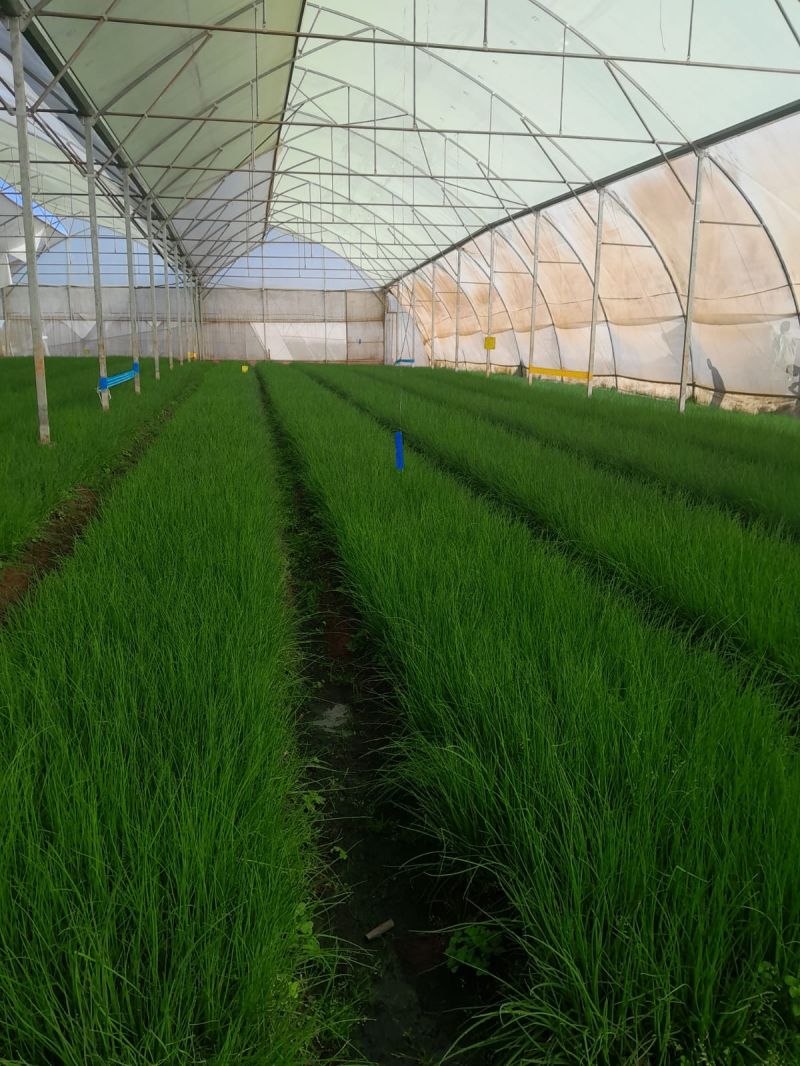
Variety Selection for the Kenyan Market
The chives market in Kenya demands two main varieties. Understanding these helps you choose the right type for your target market.
Common chives, often called onion chives, are well-known among cooks and gardeners. The blossoms resemble spiky tiny purple balls and are edible. Three common types exist within this variety. Fine leaf chives are thinner and suitable for fresh use. Purly chives have thicker leaves and are more productive. Staro chives are large and thick-leafed, making them ideal for freezing or drying.
Garlic chives, often known as Chinese or Oriental chives, are a flat-leafed type with a mild garlicky taste. They are widely available as seeds and seedlings. This type has fragrant white blooms that appear later in the season. Garlic chives sprout faster after harvest and are more productive than regular chives. Unlike standard chives, Chinese chives do not suffer from tip die-back following harvesting.
Where to find chives seeds in Kenya? Farmers Trend Ltd nurseries offer high-quality chives seedlings through their Virtual Agrovet platform. Their seedlings are disease-free, fast-growing, and tailored to thrive in Kenya’s diverse climatic conditions. At 250 shillings per seedling, they provide excellent value for money. Contact Farmers Trend Ltd at 0790509684 or visit their Virtual Agrovet platform to place orders.
Cultivation Strategy for Chives Farming in Kenya
How long does it take for chives to grow? Chives takes about 45 days to mature after planting. After the first harvest, farmers harvest a crop every 20 to 25 days for up to three years. As a perennial crop, chives is easy to grow and is rarely attacked by pests and diseases, making it very attractive for farmers.
Chives can multiply through clump division, which is the preferred propagation method for faster establishment. To propagate using divisions, gently dig the clump and pull away a smaller clump from the main clump. The smaller clump should have at least five to ten bulbs. Transplant this small clump to the desired location where you will be growing chives. When planted from separated clumps, chives establish themselves within two to three weeks and thicken with each harvest.
How many chives does one seed produce? When using seeds, each seed produces one plant that multiplies into a clump over time. Seeds can be raised in a nursery indoors or outdoors before transplanting. Transplant when the seedlings attain 15 centimeters in height. Chives germinate best at temperatures ranging from 15 to 20 degrees Celsius with consistent moisture. However, the resulting plants grow slowly and mature later compared to clump division.
For seedling propagation versus bulb propagation, clump division is superior for commercial production. To get planting material from bulbs, remove the bulbs from the foliage, leaving 3.8 to 5 centimeters of the bulb base. After harvesting, replant the bulbs as soon as possible. Retain them for no more than five to seven days before planting.
Land Preparation and Planting
Proper land preparation is crucial for successful chives farming in Kenya. Prepare the seedbed well and remove all weeds. Harrow the seedbed to a fine tilth desired for the crop. The first digging should be deep, followed by shallow harrowing to create moist, flexible soil. Virgin lands should be ploughed twice down and across the field to a depth of at least 30 centimeters.
Incorporate well-decomposed manure during land preparation. Apply 20 to 25 tons of manure per acre. Manure improves soil structure and provides slow-release nutrition throughout the growing season. If using synthetic fertilizers, apply DAP at 200 kilograms per acre during planting.
Form raised beds if your soil drains slowly. Beds 15 to 20 centimeters high improve drainage and root health. In well-drained soils, flat planting works adequately. Bed width of 1 meter allows easy access for planting, weeding, and harvesting.
Planting density determines your yield potential. Space plants 30 centimeters between rows and 20 centimeters within rows. This spacing gives approximately 66,000 plants per acre. Higher density planting of 25 by 20 centimeters gives 80,000 plants per acre for farmers seeking maximum early production.
Plant divisions or seedlings at the same depth they grew in the nursery. The crown should stay at soil level. Planting too deep encourages stem rot. Planting too shallow exposes roots to drying.

Feeding and Irrigation for Chives Farming in Kenya
What is the best fertilizer for chives? Chives respond well to balanced nutrition throughout the growing season. Apply NPK 17:17:17 at planting to provide balanced nutrients for establishment. Use 200 kilograms per acre mixed with soil before planting.
During the growth phase, apply nitrogen-rich fertilizers to support leaf development. Use calcium nitrate at 100 kilograms per acre every six to eight weeks. Split applications into smaller doses for better uptake.
Calcium-rich foliars improve leaf quality and prevent disorders. Spray calcium-based foliar fertilizers every three to four weeks during active growth. Foliar applications provide quick nutrient boosts when plants need them most.
Organic matter remains important. Top-dress with compost or well-decomposed manure twice yearly. Apply 5 to 10 tons per acre at the start of rains and after heavy harvest periods.
How often to water chives? Chives need consistent moisture for optimal growth. Drip irrigation is the most efficient delivery method. During dry weather, water every two to three days. Apply enough water to moisten the root zone to 20 centimeters depth.
During the first month after planting, water more frequently to support establishment. As plants mature, adjust frequency based on weather and soil type. Sandy soils need more frequent watering than clay soils.
Mulching conserves moisture and suppresses weeds. Apply 5 to 10 centimeters of dry grass or other organic material around plants. Keep mulch away from plant stems to prevent rot.
What Should Not Be Planted Near Chives
What should not be planted near chives? Avoid planting legumes like peas and beans near chives. Chives inhibit the growth of legumes through allelopathic effects. This growth inhibition reduces yields of nearby legume crops.
Plant chives away from asparagus and spinach. These crops compete poorly with chives for nutrients. Good companions for chives include carrots, tomatoes, and brassicas. Chives improve the flavor of carrots when planted nearby.
In crop rotation, follow chives with leafy vegetables or cereals. Avoid planting chives after other alliums like onions or garlic to prevent soil-borne disease buildup. A three-year rotation between allium crops maintains soil health.

Harvesting Cycles and Yield Optimization
How many times can you harvest chives? A well-managed chives planting produces three to four harvests annually for up to three years. After the initial 45-day establishment period, harvest every 20 to 25 days during active growth.
Do chives regrow once cut? Yes, chives regrow vigorously after cutting. Harvest by cutting leaves 2 to 3 centimeters above the crown. Use sharp scissors or knives to make clean cuts. Tearing damages plants and invites disease.
First harvest occurs 45 to 60 days after planting, depending on growing conditions. Plants should be at least 15 centimeters tall before first harvest. Early harvesting before plants are established reduces total yield.
Subsequent harvests follow every three to four weeks during warm weather. Cool weather slows regrowth, extending intervals between harvests. In very hot weather, harvest more frequently to prevent flowering and leaf toughening.
What specific month to harvest chives for peak essential oils? Harvest in the morning after dew dries but before heat stresses plants. Essential oil content peaks in the early morning. Leaves harvested at this time have stronger flavor and longer shelf life.
For fresh market, harvest leaves when they are 15 to 25 centimeters long. Younger leaves are tender and flavorful. Older leaves become tough and develop strong flavor.
For processing or drying, harvest at full maturity when leaves are 25 to 30 centimeters long. These leaves have higher dry matter content and process more efficiently.
Yield Expectations and Financial Projections
How many kgs of chives per acre? A well-managed acre of chives produces 5,000 to 8,000 kilograms annually. This assumes 66,000 plants per acre producing 75 to 120 grams per harvest, with three to four harvests annually.
First year yields are lower as plants establish. Expect 3,000 to 4,000 kilograms in year one. Second and third year yields reach full potential as plants mature and clumps expand.
What is the current chives price per kg in Kenya? Local wholesale prices range from 200 to 300 shillings per kilogram depending on season and quality. Retail prices in Nairobi supermarkets reach 400 to 600 shillings per kilogram.
Export prices average 600 shillings per kilogram FOB Nairobi. Prices peak during European winter when local production slows. Farmers with Global GAP certification access these premium markets.

2026 Chives Commercial Production Budget Table
| Cost Item | Amount (KSh) |
|---|---|
| Seedlings (66,000 at KSh 250 from Farmers Trend Ltd) | 1,650,000 |
| Land preparation | 50,000 |
| Manure (25 tons) | 75,000 |
| Drip irrigation system (1 acre) | 250,000 |
| Mulch materials | 50,000 |
| Fertilizers (annual) | 80,000 |
| Pest control materials | 40,000 |
| Labor (planting, weeding, harvest) | 900,000 |
| Certification and export compliance | 100,000 |
| Total First-Year Investment | 3,195,000 |
| Revenue Projection | Amount (KSh) |
|---|---|
| Year 1 yield (4,000 kg at KSh 300) | 1,200,000 |
| Year 2 yield (6,000 kg at KSh 300) | 1,800,000 |
| Year 3 yield (7,000 kg at KSh 300) | 2,100,000 |
| Year 1 net profit | -1,995,000 |
| Year 2 net profit (costs KSh 800,000) | 1,000,000 |
| Year 3 net profit (costs KSh 800,000) | 1,300,000 |
Cumulative profit over three years exceeds 300,000 shillings with full recovery of first-year investment. With export prices at 600 shillings per kilogram, profits double.
Nutritional and Fertilizer Application Schedule Table
| Growth Stage | Timing | Fertilizer | Rate per Acre | Application Method |
|---|---|---|---|---|
| Pre-planting | Before planting | Manure | 25 tons | Incorporate in soil |
| Planting | At planting | DAP | 200 kg | Band in planting rows |
| Early growth | 3-4 weeks after planting | Calcium nitrate | 50 kg | Side dress |
| Active growth | Every 6-8 weeks | Calcium nitrate | 50 kg | Side dress |
| After each harvest | Within 3 days of harvest | Calcium nitrate | 50 kg | Side dress |
| Throughout season | Monthly | Foliar calcium | As labeled | Foliar spray |
| Throughout season | Monthly | Seaweed extract | As labeled | Foliar spray |
Pest Control and Export Traceability
Some common chive problems include thrips, leaf miners, and downy mildew. Identifying these early prevents crop losses.
Thrips are tiny insects that rasp leaf tissues and suck plant fluids. Damaged leaves show silvery streaks and distorted growth. Severe infestation reduces yield and quality. Control using blue sticky traps to monitor populations. Apply spinosad-based products when thresholds are reached. Rotate between chemical classes to prevent resistance.

Leaf miners tunnel between leaf surfaces, creating visible trails. Damaged leaves have reduced photosynthetic area and are unmarketable. Remove and destroy infested leaves. Use systemic insecticides when populations are high. Introduce parasitic wasps for biological control in greenhouses.
Downy mildew appears as yellow spots on leaf surfaces with fuzzy growth on undersides. It spreads rapidly in cool, wet conditions. Space plants properly for air circulation. Avoid overhead irrigation that keeps leaves wet. Apply copper-based fungicides preventatively. Remove infected plants promptly.
The 2026 National Horticulture Traceability System requires all export herbs to be traceable from farm to consumer. Farmers must maintain records of seed sources, inputs used, and harvest dates. Exporters require Global GAP certification. This standard covers food safety, environmental sustainability, and worker welfare. Certification costs 50,000 to 100,000 shillings initially, with annual renewal fees. Many exporters assist farmers with certification.
The Farmers Trend Ltd Advantage
Farmers Trend Ltd provides certified chives seedlings through their nurseries and Virtual Agrovet platform. Their seedlings are propagated from select mother stock, ensuring genetic quality and disease-free plants.
Contact Farmers Trend Ltd at 0790509684 to place orders or inquire about availability. The Virtual Agrovet platform allows you to order online with delivery arranged to your farm. Browse varieties, check prices, and place orders at any time.
Technical support continues after purchase. Farmers Trend Ltd staff advise on planting, irrigation, fertilization, and pest control. This ongoing relationship increases your chances of success.
Next Step
Chives farming in Kenya offers one of the most reliable paths to horticulture income. The crop establishes in 45 days. Plants produce for three years with three to four harvests annually. Local prices average 300 shillings per kilogram. Export prices reach 600 shillings per kilogram.
The 2026 planting windows approach. March to May and September to October offer ideal conditions with the rains. Your seedlings are waiting at Farmers Trend Ltd nurseries. The Virtual Agrovet platform makes ordering simple.
Start with soil testing to know your pH and nutrient levels. Choose the right variety for your market. Common chives for fresh local sales. Garlic chives for export and processing.
Prepare your land thoroughly. Install drip irrigation for consistent moisture. Order your certified chives seedlings from Farmers Trend Ltd through their Virtual Agrovet platform or call them at 0790509684.
The farmers earning substantial incomes from chives started exactly where you are now. They learned, they planned, and they took action. You can do the same.
Your chives farming in Kenya journey begins today. The market is waiting. The profits are real. The time to act is now.
https://farmerstrend.co.ke/trending/chives-farming-in-kenya-export-guide/https://farmerstrend.co.ke/wp-content/uploads/2026/03/chives-market-in-kenya-768x1024.jpeghttps://farmerstrend.co.ke/wp-content/uploads/2026/03/chives-market-in-kenya-150x150.jpeg# TrendingChives FarmingChives Farming in Kenya: The 2026 Blueprint for Export and Local Profits Chives farming in Kenya offers one of the most reliable paths to income in the horticulture sector. Walk through the highlands of Nyeri, the fertile plains of Kiambu, or the organized farms in Nakuru, and you will find...FarmersTrendjohn doefarmerstrend@gmail.comAdministratorFarmers Trend Ltd.








Leave a Reply