Groundnut Farming in Kenya: The 2026 Successful Guide to Earning KSh 330,000 Per Acre
Groundnut Farming in Kenya: The 2026 Definitive Guide to Commercial Success
Groundnut farming in Kenya is one of the most reliable pathways to agricultural prosperity, particularly for farmers in arid and semi-arid regions. Known locally as njugu karanga, this humble legume has transformed from a subsistence crop into a commercial powerhouse feeding Kenya’s growing processing industry and export market.

The numbers tell a compelling story. A well-managed acre yields 1,200 to 1,500 kilograms of shelled groundnuts. At current wholesale prices of 250 shillings per kilogram, gross revenue reaches 300,000 to 375,000 shillings per acre. After subtracting production costs of approximately 45,000 shillings, net profit stands at 255,000 to 330,000 shillings. With two seasons annually in irrigated areas, annual returns exceed 500,000 shillings per acre.
The demand for groundnuts in Kenya’s processing industry continues expanding. Peanut butter manufacturers, confectionery companies, and snack food processors seek consistent supply. The rise of health-conscious consumers has increased demand for groundnut-based products. Export opportunities to regional and international markets are growing.
This guide by Farmers Trend Ltd. provides everything you need to know about groundnut farming in Kenya. You will learn about variety selection, establishment costs, planting techniques, pest management, and market opportunities. The information comes from successful commercial growers and agricultural research stations across the country.

The Economic Status of Groundnut Farming in Kenya
Is groundnut a good business? Yes, and the evidence comes from farmers across Kenya who have transformed their lives through this crop. Farmers in Siaya County increased their income significantly after adopting certified seeds and proper agronomic practices. These farmers now produce peanut butter, roasted nut bites, and raw peanut flour for sale to hotels in Kisumu.
How to start a groundnut business begins with understanding the market. Groundnuts in Kenya trade at approximately 250 shillings per kilogram wholesale and 300 shillings per kilogram retail. A 50-kilogram bag sells for 12,500 to 15,000 shillings depending on quality and location.
Regional price variations create opportunities for savvy farmers. A 110-kilogram bag of groundnuts costs 16,500 shillings at Kongowea Market in Mombasa, compared to 13,800 shillings in Nairobi. The same quantity trades at 12,000 shillings in Kisumu, 14,000 shillings in Nakuru, and 12,600 shillings in Eldoret. Malindi records the highest prices at 16,200 shillings per 110-kilogram bag.
The processing industry offers additional value. Farmers produce peanut butter, selling 400-gram packs to hotels at premium prices. This value addition multiplies returns compared to selling raw nuts.
Ecological Requirements for Groundnut Production
Groundnuts grow best in warm areas below 1,500 meters above sea level with temperatures ranging from 28 to 30 degrees Celsius. Low temperatures during flowering affect pollination and reduce yields significantly.
Rainfall requirements range from 500 to 600 millimeters well-distributed throughout the growing season. The crop can survive drought but yields will be substantially reduced. Well-drained sandy loam soils with pH between 5.5 and 7.5 produce the best results. Heavy clay soils cause pod rot and make harvesting difficult.
The major groundnut growing regions in Kenya include Western Kenya, Nyanza, Coastal region, and parts of Eastern Kenya. Siaya County has emerged as a leading producer, with farmers increasing productivity through adoption of certified seeds and improved practices.
Turkana County is also joining groundnut production. Farmers at Katilu Irrigation Scheme harvested their first crops after technical support from Egerton University, proving that even pastoral areas can succeed with this drought-tolerant crop.

Varieties for the Kenyan Market
Kenyan farmers grow two main types of groundnuts: bunch types and runner types. Bunch varieties are smaller, tastier, and highly marketable. They mature in 60 to 75 days. Runner varieties are larger and preferred for high yields, maturing in 90 to 100 days.
Red Valencia is a popular bunch variety known for its excellent taste and market acceptance. It is widely grown in Western and Nyanza regions. The red color appeals to consumers and processors.
Egerton M1, also called Ndovu variety, represents the latest advance in groundnut breeding. Developed by Egerton University’s Agro-Science Park, this variety yields 1.5 tonnes per acre, nearly double the 800 kilograms from traditional varieties. Ndovu is best suited to hot and dry areas. Seeds cost 350 shillings per kilogram and are available at the university or during agricultural exhibitions.
Egerton has also developed Mwangaza, a red seed variety suitable for similar conditions. Ndovu yields 1.3 tonnes per acre while Mwangaza produces 10 to 11 bags per acre.
Other varieties found in Kenya include Red Oriata, Manipinta, Makulu Red, Bukene, Homa Bay, Texas Peanut, and Atika. Farmers should select varieties based on their region, target market, and resistance to local pests and diseases.
Where to Buy Groundnut Seeds in Kenya
Where to buy groundnut seeds in Kenya is a critical question for new farmers. Farmers Trend Ltd nurseries and Virtual Agrovet offer certified groundnut seeds through their online platform. The cost of groundnut seeds in Kenya ranges from 600 to 800 shillings per kilogram for certified seed.
The Kenya Agricultural and Livestock Research Organization provides certified seeds at various research stations. KALRO Katumani, KALRO Kakamega, and KALRO Mtwapa maintain mother stocks of improved varieties.
Egerton University sells Ndovu seeds at their Njoro campus. Farmers can also order online with delivery arranged to their locations. The university plans to stock seeds in agrovets across the country.
When buying seeds, look for certified sources. Uncertified seeds from unknown sources often carry diseases and produce poor yields. The investment in quality seeds pays back through higher production.

Land Preparation and Planting
How to plant groundnuts in Kenya starts with proper land preparation. Plough deeply to 20 to 25 centimeters. Break all clods and remove weeds and stones. Groundnuts require a fine seedbed for good germination and peg penetration.
Plant at the onset of rains. In Kenya, best planting seasons are February to March for long rains and August to September for short rains. Early planting ensures adequate moisture throughout the growing period.
Spacing varies with variety. Bunch types require 30 centimeters between rows and 15 centimeters between plants. Runner types need 45 centimeters between rows and 20 centimeters between plants. An acre accommodates approximately 66,000 plants, requiring 16 to 20 kilograms of seeds.
Plant seeds at 5 to 6 centimeters depth. Deeper planting delays emergence. Shallower planting exposes seeds to birds and sun. Plant with the pointed end facing downward for proper germination.
Groundnut seeds per kg count approximately 600 to 800 seeds depending on variety. Calculate your seed requirements based on spacing and plant population targets.
How Long Do Groundnuts Take to Mature
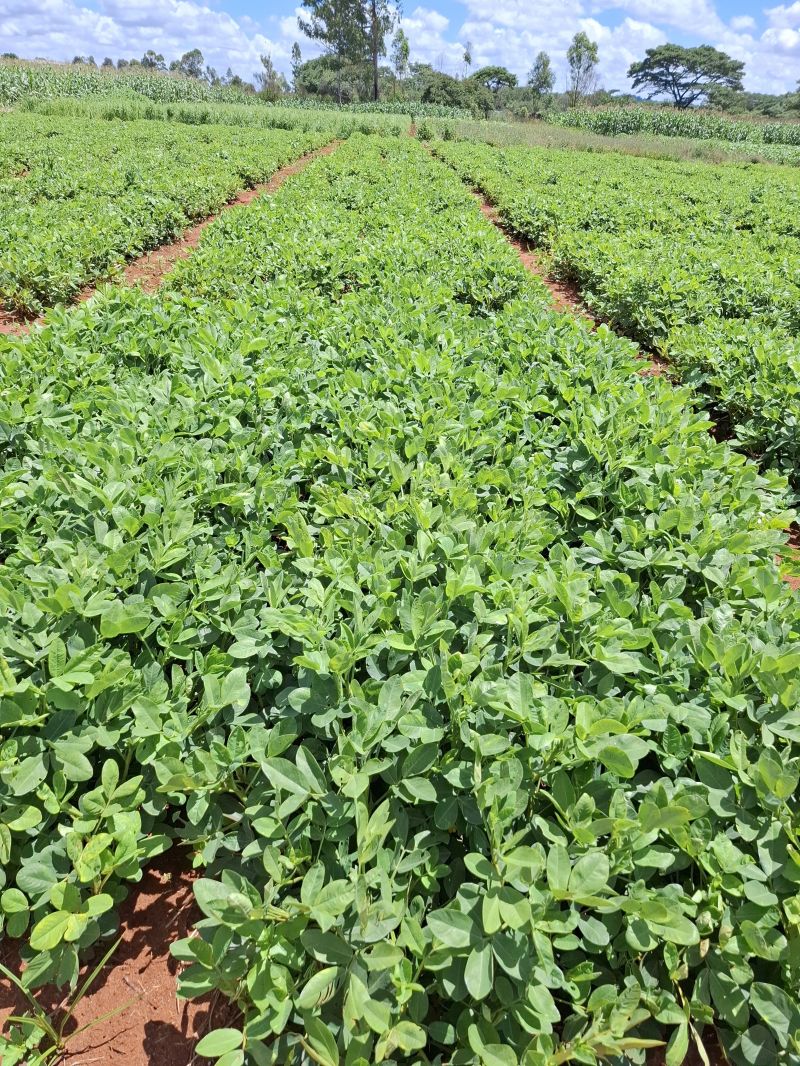
How many days are needed for groundnut cultivation? Maturity ranges from 90 to 120 days depending on variety and growing conditions.
Bunch varieties mature faster, typically in 90 to 100 days. Runner varieties take longer, maturing in 100 to 120 days. Ndovu variety from Egerton takes 4 to 5 months to mature.
How many months does it take for groundnuts to be harvested? Most varieties are ready for harvest in 3 to 4 months. Signs of maturity include yellowing of leaves, hardening of shells, and darkening of the inner shell membrane.
Harvest when about 70 percent of pods are mature. Delaying harvest increases risk of pod detachment and losses. Early harvest reduces yields and affects quality.
Harvesting involves lifting the entire plant using a fork or hoe. Shake off excess soil and dry plants in the field for 2 to 3 days. Stack plants with pods facing inward to protect from sun and rain.
Yield Expectations
How many bags of groundnut per acre? With good management, farmers target 12 to 15 bags of 100 kilograms each. This translates to 1,200 to 1,500 kilograms per acre.
How many kgs of groundnuts per acre? Traditional varieties yield 400 to 600 kilograms per acre. Improved varieties like Ndovu yield up to 1,500 kilograms per acre.
Siaya farmers increased yields from 150 kilograms to 450 kilograms per acre after adopting certified seeds. With proper agronomy, they now achieve 500 to 600 kilograms per acre.
Turkana farmers using Ndovu variety harvest 1.3 tonnes per acre from two acres, demonstrating the potential of improved varieties even in harsh conditions.
Factors affecting yield include seed quality, soil fertility, water availability, and pest management. Farmers who address all these factors consistently achieve the higher end of the yield range.

How to Increase Groundnut Production
How to increase groundnut production requires attention to several key practices that experienced farmers have refined over years of trial and error.
Calcium application is critical for pod development. Groundnuts need adequate calcium when pods are forming. Unlike nitrogen, which the plant fixes through rhizobia bacteria, calcium must be present in the soil where pods develop. Apply gypsum at 200 kilograms per acre at flowering to ensure proper pod fill.
Earthing up is essential. This involves pulling soil around the base of plants to create ridges. Earthing up encourages pegging, where the flower stalks penetrate the soil to form pods. It also covers developing pods, protecting them from sun and pests.
Phosphate fertilizer at 40 kilograms per acre boosts plant vigor and pod development. Apply during planting for best results. Groundnuts are self-sustaining for nitrogen through rhizobia bacteria, so nitrogen fertilizers are unnecessary and actually reduce nitrogen fixation.
Weeding should commence 2 to 3 weeks after germination and continue regularly during early growth. After pegging begins, use hand weeding to avoid disturbing developing pods. Clean weeding up to 6 weeks after planting prevents weed competition that reduces yields.
Cost of Groundnut Farming in Kenya
The cost of groundnut farming in Kenya for one acre includes seeds, land preparation, planting, weeding, harvesting, and threshing.
| Cost Item | Amount |
|---|---|
| Seeds (20kg at KSh 600) | 12,000 KSh |
| Land preparation | 5,000 KSh |
| Planting labor | 3,000 KSh |
| Weeding (2 times) | 4,000 KSh |
| Gypsum/fertilizer | 8,000 KSh |
| Harvesting and threshing | 8,000 KSh |
| Pest control | 3,000 KSh |
| Miscellaneous | 2,000 KSh |
| Total | 45,000 KSh |
This investment covers a single season of 90 to 120 days. With two seasons annually, annual costs double but returns more than double due to fixed infrastructure amortization.
2026 Market Price Comparison Table
| Market | Wholesale Price (110kg bag) | Retail Price (per kg) |
|---|---|---|
| Nairobi | 13,800 KSh | 280 KSh |
| Mombasa | 16,500 KSh | 320 KSh |
| Kisumu | 12,000 KSh | 250 KSh |
| Nakuru | 14,000 KSh | 290 KSh |
| Eldoret | 12,600 KSh | 270 KSh |
| Malindi | 16,200 KSh | 315 KSh |
| Busia | 16,500 KSh | 320 KSh |
Prices vary with season, quality, and market dynamics. Mombasa and Busia consistently offer premium prices due to export demand and processor concentration.
5-Year Growth and Profit Projection Table
| Year | Acreage | Yield (kg) | Price/kg | Gross Revenue | Costs | Net Profit |
|---|---|---|---|---|---|---|
| 1 | 1 | 800 | 250 | 200,000 | 45,000 | 155,000 |
| 2 | 2 | 900 | 260 | 468,000 | 90,000 | 378,000 |
| 3 | 3 | 1,000 | 270 | 810,000 | 135,000 | 675,000 |
| 4 | 4 | 1,100 | 280 | 1,232,000 | 180,000 | 1,052,000 |
| 5 | 5 | 1,200 | 290 | 1,740,000 | 225,000 | 1,515,000 |
This projection assumes increasing yields as experience grows and gradual price appreciation. Actual results vary with management and market conditions.
Pest and Disease Management
Groundnuts face several pests and diseases throughout the growing cycle. Termites, aphids, white grubs, and millipedes attack roots, stem base, leaves, and pods. Prevention through early planting, high farm hygiene, conserving natural enemies, timely harvesting, and using well-decomposed manure reduces losses.
Aflatoxin is the most serious quality concern in groundnuts. This poisonous compound produced by certain fungi develops when nuts are stored in humid conditions. Proper drying to 10 percent moisture content and storage in dry, well-ventilated facilities prevents aflatoxin contamination.
Leaf spot diseases cause defoliation and yield loss. Copper-based fungicides provide control when applied early. Rotate crops and practice field sanitation to reduce disease pressure.

Red Versus White Groundnuts
Red and white groundnuts serve different market segments in Kenya. Red varieties like Red Valencia are preferred for roasting and direct consumption. Their attractive color signals quality to consumers. They command slightly higher retail prices but have lower yields.
White varieties like Manipinta are favored for processing. They have higher oil content and produce smoother peanut butter. Processors often specify white varieties for consistency. Yields are typically higher than red varieties.
Both types grow under similar conditions. Choose based on your target market. Farmers supplying processors should prioritize white varieties. Those selling directly to consumers or roasting operations should consider red varieties.

Marketing Your Groundnuts
Groundnuts move through multiple market channels in Kenya. Fresh produce markets in major towns are the most accessible outlet for small farmers. Nairobi’s Wakulima Market, Mombasa’s Kongowea Market, and Kisumu’s Kibuye Market have dedicated groundnut sections.
Processors offer stable demand for consistent supply. Peanut butter manufacturers, bakeries, and snack food companies need raw materials year-round. Approach processors with samples and a supply proposal. Building relationships with processors provides reliable income.
Value addition creates additional opportunities. Roast and package groundnuts for retail sale. Process into peanut butter. Grind into flour for the health food market. Value-added products fetch two to three times the price of raw nuts.
Export markets exist in Uganda, South Sudan, and beyond. Export requires certification and consistent quality. Work with export companies if you can meet their requirements.

Next Step
Groundnut farming in Kenya offers one of the most profitable opportunities in dryland agriculture. The crop matures in 90 to 120 days. Yields reach 1,500 kilograms per acre with improved varieties. Prices range from 250 to 320 shillings per kilogram depending on market. Net profits exceed 250,000 shillings per acre per season.
The 2026 planting windows approach. February to March and August to September offer ideal conditions with the rains. Your seeds are waiting at Farmers Trend Ltd and certified suppliers. Your land is ready for preparation.
Start with soil testing to know your pH and nutrient levels. Choose the right variety for your market. Red Valencia for direct sales. Ndovu for maximum yields. Manipinta for processing.
Prepare your land thoroughly. Create a fine seedbed for small seeds. Plant at correct spacing and depth. Apply gypsum at flowering. Earth up to protect developing pods.
Order your certified seeds from Farmers Trend Ltd through their Virtual Agrovet platform. Buy quality seeds to ensure true-to-type plants and disease-free establishment.
The farmers earning substantial incomes from groundnuts started exactly where you are now. They learned, they planned, and they took action. You can do the same.
Your groundnut farming in Kenya journey begins today. The market is waiting. The profits are real. The time to act is now.
https://farmerstrend.co.ke/trending/groundnut-farming-in-kenya-definitive-guide/https://farmerstrend.co.ke/wp-content/uploads/2026/03/groundnut-farming-guide.jpeghttps://farmerstrend.co.ke/wp-content/uploads/2026/03/groundnut-farming-guide-150x150.jpeg# TrendingGroundnut farming1kg groundnuts price today,cost of groundnut seeds in kenya,Farmers Trend groundnut seeds,Groundnut farming in Kenya PDF,Groundnut maturity period Kenya,Groundnut profit per acre Kenya,Groundnut yield per acre in Kenya,how many bags of groundnut per acre,how to plant groundnuts in Kenya,Ndovu groundnut variety,Red Valencia groundnuts Kenya,Red vs white groundnuts Kenya,Virtual agrovet groundnut seedsGroundnut Farming in Kenya: The 2026 Definitive Guide to Commercial Success Groundnut farming in Kenya is one of the most reliable pathways to agricultural prosperity, particularly for farmers in arid and semi-arid regions. Known locally as njugu karanga, this humble legume has transformed from a subsistence crop into a commercial...FarmersTrendjohn doefarmerstrend@gmail.comAdministratorFarmers Trend Ltd.

I am shadrack wambua musyoka a resident of makueni county,a dedicated peanut farmer in the region.Are you willing to come for interview?