How to Start a Profitable Agrovet Business in Kenya: The 2026 Registration and Cost Guide
The agrovet business in Kenya sits at the heart of the country’s agricultural economy. Farmers need seeds, fertilizers, pesticides, and animal health products to keep their operations running. Without agrovets, they cannot access these essential inputs. This dependence creates a stable and growing market for entrepreneurs who establish themselves in this sector.
The numbers tell a compelling story. Kenya has over 7 million smallholder farmers who require agricultural inputs throughout the year. During planting seasons, demand spikes dramatically. An agrovet positioned in the right location serves hundreds of farmers daily. With proper management and licensing, this business generates substantial returns.
This guide by Farmers Trend Ltd. provides everything you need to know about how to start an agrovet in Kenya. You will learn about licensing requirements, staff qualifications, startup costs, product selection, and proven strategies for success. By the end, you will have a clear roadmap to launch your own agrovet business in 2026.

Who Can Open an Agrovet Business in Kenya
Any entrepreneur can own an agrovet business in Kenya. The business structure welcomes investors from all backgrounds. However, the law requires that a qualified technical person leads the daily operations. This person must have formal training in animal health, crop science, or a related field.
The technical person holds a Diploma or Degree in Animal Health, Veterinary Medicine, Agriculture, or Agricultural Extension. They must be registered with the Kenya Veterinary Board or the relevant professional body. Their role is to advise farmers correctly and ensure that all products sold are appropriate for the intended use.
As the business owner, you handle the commercial aspects. You manage finances, stock control, marketing, and customer relationships. The technical person focuses on product advice and ensuring compliance with professional standards. This division of responsibilities protects both your business and the farmers you serve.
Some entrepreneurs choose to become the technical person themselves by pursuing the necessary qualifications. Others partner with qualified professionals who work as employees or shareholders. Both approaches work as long as the required expertise is present in your operation.
Staff Qualifications for an Agrovet
The Kenya Veterinary Board sets clear requirements for staff working in agrovets. Anyone advising farmers on animal health products must hold recognized qualifications.
A Diploma in Animal Health and Production is the minimum qualification for veterinary paraprofessionals. This three-year course covers animal diseases, treatment protocols, and proper use of veterinary drugs. Graduates register with the Kenya Veterinary Board and receive a practicing license.
A Bachelor’s Degree in Veterinary Medicine qualifies graduates to advise on all animal health matters. These professionals handle more complex cases and can prescribe restricted products. They also register with the Kenya Veterinary Board.
For staff handling crop protection products, training in agriculture or horticulture is essential. A Diploma or Degree in Agriculture provides the necessary knowledge about pesticides, herbicides, and fertilizers. These professionals understand application rates, safety precautions, and environmental considerations.
Your business must have at least one qualified person present during operating hours. This ensures that farmers receive accurate advice and that your business complies with regulations. The qualified person’s name and registration number appear on your license.
How to Register an Agrovet in Kenya
Register an agrovet in Kenya through two main regulatory bodies. The Pest Control Products Board licenses the sale of pesticides, herbicides, and fungicides. The Kenya Veterinary Board licenses the sale of animal health products.
Step 1: Business Registration
Start by registering your business name with the Business Registration Service. For sole proprietorships, register a business name. For partnerships or companies, incorporate under the Companies Act. This registration costs approximately 1,000 to 10,000 shillings depending on your chosen structure.
Step 2: PCPB Licensing
The Pest Control Products Board regulates all pest control products. To obtain a PCPB license, you need:
- A valid business registration certificate
- A premises inspection by PCPB officials
- Proof that your premises meet safety standards
- Payment of the prescribed license fee
The premises inspection ensures that your shop has proper ventilation, separate storage for chemicals, and safety equipment. PCPB officials check that products are stored away from food items and that the premises are secure.
PCPB license fees range from 1,000 to 5,000 shillings annually depending on the scope of your business. The license must be renewed each year.
Step 3: Kenya Veterinary Board Registration
The Kenya Veterinary Board regulates animal health products. To register with KVB, you need:
- A qualified veterinary professional on your staff
- Proof of the professional’s KVB registration
- A valid business registration certificate
- A premises inspection by KVB officials
- Payment of registration fees
KVB officials inspect your premises to ensure proper storage of veterinary drugs. They check refrigeration facilities if you sell vaccines or other temperature-sensitive products. They also verify that you have appropriate record-keeping systems.
KVB registration fees range from 2,000 to 10,000 shillings annually depending on the size of your operation.
Step 4: County Government Permits
Your county government requires a single business permit to operate. Fees vary by county and business size. In Nairobi, fees range from 5,000 to 50,000 shillings annually. In smaller counties, fees are lower.
Step 5: Kenya Revenue Authority Registration
Register for a Personal Identification Number and VAT if your turnover exceeds the threshold. KRA also requires you to install an Electronic Tax Register for issuing receipts.
Cost of Starting an Agrovet in Kenya
The cost of starting an agrovet in Kenya ranges from 500,000 to 1,500,000 shillings depending on location, size, and stock levels. Here is a detailed breakdown:
| Cost Item | Estimated Amount |
|---|---|
| Business registration | 5,000 – 15,000 KSh |
| PCPB license | 1,000 – 5,000 KSh |
| KVB registration | 2,000 – 10,000 KSh |
| County single business permit | 5,000 – 50,000 KSh |
| Shop rent deposit and advance | 100,000 – 300,000 KSh |
| Shop fittings and shelves | 100,000 – 200,000 KSh |
| Refrigerator for vaccines | 30,000 – 70,000 KSh |
| Initial stock | 200,000 – 500,000 KSh |
| Signage and branding | 30,000 – 70,000 KSh |
| Safety equipment | 20,000 – 40,000 KSh |
| Furniture and computer | 30,000 – 60,000 KSh |
| Working capital | 50,000 – 150,000 KSh |
| Total | 573,000 – 1,470,000 KSh |
Rent is a major ongoing expense. Locations in agricultural hubs like Eldoret, Nakuru, or Kiambu command higher rents but attract more customers. A good location near a bus stop or market in these towns costs 15,000 to 50,000 shillings monthly.
Initial stock requires careful planning. You need a mix of seeds, fertilizers, pesticides, and animal health products. Start with essential items and expand based on customer demand. Building relationships with suppliers like Twiga Chemicals, Amiran, and Kenya Seed ensures steady supply.
Licenses must be renewed annually. Budget for these recurring costs in your financial planning.
Is the Agrovet Business Profitable
The agrovet business in Kenya offers strong profit potential. Margins vary by product category, but overall returns justify the investment.
Seeds carry margins of 10 to 15 percent. Popular varieties from Kenya Seed, JKUAT, and other certified sources sell steadily throughout planting seasons. Farmers trust recognized brands and return to shops that stock quality seeds.
Fertilizers including DAP, CAN, and NPK offer margins of 10 to 20 percent. During planting seasons, fertilizer sales spike dramatically. Farmers buy in bulk, creating high turnover periods.
Pesticides and herbicides provide margins of 20 to 30 percent. These products require careful handling and professional advice, which customers value. Your qualified staff’s expertise drives sales in this category.
Animal health products including vaccines, dewormers, and antibiotics carry margins of 15 to 25 percent. Livestock farmers need these products regularly, creating steady demand throughout the year.
Veterinary services, if you offer them, generate additional income. Consultations, vaccinations, and minor treatments bring farmers into your shop and build loyalty.
A well-located agrovet serving 50 farmers daily with average purchases of 1,000 shillings generates daily sales of 50,000 shillings. At 20 percent average margin, daily gross profit reaches 10,000 shillings. Monthly gross profit hits 300,000 shillings. After expenses of 150,000 shillings for rent, staff, and operating costs, net profit stands at 150,000 shillings monthly.
During peak seasons, sales multiply. A single planting season can generate three to four months of normal revenue in one month. This seasonality requires careful cash flow management.
What to Sell in an Agrovet
Your product mix determines your success. A well-stocked agrovet serves as a one-stop shop for farmer needs.
Certified Seeds
Stock seeds from trusted suppliers. Kenya Seed Company provides maize, beans, and pasture seeds. JKUAT offers certified garlic, fruit, and vegetable seedlings. East African Seed supplies vegetable varieties. Stock both hybrid and open-pollinated varieties to serve different farmer budgets.
Popular seed brands include:
- Kenya Seed maize varieties: H6213, H629, H516
- JKUAT garlic and fruit seedlings
- East African Seed vegetables: tomatoes, cabbages, kale
- Simlaw Seeds cereals and legumes
Fertilizers
Farmers need both planting and top-dressing fertilizers. Stock DAP for planting, CAN for top-dressing, and NPK blends for various crops. Also stock organic fertilizers for farmers practicing sustainable agriculture.
Key fertilizer products:
- DAP (Diammonium Phosphate)
- CAN (Calcium Ammonium Nitrate)
- NPK 23.23.23 for general use
- Organic fertilizers like Yara and MEA brands
Pesticides and Herbicides
Pest control products require careful selection. Stock products for common pests in your area. Include insecticides, fungicides, and herbicides. Ensure your qualified staff understand application rates and safety precautions.
Essential pesticides:
- Insecticides for aphids, thrips, and fruit flies
- Fungicides for blight and mildew
- Herbicides for grass and broadleaf weed control
- Twiga Chemicals and Amiran brands are trusted
Animal Health Products
Livestock farmers need vaccines, dewormers, and treatments. Stock products for cattle, goats, sheep, and poultry. Include vitamins and mineral supplements.
Animal health essentials:
- Vaccines for common diseases
- Dewormers for internal parasites
- Acaricides for tick control
- Antibiotics for bacterial infections
- Vitamin and mineral supplements
Veterinary Supplies
Stock basic veterinary supplies including syringes, needles, and drenching guns. Farmers need these items for administering treatments.
Protective Gear
Sell gloves, masks, and boots for farmers handling chemicals. Safety equipment protects farmers and builds your reputation as a responsible supplier.
Virtual Agrovet: The 2026 Trend
What is a virtual agrovet? This emerging business model allows you to sell agricultural inputs through online platforms and mobile applications without maintaining a large physical shop.
Companies like iProcure and Farmers Trend Virtual Agrovet pioneered this approach. Farmers order products through their phones and receive delivery within days. This model reduces your overhead costs and expands your reach beyond your immediate location.
To start a virtual agrovet, you need:
- An e-commerce platform or mobile application
- Partnerships with distributors for direct delivery
- A physical warehouse for stock storage
- PCPB and KVB licenses for your operation
- Delivery logistics or partnerships with transport providers
The virtual model works well for farmers in remote areas who cannot easily access physical agrovets. It also suits busy farmers who prefer ordering from home. The trend continues growing as smartphone adoption increases in rural Kenya.
You can start with a hybrid model: a small physical shop in a strategic location combined with online ordering and delivery. This approach captures both walk-in customers and the growing online market.
How to Choose an Agrovet Location
Location determines your customer traffic and sales volume. The best agrovet locations share common characteristics.
High-traffic areas near bus stops attract farmers coming to town for supplies. Farmers often combine market visits with input purchases. A shop along their route captures this traffic.
Locations near markets work well. Farmers selling produce at markets need inputs for the next planting. An agrovet nearby serves them conveniently.
Agricultural hubs like Eldoret, Nakuru, and Kiambu have high farmer densities. These towns serve as collection points for surrounding farming areas. An agrovet in these locations reaches farmers from a wide radius.
Consider visibility and accessibility. Your shop should be easily seen from the road with space for customers to park. Farmers often arrive with pickups or motorcycles needing parking space.
Research your competition. Too many agrovets in one location reduce everyone’s margins. Find areas with farmer demand but limited supply. Your county agricultural office can advise on underserved locations.
Premises Requirements for an Agrovet
The Pest Control Products Board sets specific standards for agrovet premises. Meeting these requirements is essential for licensing.
Your shop must have adequate ventilation. Windows or ventilation systems ensure air circulation, reducing chemical fume accumulation. This protects both staff and customers.
Separate storage for chemicals is mandatory. Pesticides, herbicides, and other hazardous products must be stored away from seeds, feeds, and other items. This prevents cross-contamination and accidental poisoning.
Safety equipment must be available. Fire extinguishers, first aid kits, and spill containment materials are required. Staff must know how to use this equipment.
Clean water and washing facilities must be accessible. Staff need to wash after handling chemicals. Emergency eyewash stations are recommended.
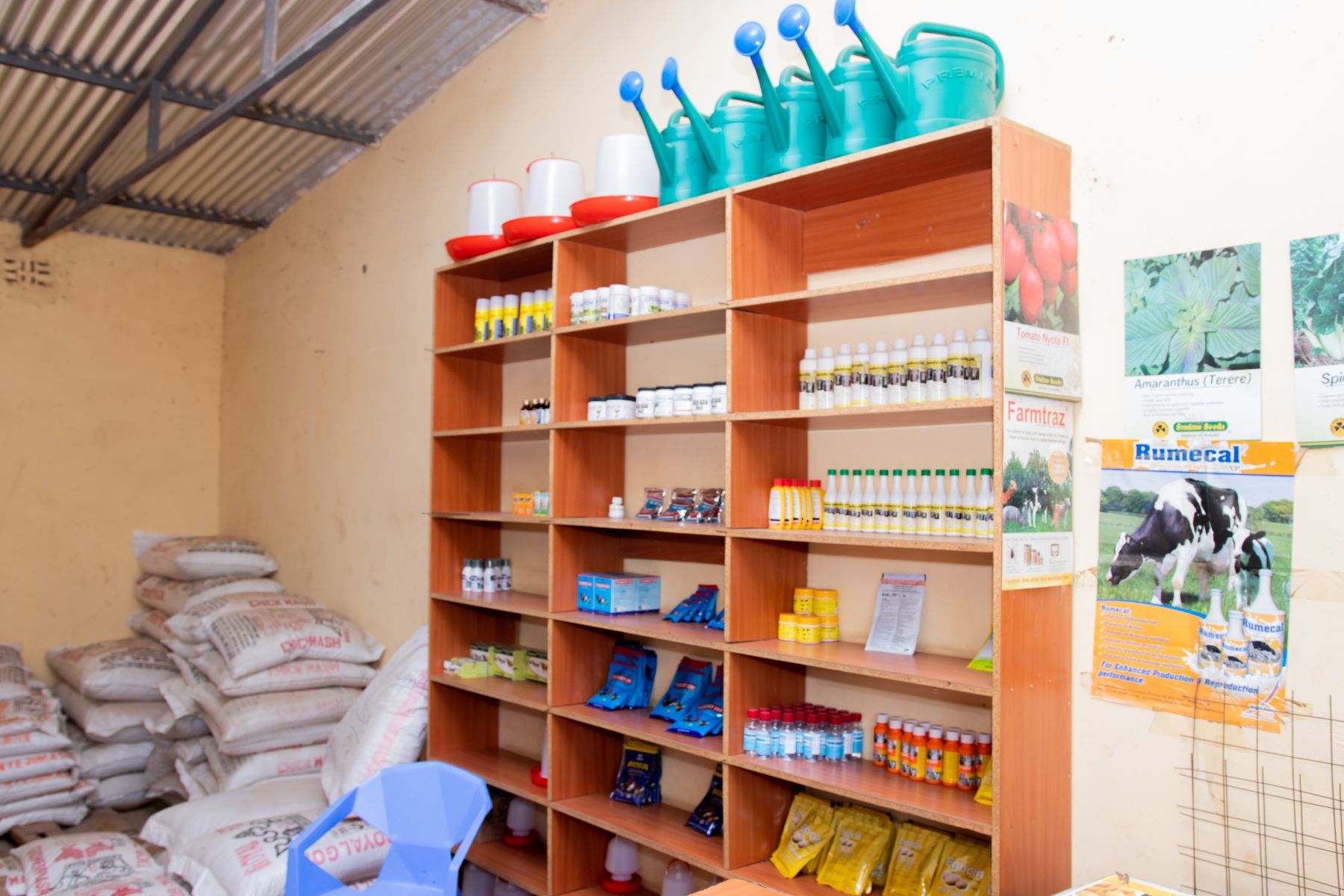
Proper shelving and displays keep products organized and accessible. Products should be stored off the floor and clearly labeled.
Refrigeration is required for vaccines and other temperature-sensitive products. A reliable refrigerator with temperature monitoring ensures product efficacy.
Security measures including locks, alarms, and secure doors protect your stock. Agrovets hold valuable products that attract theft.
How to Source Products and Avoid Fakes
Fake agricultural products destroy farmer trust and expose you to massive fines. The Pest Control Products Board imposes penalties of up to 1 million shillings for selling counterfeit products. Protecting your reputation and avoiding these fines requires careful sourcing.
Buy only from verified distributors. Twiga Chemicals, Amiran Kenya, and Bayer East Africa are reputable suppliers. Request their distributor lists and buy directly from authorized channels.
Check product packaging carefully. Counterfeiters often use slightly different colors or misspelled brand names. Train your staff to recognize authentic packaging.
Verify batch numbers with suppliers. Before accepting deliveries, confirm batch numbers with the manufacturer. This simple step catches many fakes.
Keep records of all purchases. Your records should include supplier details, batch numbers, and quantities. These records protect you if questions arise about product authenticity.
Report suspicious products immediately. If you encounter suspected fakes, report to PCPB. Your vigilance protects the entire industry.
Build relationships with multiple suppliers. Reliable supply chains ensure you never run out of essential products. Good relationships also give you access to new products and promotions.
Marketing Your Agrovet Business
Effective marketing builds your customer base. Farmers need to know you exist and trust your advice.
Signage is your primary marketing tool. A clear, professional sign visible from the road attracts passing farmers. Include your business name and key product categories.
Relationship building with farmer groups brings steady customers. Offer to train farmer groups on input use and pest control. These sessions position you as an expert and build trust.
Loyalty programs encourage repeat business. Offer discounts to regular customers or free products after a certain purchase volume. Simple programs build customer retention.
Seasonal promotions during planting times capture peak demand. Advertise your stock availability and competitive prices. Farmers plan their purchases around these seasons.
Social media presence reaches younger farmers. Share advice, product information, and promotions on platforms like Facebook and WhatsApp. Farmers share useful information with their networks.
Referral programs encourage word-of-mouth marketing. Offer existing customers a small reward for bringing new farmers to your shop.
Financial Management for Agrovets
Good financial management keeps your business profitable. Agrovets deal with cash, credit, and seasonal fluctuations.
Separate business and personal finances. Open a business bank account and use it for all transactions. This simplifies accounting and tax preparation.
Track inventory carefully. Agrovet products have expiry dates. Old stock must be sold before expiry or written off. Regular stock counts prevent losses.
Manage credit cautiously. Selling on credit to farmers is common but risky. Set clear credit policies and limits. Follow up on overdue accounts promptly.
Plan for seasonal cash flow. During planting seasons, you need cash to stock up. During off-seasons, sales drop. Build cash reserves to smooth these fluctuations.
Price competitively but profitably. Know your costs and desired margins. Check competitor prices regularly. Price too high and you lose customers. Price too low and you lose money.
Keep proper records for tax purposes. KRA expects accurate records of all sales and purchases. Good records also help you track business performance.
Agrovet Profit Margins by Product Category
| Product Category | Typical Margin | Demand Pattern | Key Considerations |
|---|---|---|---|
| Certified seeds | 10-15% | Seasonal peaks | High turnover, trusted brands essential |
| Fertilizers | 10-20% | Highly seasonal | Bulk purchases, storage space needed |
| Pesticides | 20-30% | Year-round | Professional advice required |
| Herbicides | 20-30% | Seasonal | Safety equipment needed |
| Animal health products | 15-25% | Steady year-round | Refrigeration for vaccines |
| Veterinary supplies | 25-40% | Steady | Low volume, high margin |
| Protective gear | 20-30% | Growing | Health-conscious farmers |
| Feeds and supplements | 10-15% | Steady | Bulk storage, regular turnover |
Common Mistakes to Avoid
New agrovet owners often make predictable mistakes. Learning from others saves you time and money.
Skipping proper licensing leads to closure. Operating without PCPB or KVB approval invites fines and business shutdown. Complete all licensing before opening.
Inadequate stock of essential products disappoints farmers. Farmers travel specifically to buy inputs. If you lack what they need, they go elsewhere and may not return.
Poor advice damages your reputation. Your qualified staff must give correct advice. Wrong recommendations kill crops or animals and destroy trust.
Ignoring expiry dates creates losses. Old stock must be sold at discount or written off. Regular stock rotation prevents this.
Underestimating capital requirements causes stress. Many new businesses run out of money before becoming profitable. Plan for six months of operating expenses beyond initial investment.
Poor location choices limit sales. An agrovet in a low-traffic area struggles regardless of how well it is run. Invest time in location research.
Registration Roadmap for 2026
Follow this step-by-step roadmap to register your agrovet in 2026:
Month 1: Planning and Research
Conduct market research in your target location
Identify qualified technical staff
Prepare business plan and financial projections
Secure initial capital
Month 2: Business Registration
Register business name or company
Obtain PIN from KRA
Open business bank account
Month 3: Premises Preparation
Secure suitable premises
Install shelves, refrigeration, and safety equipment
Prepare for regulatory inspections
Month 4: Licensing Applications
Apply for PCPB license with premises inspection
Apply for KVB registration with staff qualifications
Obtain county single business permit
Month 5: Stocking and Supplier Relationships
Open accounts with verified distributors
Place initial stock orders
Set up inventory management systems
Month 6: Launch and Marketing
Plan launch event or promotion
Install signage and marketing materials
Open for business
Next Step
Starting an agrovet in Kenya requires careful planning, adequate capital, and strict compliance with regulations. The rewards justify the effort. A well-run agrovet serves its community, builds lasting customer relationships, and generates strong returns for its owners.
The 2026 registration windows are open. PCPB and KVB accept applications throughout the year. Your qualified staff are available. Your location is waiting.
Start by identifying your technical person. Secure their commitment before proceeding. Then find your location and prepare your premises. Complete your registrations step by step. Build relationships with verified suppliers.
The successful agrovet owners across Kenya started exactly where you are now. They learned the requirements, gathered their resources, and took action. You can do the same.
Your agrovet business journey begins today. Farmers need your services. The market is waiting. The time to start is now.
https://farmerstrend.co.ke/trending/how-to-start-an-agrovet-business-in-kenya-2026-complete-guide/https://farmerstrend.co.ke/wp-content/uploads/2026/03/Agrovet-Business-in-kenya-1024x683.jpghttps://farmerstrend.co.ke/wp-content/uploads/2026/03/Agrovet-Business-in-kenya-150x150.jpg# TrendingThe agrovet business in Kenya sits at the heart of the country's agricultural economy. Farmers need seeds, fertilizers, pesticides, and animal health products to keep their operations running. Without agrovets, they cannot access these essential inputs. This dependence creates a stable and growing market for entrepreneurs who establish themselves...FarmersTrendjohn doefarmerstrend@gmail.comAdministratorFarmers Trend Ltd.










Leave a Reply