Collaborative Efforts to Enhance Dairy Farming, Food Security and Livelihoods in Marsabit County
The Jomo Kenyatta University of Agriculture and Technology (JKUAT), in collaboration with the University of Nairobi, the University of Copenhagen, the Kenya Agricultural and Livestock Research Organization (KALRO) and the Karare Women Dairy Cooperative, have launched a project to boost the dairy industry in Marsabit County.
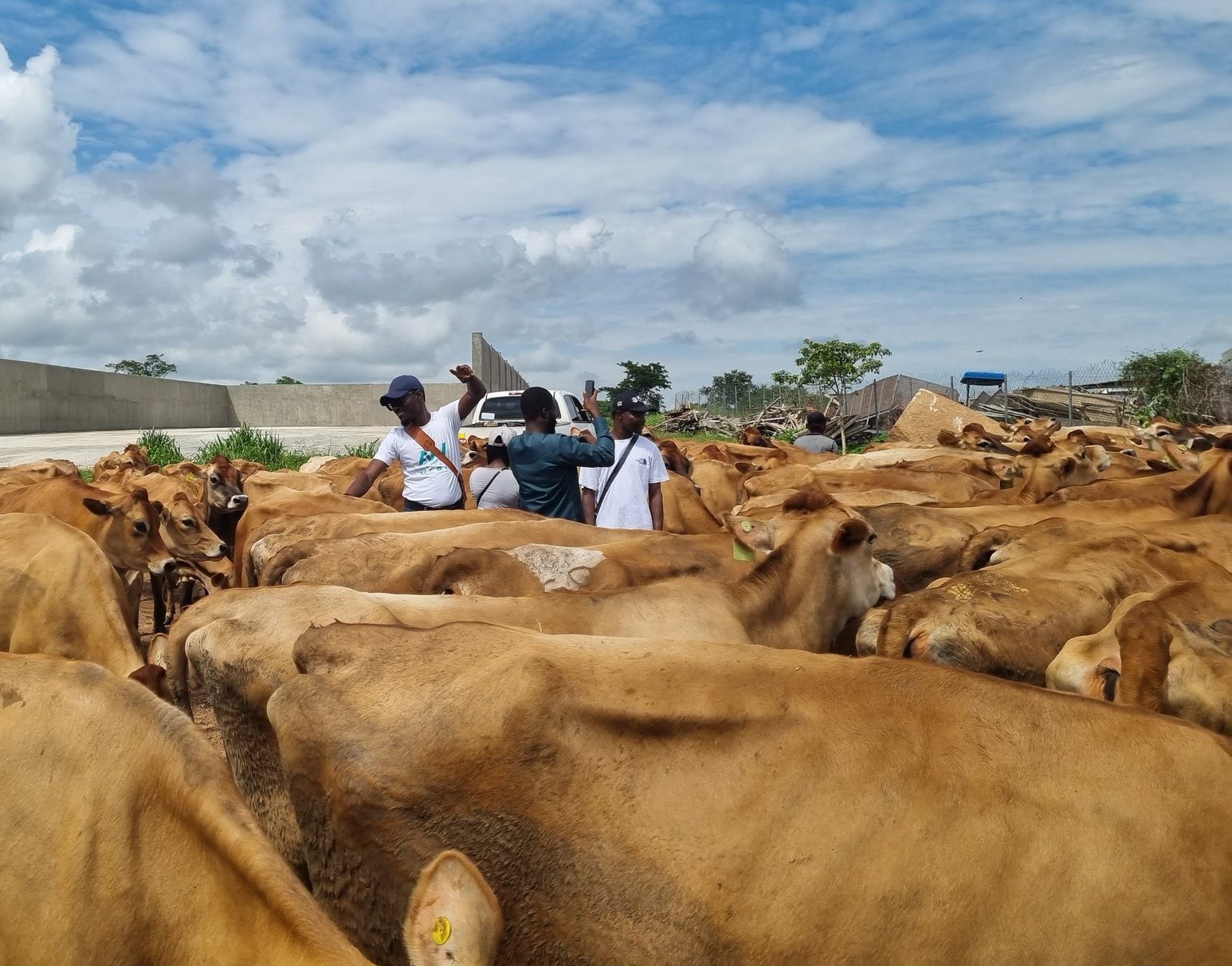
The multimillion-shilling initiative, titled ADAPTiVE, which has been rolled out from December 2024, is aimed at turning the dairy industry in Marsabit into a sustainable and profitable source of income for the county’s pastoralist community.
Marsabit County is in northern Kenya’s arid and semi-arid land, or ASAL areas. Prolonged drought periods are a challenge for the local community, which largely depends on livestock for its income.
The Karare Women Dairy Cooperative is one of the initiatives started by the community to empower women and create a source of income for the locals through milk production. Prolonged drought periods due to climate change have been an obstacle, however.
Climate adaptation
JKUAT saw the need to help mitigate these challenges, hence the five-year long ADAPTiVE project, that will be funded by Denmark’s Ministry of Foreign Affairs through the Danish International Development Agency, or DANIDA.
“This project is geared towards climate change adaptation, to improve food safety and livelihoods among pastoral communities in Kenya. Marsabit is located in an ASAL, where climate change-induced droughts present a big problem, since the majority of the people are pastoralist, relying on livestock for their livelihoods,” said Dr John Kinyuru, the ADAPTiVE project’s co-principal investigator, based at JKUAT.
“The project will address challenges experienced by the dairy sector in the county by collaborating with the Karare Women Dairy Cooperative, which offers market access – particularly to female dairy farmers,” Kinyuru told University World News.
Kinyuru added that women play a critical role in the milk value chain in Marsabit County and Karare, being an all-women cooperative, provides an opportunity also to empower women, who are the most affected by climate change challenges.
Research aims
According to Kinyuru, JKUAT is the overall coordinator in Kenya and will be responsible for implementing the research aspects of the project. It will be coordinating an evaluation of the milking and milk handling interventions along the value chain. JKUAT will install cold-chain handling systems of the milk at household levels and develop aggregation centres equipped with cold-storage facilities for safe handling of milk.
“JKUAT will [provide] the Karare Women Dairy Cooperative with equipment for improved cold-chain transportation of milk from aggregation centres to the cooperative. We will also conduct scientific experiments on how these interventions will improve milk safety,” Kinyuru explained.
The University of Nairobi will handle the anthropological issues surrounding milk safety, including knowledge attitudes and practices, while KALRO will handle the veterinary-related issues around milk production. KALRO will also be responsible for stakeholder engagement in the dairy sector, including with the government and private sector.
The University of Copenhagen is the grant holder from Denmark, which will be responsible for grant administration from DANIDA. It will also support the project through the publication of scientific papers, gaining citations, and sharing the project’s progress through public media, among other efforts.
Sustainable development
To counter the effects of drought and ensure sustainability, the project has been tailored to adapt to the effects of the environment.
“Some of the interventions we intend to put in place to counter the climate change effect include improved animal husbandry, solar-powered cold-chain milk handling and transportation to the Karare Cooperative, and the market thereafter,” Kinyuru said.
“The project will also promote capacity-building of the farmers and county extension staff on milk handling to improve safety and on climate-resilient strategies which will ensure it [can be scaled] to other parts of the county and the ASAL region,” he added.
Kinyuru expects the project to play a role in advancing Kenya’s Vision 2030, the national food safety policy, and global frameworks anchored on the United Nations Sustainable Development Goals, which include addressing climate change, ending hunger, ensuring health and well-being, achieving gender equality, and eradicating poverty.
https://farmerstrend.co.ke/trending/collaborative-efforts-to-enhance-dairy-farming-food-security-and-livelihoods-in-marsabit-county/https://farmerstrend.co.ke/wp-content/uploads/2025/01/F_EuTKaWkAECZEK-1024x803.jpghttps://farmerstrend.co.ke/wp-content/uploads/2025/01/F_EuTKaWkAECZEK-150x150.jpg# Trendingagricultural research Kenya,ASAL regions Kenya,climate change adaptation,cold-chain milk storage,dairy farming in kenya,DANIDA-funded projects,food security Kenya,JKUAT dairy project,Karare Women Dairy Cooperative,Marsabit County dairy sector,smart farming Kenya,sustainable agriculture,sustainable livelihoods,Vision 2030 Kenya,women empowerment agricultureThe Jomo Kenyatta University of Agriculture and Technology (JKUAT), in collaboration with the University of Nairobi, the University of Copenhagen, the Kenya Agricultural and Livestock Research Organization (KALRO) and the Karare Women Dairy Cooperative, have launched a project to boost the dairy industry in Marsabit County.The multimillion-shilling initiative, titled...FarmersTrendjohn doefarmerstrend@gmail.comAdministratorFarmers Trend Ltd.






Leave a Reply