Camel Farming in Kenya: 2026 Complete Profit, Milk & Rearing Guide
Camel farming in Kenya is a vital and resilient agricultural practice, particularly in the vast arid and semi-arid lands (ASALs) that cover over 80% of the country’s territory. Far from being just a traditional activity, modern camel farming in Kenya has evolved into a commercially viable enterprise with growing markets for milk, meat, and tourism. This guide by Farmers Trend Ltd. addresses every practical question about camel farming in Kenya, providing clear information on profitability, biology, management, and market opportunities. Whether you are a pastoralist in the drylands or an investor exploring drought-resistant livestock, this resource offers essential knowledge for building a successful camel-based livelihood.

Profitability of Camel Farming in Kenya
The fundamental question for any livestock keeper is economic viability. Is camel farming profitable in Kenya? The answer is increasingly positive, especially as climate change makes other forms of livestock keeping more challenging in dry regions.
A dairy camel can produce significant revenue through milk sales. A healthy lactating camel yields between 3 to 10 litres of milk per day under good management, with some high-producing breeds reaching up to 15 litres during peak lactation. With the current price of camel milk ranging from KSh 150 to KSh 250 per litre in urban markets, a single camel can generate between KSh 450 and KSh 2,500 daily in milk revenue alone.
Beyond milk, camels provide multiple income streams:
- Meat production: A mature camel yields 200-400 kg of meat
- Breeding stock: Quality breeding camels command premium prices
- Tourism and cultural experiences: Camel safaris and rides
- Hides and hair for traditional crafts and textiles
When pastoralists ask which farm animal makes the most money in arid areas, camels often outperform cattle and goats due to their superior drought tolerance and lower mortality rates during dry seasons. Their ability to utilize browse that other livestock cannot access gives them a unique advantage in resource-scarce environments.
Primary Camel Farming Regions in Kenya
Camel farming in Kenya is predominantly practiced in specific ecological zones. The main regions include:
- North Eastern Kenya: Garissa, Wajir, and Mandera counties, where camel keeping is deeply embedded in Somali culture
- Northern Rift Valley: Isiolo, Marsabit, and Samburu counties
- Eastern Kenya: Parts of Kitui and Makueni counties
- Southern Rift Valley: Kajiado and Narok counties among Maasai communities
These areas are characterized by low annual rainfall (less than 500mm), high temperatures, and sparse vegetation – conditions where camels thrive while other livestock struggle. Research institutions like KALRO are conducting experiments, such as the Somali Camel for milk production project, to improve productivity in these regions.
Understanding Camel Biology and Production
Successful camel farming in Kenya requires understanding the animal’s unique biology.
Growth Rate: How long does it take for a camel to grow? Camels reach sexual maturity at 3-5 years but continue growing until about 7-8 years old. They have a long productive life, with a lifespan of 40-50 years under good management, far exceeding most domestic livestock.
Reproduction: A critical question is how many months is a camel pregnant? The gestation period is remarkably long—13 to 15 months (approximately 390-410 days). This makes it one of the longest pregnancies among domestic animals. After giving birth, a camel typically produces milk for 12-18 months, with peak production around months 3-6 of lactation.
Breeding Frequency: Regarding how many times can a camel give birth in a year, the answer is less than once annually due to the long gestation and recovery period. Under optimal management, a female camel (cow) can produce one calf every two years.
Lactation Biology: An intriguing question is can camels produce milk without being pregnant? Unlike dairy cattle that must calve to lactate, camels can continue lactating for extended periods—sometimes years—without reconceiving, though milk yield gradually decreases without the stimulus of a new pregnancy.
Milk Production and Quality
Milk is the primary commercial product in camel farming in Kenya. How many litres of milk can a camel produce? Production varies by breed, feed, and management:
- Average daily yield: 3-10 litres
- Peak production: 8-15 litres for improved breeds
- Annual yield: 1,000-3,000 litres per lactation
What does camel milk taste like? It is slightly saltier than cow’s milk, with a sweet aftertaste and thinner consistency. Some describe it as having a slight almond flavor. Nutritionally, it is superior to cow’s milk in several aspects, being lower in fat, higher in vitamin C, and containing different proteins that make it more digestible and less allergenic.
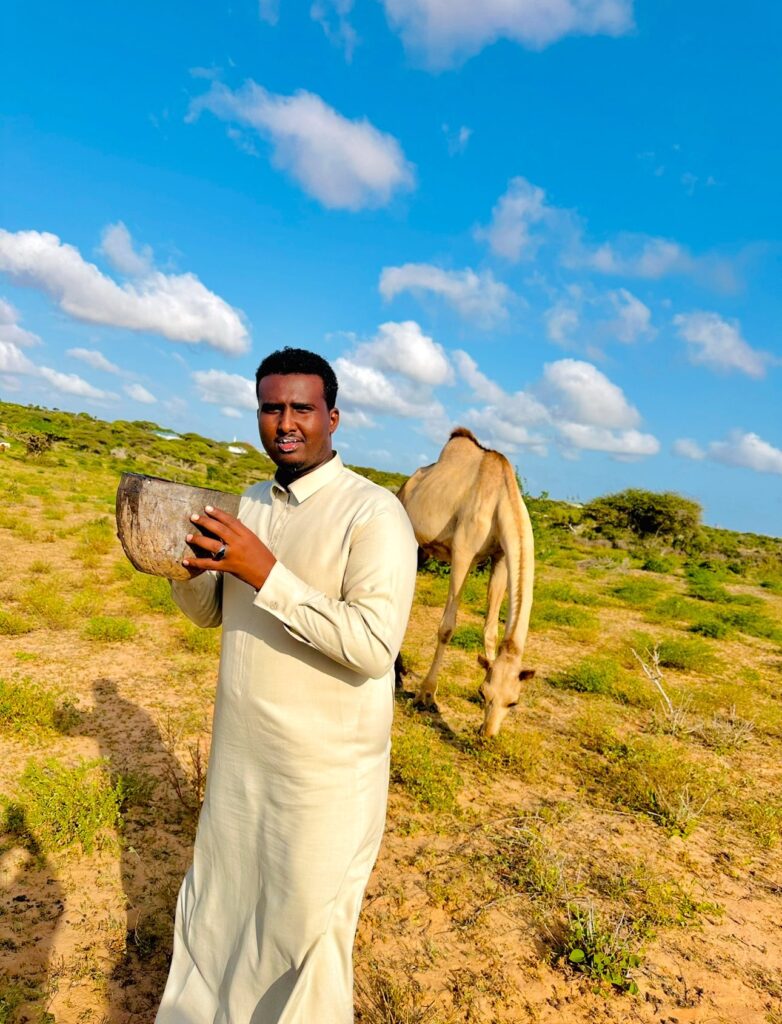
Camel milk benefits are increasingly recognized:
- Rich in insulin-like proteins, potentially beneficial for diabetics
- Contains antimicrobial compounds
- Higher in vitamin C and iron than cow’s milk
- Lower in lactose, often tolerable for lactose-intolerant individuals
Can humans drink camel milk? Absolutely. It has been consumed for millennia in camel-keeping communities and is gaining popularity in urban health-conscious markets in Kenya and internationally.
Comparative Analysis: Camels vs. Other Livestock
When choosing livestock for arid areas, understanding comparative advantages is crucial. Below is a comparison highlighting why camel farming in Kenya is uniquely suited to dryland environments:
| Aspect | Camels | Cattle (Beef) | Goats |
|---|---|---|---|
| Water Requirement | Can go 7-10 days without water | Need water daily | Need water every 2-3 days |
| Feed Adaptation | Browse 80% of vegetation (thorns, dry matter) | Prefer grasses | Browse 60% of vegetation |
| Drought Survival | Excellent (store fat in hump) | Poor (high mortality in drought) | Good but limited |
| Gestation Period | 13-15 months | 9 months | 5 months |
| Milk Production | 3-10+ litres/day for 12-18 months | 5-20 litres/day for 10 months | 1-3 litres/day for 6 months |
| Meat Yield | 200-400 kg (dressed) | 150-300 kg (dressed) | 10-20 kg (dressed) |
| Lifespan | 40-50 years | 15-20 years | 10-12 years |
| Climate Tolerance | Excellent in heat, poor in cold/wet | Moderate | Good |
| Disease Resistance | High (fewer tick-borne diseases) | Moderate | Moderate to High |
This comparison explains why many pastoralists in Kenya’s drylands are shifting from cattle to camels as climate patterns become more erratic.
Meat Production and Quality
While milk often receives more attention, camel meat is a valuable product. How much meat can you get from a camel? A mature camel yields 200-400 kilograms of dressed meat (approximately 50-55% of live weight), significantly more than cattle in similar environments.
Is camel meat healthier than cow meat? Nutritionally, camel meat is:
- Lower in fat and cholesterol
- Higher in polyunsaturated fatty acids
- Rich in iron and zinc
- Contains all essential amino acids
The taste is similar to beef but slightly sweeter and leaner. In Kenya, camel meat (known as “nyama ya ngamia”) is particularly popular in Somali and Muslim communities and is gaining wider acceptance in urban butcheries.
Starting a Camel Farming Enterprise
For those considering how to rear and make a living from camel farming, several steps are essential:
1. Initial Investment and Costs:
The cost of camels in Kenya varies by age, sex, breed, and purpose:
- Milking female: KSh 80,000 – KSh 150,000
- Pregnant female: KSh 100,000 – KSh 200,000
- Breeding male: KSh 150,000 – KSh 300,000
- Young camel (1-2 years): KSh 40,000 – KSh 70,000
Additional startup costs include shelter, watering equipment, feeding troughs, veterinary supplies, and potentially fencing.
2. Breed Selection:
Kenya primarily has two camel types:
- Dromedary (One-humped): The most common, well-adapted to dry areas
- Somali breed: Particularly valued for milk production, the focus of KALRO experiments for enhanced productivity
3. Housing and Management:
While camels are hardy, basic shelter from extreme sun and rain improves welfare and productivity. A simple three-sided structure is sufficient. More important is access to browsing areas and reliable water sources.
4. Feeding:
Camels are efficient browsers but benefit from supplemental feeding, especially lactating females. Salt licks and mineral supplements are important for optimal health and production.
5. Health Management:
Common health issues include parasites (internal and external), respiratory infections, and nutritional deficiencies. Establishing a relationship with a veterinarian experienced in camels is crucial. Regular vaccination and deworming programs should be implemented.

Market Opportunities and Value Addition
Camel milk price and market access determine profitability. Current prices range from:
- Farm gate: KSh 100 – KSh 150 per litre
- Urban retail: KSh 150 – KSh 250 per litre
- Processed products: KSh 300 – KSh 500 per litre (as yogurt, cheese, or powder)
Marketing channels include:
- Direct sales to neighbors and local communities
- Supplying hotels and restaurants in urban areas
- Cooperatives that aggregate and process milk
- Specialty health stores targeting nutritional benefits
- Export markets to Middle Eastern countries and diaspora communities
Value addition through processing into yogurt, cheese, ice cream, or powdered milk significantly increases shelf life and profitability. The growing search for “camel milk near me” in Kenyan urban centers indicates rising demand.
Unique Camel Characteristics
Several fascinating biological adaptations make camels exceptionally suited to arid environments:
Water Conservation: How long can a camel go without water? During cool seasons with moist forage, they can survive 7-10 days; in hot conditions, they typically need water every 4-5 days. Their unique physiology allows them to lose up to 25% of body weight through dehydration without harm, and rehydrate by drinking up to 100 litres in 10 minutes.
Temperature Regulation: Camels tolerate body temperature fluctuations from 34°C to 41°C, reducing water loss through sweating.
Feeding Adaptations: Their split upper lip and tough mouth lining allow them to eat thorny plants other animals avoid.
Intelligence: How intelligent are camels? They demonstrate problem-solving abilities, long memories (including remembering people who mistreated them), and complex social behaviors within herds.
Anatomical Quirks: Regarding which organ is missing in the camel, they lack a gall bladder, which may contribute to their ability to process poor-quality forage efficiently.
Challenges in Camel Farming
Despite advantages, camel farming in Kenya faces significant challenges:
Disease Threats: Trypanosomiasis (transmitted by tsetse flies), mange, and respiratory diseases can cause significant losses.
Limited Veterinary Services: Few veterinarians specialize in camels, especially in remote areas.
Market Infrastructure: Lack of cooling and processing facilities limits milk marketing options.
Theft and Conflict: Camels’ high value makes them targets for rustling, particularly in border regions.
Cultural Barriers: In some communities, camels are viewed primarily as prestige assets rather than commercial enterprises, limiting adoption of improved management practices.
Knowledge Gaps: Limited extension services specific to camel production hinder productivity improvements.
The Future of Camel Farming in Kenya
Several trends suggest growing opportunities for camel farming in Kenya:
Climate Change Adaptation: As droughts become more frequent and severe, camels’ drought tolerance becomes increasingly valuable.
Health and Nutrition Awareness: Growing recognition of camel milk benefits is expanding urban markets.
Research and Development: Institutions like KALRO are investing in genetic improvement and management research.
Policy Support: The Kenyan government’s increased focus on arid lands development includes support for camel value chains.
Export Opportunities: The large Kenyan diaspora in camel milk-consuming countries presents export potential.
For pastoralists and investors alike, camels represent not just a traditional livelihood but a modern commercial opportunity uniquely adapted to Kenya’s challenging environments. With proper management, market development, and value addition, camel farming in Kenya can provide sustainable income while contributing to food security in regions where few other agricultural enterprises are viable.
By addressing production challenges, improving genetics through initiatives like the KALRO Somali Camel project, and developing stronger market linkages, camel farming in Kenya can transition from a subsistence activity to a commercially vibrant sector that supports livelihoods across the country’s arid lands for generations to come.
https://farmerstrend.co.ke/trending/camel-farming-in-kenya-profit-guide/https://farmerstrend.co.ke/wp-content/uploads/2026/01/GesfBk3XIAAWcfZ-1024x805.jpeghttps://farmerstrend.co.ke/wp-content/uploads/2026/01/GesfBk3XIAAWcfZ-150x150.jpeg# TrendingCamelCamel farming in Kenya is a vital and resilient agricultural practice, particularly in the vast arid and semi-arid lands (ASALs) that cover over 80% of the country's territory. Far from being just a traditional activity, modern camel farming in Kenya has evolved into a commercially viable enterprise with growing markets for...FarmersTrendjohn doefarmerstrend@gmail.comAdministratorFarmers Trend Ltd.








Leave a Reply