Irrigated Farming in Isiolo Kenya Transforms Taiboto Group from Drought Victims to Onion Producers
In Garbatulla Ward of Isiolo County, a quiet transformation is taking root. The Taiboto Self-Help Group, once dependent on pastoralism, is rewriting its future. After years of devastating droughts that wiped out livestock and livelihoods, these households made a bold shift to irrigated farming. Today, that decision is paying off.

For generations, the people of Garbatulla relied on their animals. Cows, goats, and camels were their currency, their savings, and their food. When the rains failed, the animals died. When the animals died, families went hungry. Children dropped out of school. Mothers walked for days searching for water. Fathers watched their wealth disappear under the hot sun.
The drought between 2020 and 2023 was the worst in memory. Some families lost every animal they owned. The Taiboto Self-Help Group had a choice. They could wait for the next rains and hope their remaining animals survived. Or they could try something new. They chose to farm.
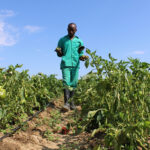
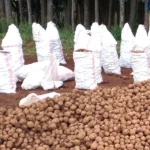
In their first harvest, the group has produced 540 bags of red onions. That is 27 tonnes. Land that was once dry, bare, and underutilised has been transformed into a productive farm. It is now feeding families and generating income.
The government support that made it possible
Behind this success is a deliberate investment in resilience. The group received support from the National Government through the National Drought Management Authority (NDMA) under the National Drought Emergency Fund (NDEF). The support included:
- Construction of a 100,000 litre elevated steel water storage tank to ensure reliable water supply for irrigation
- Installation of a rain hose irrigation system on 20 acres
- Erection of a 1.8 kilometre solar powered electric fence to prevent crop destruction by wildlife, particularly elephants
- Provision of start up farm inputs, including onion seeds, fertiliser and equipment
Each of these investments was critical. Without the water tank, the farm would have no water during dry spells. Without the irrigation system, watering 20 acres by hand would be impossible. Without the electric fence, elephants would destroy the crop in a single night. Without the seeds and fertiliser, nothing would grow.
The harvest that changed everything
For the 25 households directly involved, crop farming is now a dependable source of food and income. This first harvest is valued at approximately KSh 3.5 million in local markets. For the wider community, it translates into improved access to fresh produce and more vibrant local markets.
The onions are sold to traders who come from as far as Isiolo town and Meru. The demand is high. Local families who once bought onions from distant markets now buy them from their neighbours. The money stays in the community.
One farmer in the group, a mother of five, said she had never held so much money at once. She used her share of the harvest earnings to pay school fees for her children and buy a small herd of goats. She said she is no longer afraid of drought. Her onions will grow even when the rains are late.
Another farmer, a young man who had given up on finding work, now manages his own plot within the group farm. He said he used to spend his days idling under a tree. Now he wakes before sunrise to check his onions. He has saved enough money to buy a motorcycle, which he uses to transport his produce to market.
How irrigated farming advances the Bottom-Up Economic Transformation Agenda
This transformation directly advances the Bottom-Up Economic Transformation Agenda (BETA) in several ways:
- Strengthening agricultural productivity at the grassroots level
- Expanding income opportunities for vulnerable households
- Creating job opportunities for youth and women
- Supporting food security and local value chains
- Reducing reliance on emergency assistance through sustainable livelihoods
The government’s agenda is to move from handouts to opportunities. The Taiboto project is a perfect example. Instead of receiving food aid during drought, these families are now producing food and selling it. They are no longer waiting for help. They are helping themselves.

A shift in mindset
Most importantly, this transformation signals a shift in mindset. Drought no longer dictates destiny. In places where livestock losses once defined hardship, irrigated agriculture is emerging as a viable, climate smart alternative.
The people of Garbatulla have not abandoned their love for livestock. Many still keep animals. But they no longer depend on them alone. They have diversified. They have built resilience. They have learned that the land can produce food if they give it water and care.
Irrigated farming in Isiolo Kenya is proving that drylands are not wastelands. They are opportunities waiting for investment. The Taiboto project demonstrates how targeted investments can unlock economic potential in Kenya’s arid lands.
The future looks green
The group plans to expand their acreage in the next season. More households want to join. The market for their onions is strong. Local traders come directly to the farm to buy. The KSh 3.5 million harvest has changed how these families see their future.
Children who once missed school because of drought now have their fees paid from onion sales. Mothers who walked long distances for food now cook meals with vegetables from their own fields. Young men who had no jobs now have work on the farm. Old men who watched their livestock die now watch onions grow.
The government’s investment through NDEF has shown what is possible when resources are directed to the right projects. The water tank, the irrigation system, and the electric fence were not gifts. They were catalysts. They allowed farmers to take control of their own destiny.
A model for other dryland communities
Irrigated farming in Isiolo Kenya is now a proven pathway out of poverty. The Taiboto Self-Help Group has shown the way. Other communities in Isiolo and beyond are watching and learning. They too want to trade their survival struggles for harvests.
The success of this project has attracted attention from neighbouring wards. Farmers from as far away as Merti and Kinna have visited the farm. They want to know how it works. They want to know if they can do the same.
The answer is yes. With water, with seeds, with protection from wildlife, and with training, dryland communities can farm. They can produce food. They can earn income. They can break the cycle of drought and dependency.
The drylands of Kenya can feed the nation. The proof is growing in Garbatulla. The 27 tonnes of red onions harvested by the Taiboto Self-Help Group are evidence. The KSh 3.5 million in their pockets is evidence. The children back in school is evidence. The mothers cooking with their own vegetables is evidence.
Resilience is not a concept. In Garbatulla, it is visible. It is measurable. It is harvestable. And it is spreading. Irrigated farming in Isiolo Kenya has shown that where there is water, there is life. Where there is life, there is hope. Where there is hope, there is a future. The Taiboto Self-Help Group is building that future, one onion at a time.
Credit: @NDMA_Kenya
https://farmerstrend.co.ke/trending/irrigated-farming-in-isiolo-kenya-onions/https://farmerstrend.co.ke/wp-content/uploads/2026/04/HHAOr6dXsAACjBo.jpghttps://farmerstrend.co.ke/wp-content/uploads/2026/04/HHAOr6dXsAACjBo-150x150.jpg# TrendingIn Garbatulla Ward of Isiolo County, a quiet transformation is taking root. The Taiboto Self-Help Group, once dependent on pastoralism, is rewriting its future. After years of devastating droughts that wiped out livestock and livelihoods, these households made a bold shift to irrigated farming. Today, that decision is paying...FarmersTrendjohn doefarmerstrend@gmail.comAdministratorFarmers Trend Ltd.


Leave a Reply